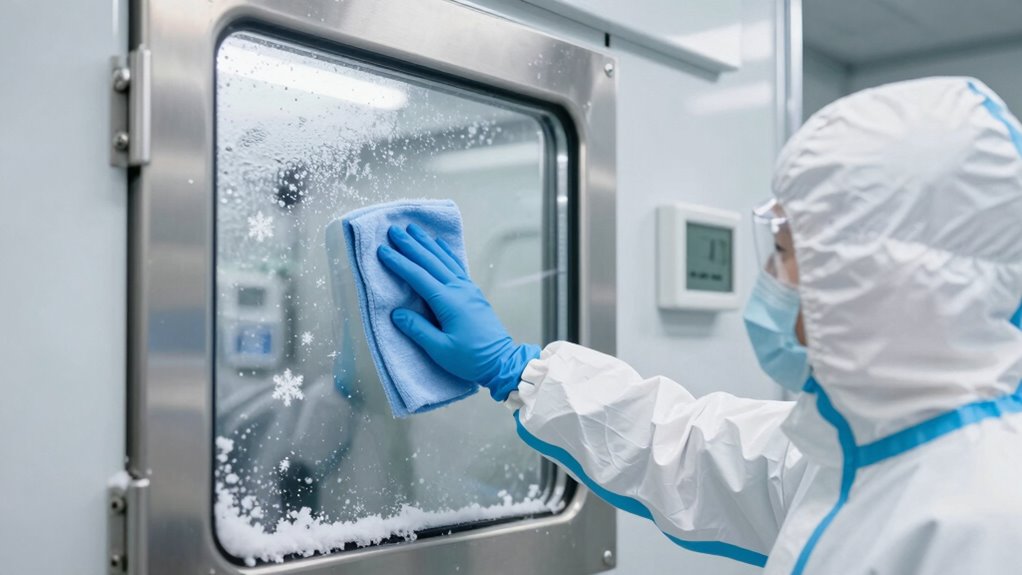
When cleaning cold storage entry zones, you should follow strict protocols to guarantee safety and product quality. Use appropriate PPE, sanitize footwear and equipment before and after entry, and choose cleaning agents effective at low temperatures. Control humidity to prevent ice buildup and thoroughly dry surfaces after cleaning. Adapt your methods for low temperatures and monitor conditions closely. Keep updated with best practices, and you’ll find out even more about maintaining a safe environment inside.
Open a free Amazon Business account
Business pricing, bulk buying and tax-exempt orders.
As an affiliate, we earn on qualifying purchases.
Key Takeaways
- Develop and follow detailed sanitation protocols tailored for low temperatures and humidity.
- Use cleaning agents compatible with cold environments to prevent residues and slipperiness.
- Regularly dry surfaces thoroughly post-cleaning to prevent ice formation and safety hazards.
- Ensure staff wear appropriate PPE, including gloves, masks, and cold-resistant footwear.
- Monitor humidity levels continuously to minimize moisture buildup and ice hazards.
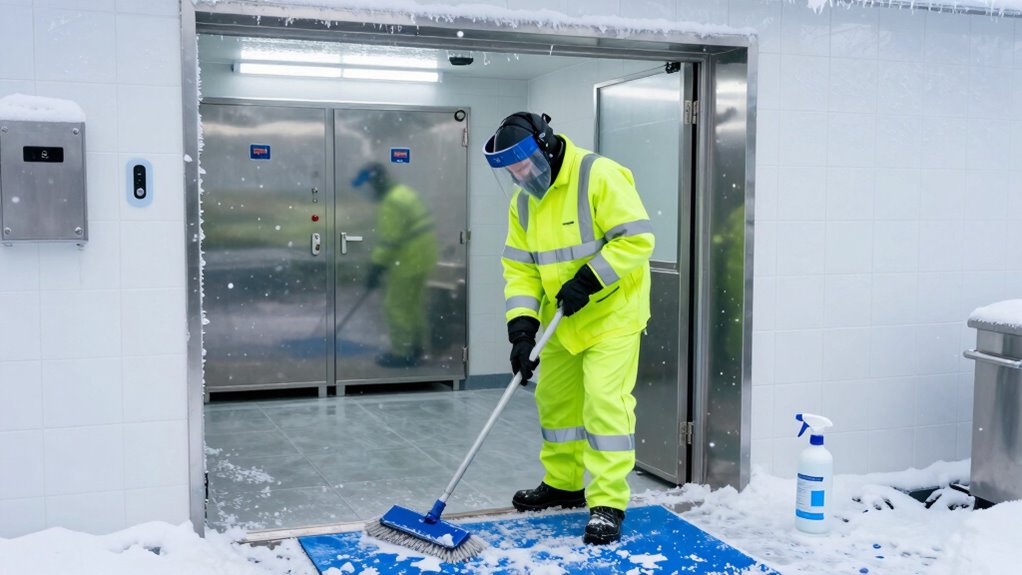
Have you ever wondered why cleaning in cold storage entry zones is so essential? It’s because these areas play a critical role in maintaining the overall safety and quality of your stored products. Proper cleaning ensures that bacteria, mold, and other contaminants don’t find a foothold, which could compromise the entire cold chain. One of the key elements in effective cleaning here is maintaining strict temperature control. Cold temperatures inhibit microbial growth, but they also require you to adapt your cleaning methods. You can’t just use regular cleaning agents or techniques; instead, specialized protocols are necessary to prevent any temperature fluctuations that might lead to condensation or ice buildup, which could harbor bacteria or cause equipment to malfunction.
Maintaining strict temperature control is essential to prevent condensation, ice buildup, and microbial growth in cold storage entry zones.
Sanitation protocols are the backbone of cleanliness in cold storage entry zones. You need to develop and follow detailed procedures that specify how often cleaning should occur, what cleaning agents to use, and the proper methods for applying them. Since these zones are entry points, they’re particularly vulnerable to contamination from personnel, equipment, and transported goods. That’s why thorough cleaning and sanitizing of footwear, carts, and pallets are essential, especially before and after each use. When you adhere strictly to sanitation protocols, you minimize the risk of cross-contamination, which is critical for food safety and regulatory compliance. Additionally, understanding the importance of microbial growth control can help you implement more effective cleaning strategies.
Handling cleaning in these zones requires a careful balance. You must guarantee that cleaning doesn’t interfere with temperature control, so your procedures should be quick and efficient, preferably done during times of low foot traffic or downtime. Using appropriate cleaning agents that are compatible with cold environments is vital—they should be effective at low temperatures and not leave residues that could freeze or cause slippery surfaces. It’s also beneficial to regularly monitor humidity levels to prevent excessive moisture, which can lead to ice formation and safety hazards. Maintaining proper humidity is crucial for preventing ice buildup and ensuring a safe environment. You also need to pay attention to humidity levels; excessive moisture can lead to ice formation, which complicates cleaning and creates safety hazards.
Personal protective equipment (PPE) is another essential aspect. You should always wear gloves, masks, and suitable footwear to prevent contaminating surfaces and to protect yourself from exposure to cleaning chemicals. After cleaning, it’s necessary to guarantee thorough drying of surfaces to prevent ice buildup and maintain a safe, sanitized environment. Consistent training on cleaning procedures and updates on sanitation protocols help guarantee everyone understands their role in keeping the cold storage entry zones safe and compliant. Ultimately, proper handling of cleaning tasks in these zones not only preserves product integrity but also supports a safe, efficient storage environment.
As an affiliate, we earn on qualifying purchases.
Frequently Asked Questions
How Often Should Cleaning Schedules Be Updated in Cold Storage Entry Zones?
You should update cleaning schedules based on cleaning frequency and ongoing maintenance needs. Regularly reviewing and adjusting the schedule guarantees hygiene standards stay high, especially when handling cold storage entry zones. Monitor the area for spills, dirt, or contamination, and increase cleaning frequency if needed. By maintaining a proactive maintenance scheduling approach, you prevent issues, ensure compliance, and keep the cold storage environment safe and efficient.
What Are the Best Cleaning Agents for Cold Storage Environments?
Did you know that using the right cleaning agents can extend cold storage equipment life by up to 20%? You should choose eco-friendly disinfectants that are safe for the environment and effective against germs. Temperature-resistant cleaning agents are essential, as they remain effective in cold environments without losing potency. These products guarantee thorough cleaning while protecting your stored products, staff, and the environment from harmful chemicals.
How to Train Staff on Proper Cleaning Protocols in Cold Zones?
You should train your staff by clearly demonstrating proper cleaning protocols, emphasizing the importance of a detailed cleaning checklist. Motivate employees by explaining how their thorough work maintains product safety and quality, creating a sense of responsibility. Use hands-on training sessions, provide visual aids, and regularly review procedures to reinforce best practices. Encouraging feedback and acknowledging their efforts boosts motivation, ensuring consistent and effective cleaning in cold storage entry zones.
Are There Specific Safety Precautions During Cold Storage Cleaning?
During cold storage cleaning, safety precautions are vital. For example, you should always wear appropriate personal protective equipment, such as insulated gloves and slip-resistant boots, to prevent frostbite and slips. Utilizing cleaning automation can reduce direct contact with cold surfaces, minimizing risks. Always make certain proper ventilation and handle chemicals carefully. These steps help protect you from cold-related hazards and guarantee a safe, effective cleaning process in chilly environments.
How to Prevent Cross-Contamination During Cleaning Processes?
To prevent cross-contamination during cleaning, you should set up sanitation barriers between different zones, ensuring contaminated tools or materials don’t cross into clean areas. Use designated cleaning equipment for each zone and follow contamination control protocols strictly. Regularly disinfect and inspect sanitation barriers, and train staff on proper cleaning procedures. This approach minimizes contamination risks, maintains product safety, and keeps your cold storage environment compliant with safety standards.
Conclusion
Remember, maintaining cleanliness in cold storage entry zones isn’t just about hygiene—it’s about safeguarding your entire operation. Think of these zones as the gateway to freshness, where neglect can invite contamination like unwelcome guests. By diligently following proper cleaning protocols, you not only protect your products but also uphold your reputation. Keep this area pristine, for in doing so, you’re sealing the fortress of quality and safety, ensuring your cold storage remains a bastion of excellence.
Fall Picks
fall essentials
As an affiliate, we earn on qualifying purchases.