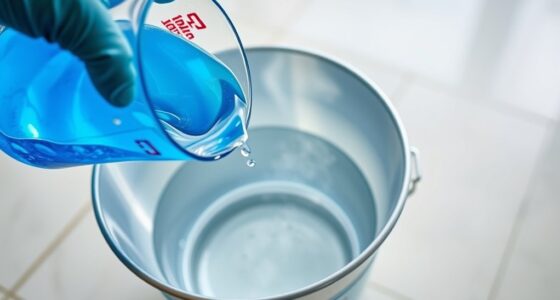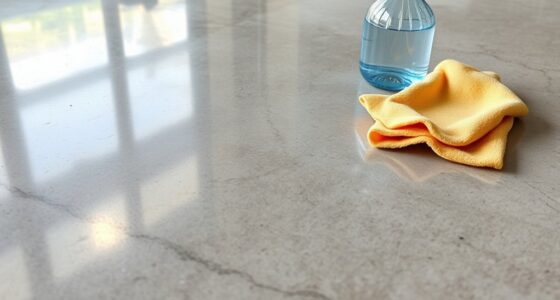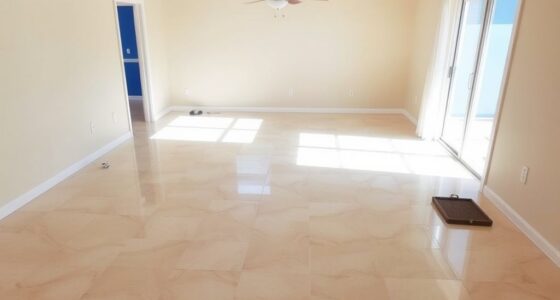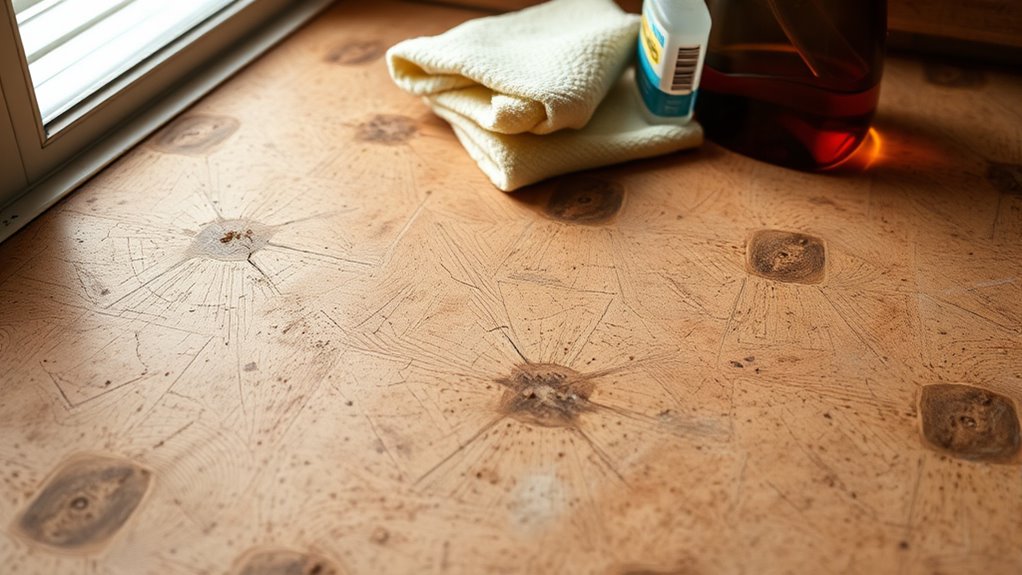

One common mistake is using harsh chemicals or abrasive tools, which can scratch or dull your cork floors. Over-wetting with water or soaking the surface can cause swelling or warping since cork is porous. Neglecting to reapply sealant regularly also leaves your floors vulnerable to stains and damage. To keep your cork looking great and lasting longer, it’s essential to use gentle cleaning methods and maintain proper sealing. If you want to avoid these pitfalls, you’ll find helpful tips if you continue exploring.
Key Takeaways
- Using harsh chemicals like ammonia, bleach, or vinegar can damage the cork sealant and discolor the surface.
- Excessive water or soaking during cleaning can cause cork swelling and warping; always use damp, not wet, cloths or mops.
- Neglecting to reapply sealant allows stains and moisture to penetrate, leading to surface damage over time.
- Relying on abrasive tools or strong cleaners can scratch or dull the cork’s natural finish.
- Failing to test cleaning solutions in hidden areas may result in unexpected discoloration or damage.
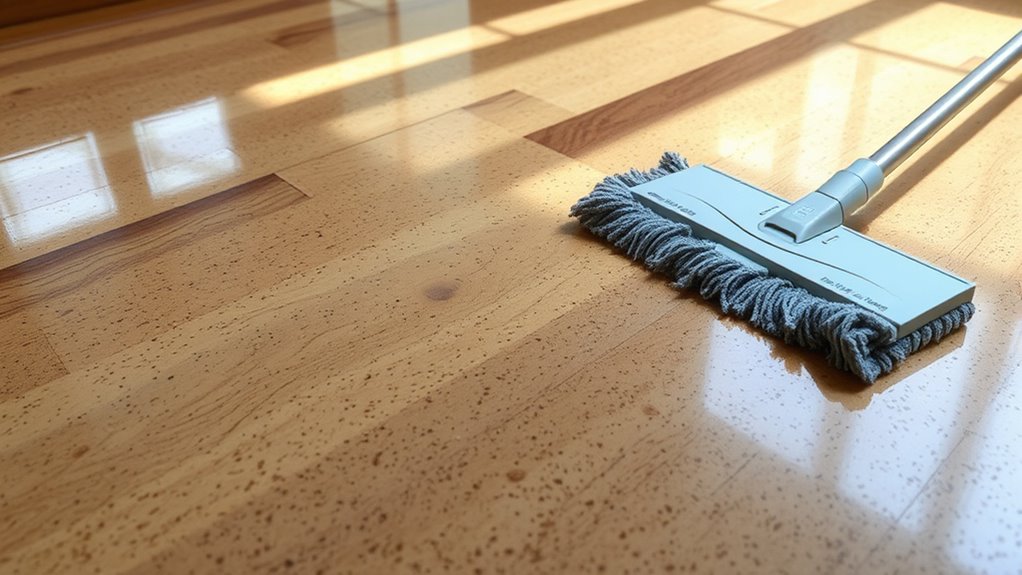
Are you making common mistakes when cleaning your cork floors? Many people overlook the importance of proper sealing techniques and end up causing more harm than good. Cork is a porous material, which means it can easily absorb spills, stains, and moisture if not sealed correctly. Using the wrong cleaning products or neglecting to reapply sealant when needed can lead to dullness, discoloration, and even damage to the surface. To keep your cork floors looking their best, you should regularly check the sealing integrity and consider resealing them every few years or as recommended by the manufacturer. Proper sealing creates a protective barrier that helps repel water and stains, making stain removal methods much easier and more effective when accidents happen.
When it comes to stain removal methods, many assume you need harsh chemicals or abrasive tools that can scratch or dull the cork. This is a mistake. Instead, you should focus on gentle, non-abrasive cleaning solutions tailored for cork floors. For fresh stains, quickly blot the spill with a soft cloth or paper towel, avoiding excessive rubbing, which can embed the stain further or damage the surface. For tougher stains, mix a small amount of mild dish soap with warm water and gently clean the area. Always test any cleaning solution in a small, inconspicuous spot first to ensure it doesn’t discolor or harm the finish. Avoid using ammonia, bleach, or vinegar, as these can break down the sealant and cause the cork to weaken or discolor over time. Additionally, understanding the signs of spoilage in liquids can help you prevent using contaminated or degraded cleaning solutions that might harm your floors.
Many homeowners forget that improper cleaning can also weaken the sealing techniques they’ve invested in. Using too much water or soaking the floor can penetrate the cork’s porous surface, causing it to swell or warp. Instead, opt for damp, not wet, mops or cloths when cleaning. Regular sweeping or vacuuming also helps prevent dirt and grit from scratching the surface during cleaning. Remember, the goal is to maintain the protective seal and avoid moisture buildup, so always dry the floor thoroughly after cleaning.
Finally, don’t forget that routine maintenance is key. Reapplying sealant when you notice it’s wearing thin not only prolongs the life of your cork floors but also makes stain removal easier down the line. Incorporate gentle cleaning practices, avoid harsh chemicals, and stay on top of sealing to preserve that beautiful, natural look of your cork flooring. Doing so saves you money and effort in the long run, ensuring your floors stay pristine and durable.
Frequently Asked Questions
How Often Should I Reseal My Cork Floors?
You should reseal your cork floors every 1 to 3 years, depending on their wear and tear. Follow a consistent maintenance schedule by inspecting the surface regularly for signs of damage or loss of shine. Proper sealing frequency protects your floors from moisture and stains, prolonging their lifespan. Keep an eye on how they look and feel, and reseal as needed to maintain their beauty and durability over time.
Can I Use Steam Mops on Cork Flooring?
You shouldn’t use steam mops on cork flooring because the heat and moisture can cause cork floor damage. Steam mop usage can lead to warping, swelling, or cracking your floors over time. Instead, opt for a damp cloth or a gentle cleaning solution designed for cork. This method keeps your floors clean without risking damage, ensuring they stay beautiful and durable for years.
What’s the Best Way to Remove Stains From Cork?
Like a painter restoring a faded masterpiece, you gently tackle cork stains with careful stain removal techniques. Use a soft cloth dampened with a mixture of mild soap and water, avoiding harsh chemicals. For stubborn spots, dab with a baking soda paste or a diluted vinegar solution, then wipe clean. Remember, patience is key—quick scrubbing can damage cork. With gentle, precise cleaning techniques, your floor’s natural beauty will shine through.
Are There Specific Cleaners to Avoid With Cork Floors?
You should avoid harsh chemicals and abrasive pads when cleaning your cork floors. These can damage the delicate surface, causing scratches and fading. Instead, opt for gentle, pH-neutral cleaners specifically designed for cork. Using harsh chemicals or abrasive tools may seem effective at first, but they’ll ultimately harm your flooring, leading to costly repairs. Always read labels carefully and stick to recommended cleaning products to keep your cork floors looking beautiful.
How Do I Maintain Shine Without Damaging the Surface?
To maintain shine without damaging your cork floor, use gentle polish techniques and natural remedies like a mixture of water and a few drops of olive oil or vinegar. Avoid harsh chemicals, and instead, regularly sweep or vacuum to prevent dirt buildup. Lightly dampen a soft cloth with your chosen remedy, then buff the surface gently. This keeps your cork floor shiny and protected without risking damage.
Conclusion
To keep your cork floors looking their best, avoid common cleaning mistakes like using harsh chemicals or excess water. Instead, treat them gently, much like caring for a delicate flower. Regular, proper cleaning preserves their beauty and durability, preventing costly repairs down the line. Remember, taking small, mindful steps is like tending a garden—over time, your floors will flourish and stay stunning for years to come.