To prevent cross-contamination when cleaning food-grade areas, always wear clean, disposable gloves and change them frequently, especially after handling raw or cooked foods. Sanitize all tools and equipment regularly, focusing on high-touch surfaces like sinks and counters. Use approved sanitizing solutions and follow manufacturer instructions. Make certain staff is well-trained on hygiene protocols and maintains disciplined routines. Keeping these practices in place helps protect food safety—learn more about effective strategies to maintain hygiene standards.

Get cleaning gear delivered free with Prime
- Fast, free delivery on millions of items
- Prime Video, Amazon Music and more included
- Member-only deals all year
Key Takeaways
- Always wear clean, disposable gloves and change them frequently between tasks to prevent cross-contamination.
- Sanitize all cleaning tools and equipment after each use to eliminate microbial buildup.
- Focus on high-touch surfaces like sinks and countertops, ensuring they are thoroughly cleaned and sanitized regularly.
- Train staff on proper glove use, hand hygiene, and routines to maintain consistent hygiene standards.
- Implement routine cleaning schedules and monitor compliance to uphold food safety and prevent cross-contamination.
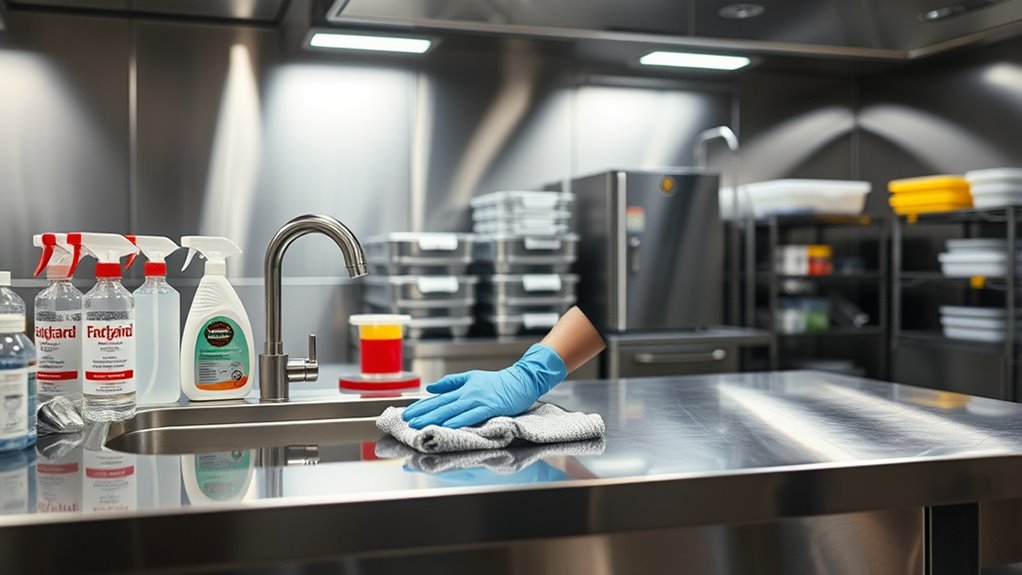
Preventing cross-contamination in food-grade areas is crucial to guarantee food safety and protect consumers. When cleaning these spaces, your approach must be meticulous, guaranteeing that no harmful bacteria or allergens transfer from one surface or product to another. One of the most effective ways to do this is by practicing proper glove usage. Always wear clean, disposable gloves when handling different types of food or cleaning surfaces, and change them frequently, especially when moving between raw and cooked foods. This simple step creates a barrier that minimizes the risk of cross-contamination, but it only works if you discard gloves after each task and don fresh ones. Remember, gloves are not a substitute for good hand hygiene; wash your hands thoroughly before and after glove use to further reduce risks.
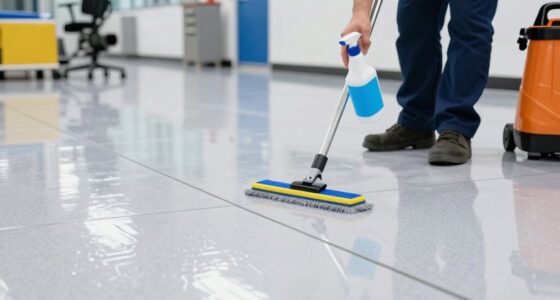
In addition to glove management, sanitizing equipment is critical. After each cleaning session, ensure all cleaning tools—mops, brushes, cloths, and scrubbers—are properly sanitized. Use appropriate sanitizing solutions that are approved for food-grade environments, and follow the manufacturer’s instructions precisely. Sanitizing equipment effectively kills bacteria and viruses that can otherwise linger and spread contamination. It’s equally important to clean equipment regularly, not just after visible dirt or spills. Accumulated residue can harbor microbes, so establishing a routine cleaning schedule helps maintain a hygienic environment. When sanitizing, pay special attention to high-touch areas like sinks, countertops, and cutting boards, which are more prone to contamination.
Keep in mind that proper glove usage and sanitizing equipment are interconnected practices. For example, if you touch a contaminated surface with your gloves and don’t change them before handling food or clean equipment, you risk spreading germs. Conversely, even if you change gloves, if the equipment used for cleaning isn’t sanitized properly, contamination can still occur. That’s why maintaining a disciplined routine—wearing gloves properly and sanitizing all tools thoroughly—is essential for effective cross-contamination prevention. Incorporating proper cleaning protocols can further reinforce these practices and enhance overall hygiene standards.
Finally, train all staff members to understand the importance of these practices. Consistent adherence ensures everyone follows the same high standards, creating a safer environment for food preparation and handling. Your diligence with proper glove usage and sanitizing equipment plays a crucial role in reducing risks, protecting consumers, and upholding the integrity of your food-grade operations. When everyone commits to these practices, you greatly decrease the chance of cross-contamination, fostering a trusted, hygienic space for food production.
As an affiliate, we earn on qualifying purchases.
Frequently Asked Questions
How Often Should Cleaning Equipment Be Sanitized?
You should sanitize cleaning equipment regularly to prevent cross-contamination. Follow your cleaning schedules diligently, typically sanitizing equipment after each use or at least daily, depending on the area’s risk level. Equipment maintenance is vital; inspect and clean tools thoroughly to guarantee they remain effective. Consistent sanitization minimizes bacteria transfer, protecting food safety. Remember, proper cleaning schedules and equipment maintenance go hand-in-hand to keep your food-grade areas safe and compliant.
What Are the Best Storage Practices for Cleaning Supplies?
You should store cleaning supplies in a well-organized area, ensuring easy access and minimizing clutter. Use clear supply labeling to identify each item quickly, preventing mix-ups. Keep chemical containers sealed and stored away from food or food-contact surfaces to avoid cross-contamination. Implement storage organization by designating specific zones for different cleaning products, and regularly inspect supplies to maintain hygiene standards and safety.
How to Train Staff on Cross-Contamination Prevention?
You need to develop extensive training programs that emphasize staff awareness of cross-contamination risks. Start by explaining how contamination occurs and the importance of proper cleaning techniques. Use practical demonstrations and regular refresher courses to reinforce best practices. Encourage staff to ask questions and share experiences. By actively engaging your team and emphasizing ongoing education, you’ll foster a culture of cleanliness and safety that minimizes contamination risks.
Are There Specific Cleaning Agents for Food-Grade Areas?
Did you know that 48% of food recalls are due to contamination? When cleaning food-grade areas, you should use food-grade disinfectants designed specifically for this purpose. These disinfectants are safe for food contact surfaces and guarantee equipment compatibility, preventing harmful residues. Always verify that the cleaning agents you choose are approved for food environments, helping you maintain safety and compliance while effectively reducing cross-contamination risks.
How Is Cross-Contamination Risk Assessed and Monitored?
You assess and monitor cross-contamination risks by evaluating surface contact points and identifying contamination sources regularly. You should conduct visual inspections, swab surfaces for testing, and track contamination patterns over time. Implementing a routine monitoring plan helps you spot vulnerabilities early, ensuring proper cleaning protocols are followed. This proactive approach minimizes cross-contamination, keeps food-safe environments, and protects consumer health effectively.
Conclusion
By staying vigilant and following proper cleaning protocols, you prevent cross-contamination from turning your food-grade area into a disaster zone. Remember, one small oversight can lead to a chain reaction of contamination, risking your reputation and customers’ health. Think of your cleaning routine as the fortress guarding the integrity of your food safety. Stay committed, because in this business, cleanliness isn’t just important — it’s the difference between success and catastrophe.
Halloween Picks
halloween
As an affiliate, we earn on qualifying purchases.