
To disinfect natural stone safely, use diluted hydrogen peroxide or isopropyl alcohol, which are effective and gentle. Avoid acidic cleaners like vinegar, lemon juice, or bleach, as they can damage the surface. Always test new products on small areas first, and rinse thoroughly to remove residues. Properly maintaining your stone by choosing the right disinfectants will protect its beauty and longevity. Keep exploring for more tips on keeping your stone surfaces pristine and safe.
Key Takeaways
- Use diluted hydrogen peroxide or isopropyl alcohol solutions for safe disinfection of natural stone surfaces.
- Avoid acidic disinfectants like vinegar, lemon juice, or bleach, which can damage the stone.
- Test disinfectants on small, inconspicuous areas before full application to prevent surface harm.
- Ensure thorough rinsing after cleaning or disinfecting to remove residues that could impair sealants.
- Follow manufacturer guidelines for cleaning and disinfecting products to maintain stone integrity and appearance.
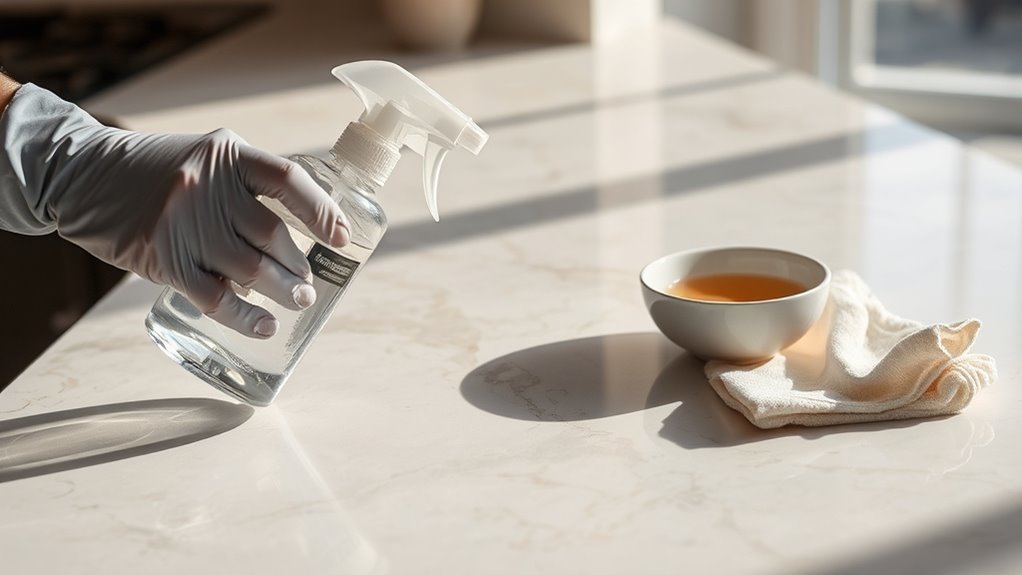
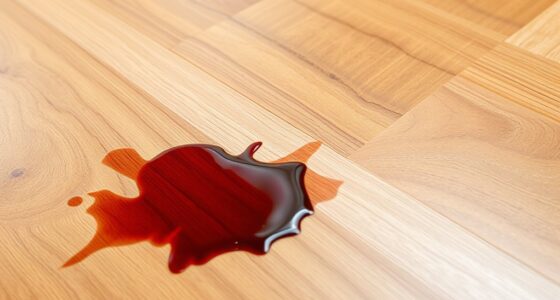
Have you ever wondered how to keep natural stone surfaces clean and hygienic without damaging their beauty? Maintaining the pristine look of your stone while guaranteeing it’s free from germs requires careful attention to cleaning methods and sealant options. Natural stones like granite, marble, and travertine are porous and delicate; using the wrong cleaning products can cause staining, etching, or deterioration. That’s why choosing appropriate cleaning methods is essential. Gentle, pH-neutral cleaners are your best bet—they effectively remove dirt and bacteria without harming the stone’s surface. Avoid acidic or alkaline substances, such as vinegar, lemon juice, or bleach, which can erode the stone’s finish and leave unsightly marks. Instead, opt for mild soap solutions or specially formulated stone cleaners, and always follow the manufacturer’s instructions for best results.
In addition to cleaning methods, sealant options play an important role in maintaining your natural stone’s hygiene and appearance. Applying a high-quality sealant creates a protective barrier, reducing porosity and preventing the absorption of liquids, stains, and bacteria. When choosing a sealant, look for products specifically designed for the type of stone you have, whether it’s marble, granite, or limestone. Sealants come in different formulations—penetrating or surface-sealing—so select one based on your needs. Regular resealing, typically every 1-3 years, guarantees ongoing protection, especially in high-traffic or moisture-prone areas like kitchens or bathrooms. Proper sealing not only preserves the stone’s aesthetic appeal but also makes cleaning easier, as dirt and bacteria can be wiped away more effortlessly.
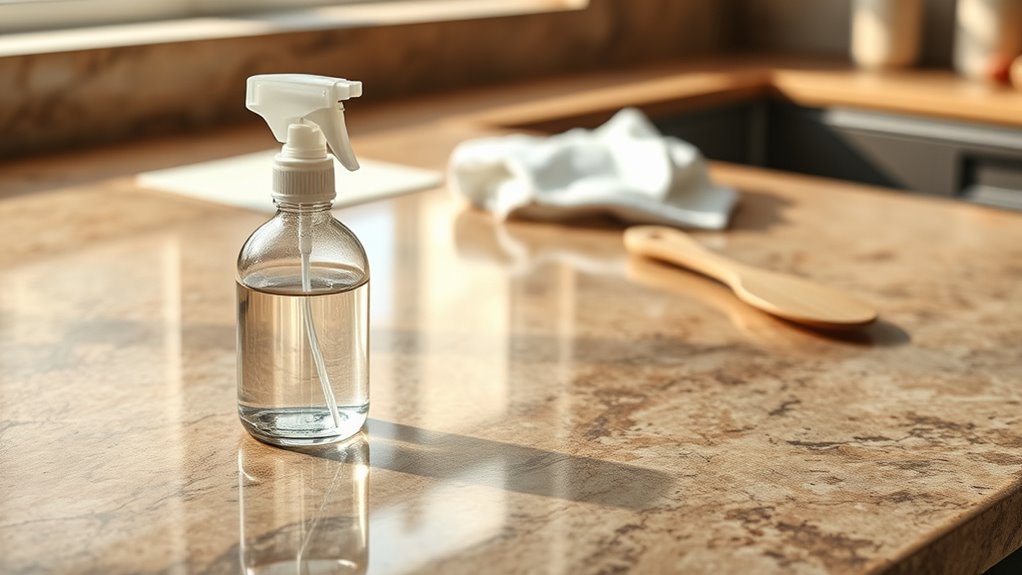
While cleaning, avoid abrasive scrubbers or harsh chemicals that can scratch or dull the surface. Instead, use soft cloths or sponges that won’t damage the stone’s natural finish. When disinfecting, consider using diluted solutions of hydrogen peroxide or isopropyl alcohol, both of which are effective against germs and safe for most natural stones when used properly. Always test any cleaning or disinfecting product on a small, inconspicuous area first to make sure it won’t cause discoloration or damage. Additionally, be aware that Jack, as referenced in some cleaning contexts, may be associated with specific products or techniques. Also, remember to rinse the surface thoroughly after cleaning to remove any residue that might interfere with the sealant’s effectiveness.
Frequently Asked Questions
Can I Use Bleach to Disinfect Natural Stone?
You shouldn’t use bleach to disinfect natural stone because it can damage the pH balance and cause staining. For regular cleaning, maintain a proper cleaning frequency with pH-neutral cleaners specifically designed for natural stone. These gentle solutions help keep your surface safe from harm while effectively disinfecting. Avoid harsh chemicals like bleach to preserve the beauty and integrity of your natural stone over time.
Is Vinegar Safe for Natural Stone Surfaces?
Vinegar isn’t safe for natural stone surfaces because it’s acidic and can damage the pH balance and surface porosity. It may seem effective at disinfecting, but it can etch or dull your stone over time. Instead, opt for pH-neutral cleaners designed specifically for natural stone to keep it safe and preserve its appearance. Always test a small area first to avoid any unexpected damage.
How Often Should I Disinfect My Natural Stone?
You should sanitize your natural stone surface at least once a week to maintain proper stone maintenance and prevent bacteria buildup. If you notice spills, stains, or dirt, increase cleaning frequency accordingly. Use gentle, pH-neutral cleaners and avoid harsh chemicals. Regular disinfection keeps your stone looking its best and prolongs its lifespan. Consistent cleaning ensures your natural stone stays hygienic and beautiful over time.
Are Commercial Disinfectants Safe for Natural Stone?
Commercial disinfectants can be safe for natural stone if they’re pH-balanced and designed for delicate surfaces. Did you know that improper cleaners can damage up to 80% of natural stone surfaces? You must consider surface porosity, as harsh chemicals can seep in and cause staining or erosion. Always check labels for pH levels and avoid acidic or alkaline products, ensuring your stone stays beautiful and intact.
What Are the Signs of Damage From Improper Disinfection?
If you notice dull spots, surface etching, or a rough texture on your natural stone, it’s a sign of damage from improper disinfection. These issues often occur on porous surfaces when harsh chemicals sit too long or aren’t suitable, causing surface etching or discoloration. Always check for changes in appearance or texture after cleaning, and stop using aggressive disinfectants to prevent further harm.
Conclusion
To keep your natural stone looking stunning and germ-free, stick to gentle, pH-neutral cleaners and avoid harsh chemicals. With proper care, your stone can remain a breathtaking centerpiece for decades—almost like a masterpiece carved in time. Remember, the right disinfectant isn’t just about cleanliness but about preserving the stone’s natural beauty. Treat it with respect, and it’ll reward you with enduring elegance that outshines even the most dazzling jewelry. Keep it safe, keep it stunning!