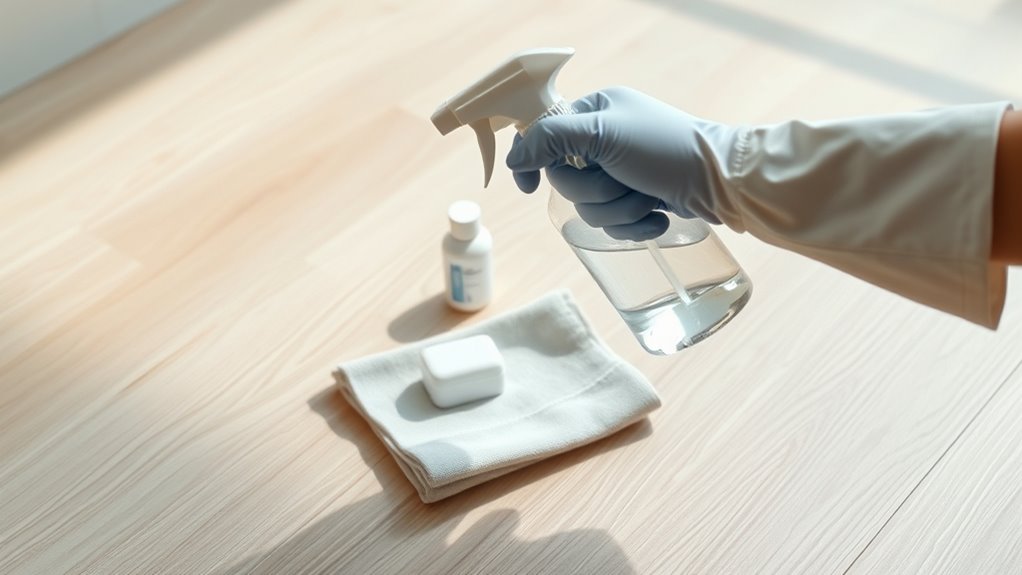
To disinfect your vinyl plank floors safely, use EPA-approved or manufacturer-recommended disinfectants, like diluted white vinegar or specific vinyl-safe commercial products, following the instructions closely. Avoid harsh chemicals like bleach, ammonia, or abrasive scrubbers that can cause damage or scratches. Focus on gentle cleaning methods, such as damp mops, and promptly wipe spills to prevent mold and stains. Keep exploring to make sure you’re maintaining your floors effectively and safely.

Get cleaning gear delivered free — and shop member deals
- Fast, free delivery on millions of items
- Access to Prime Big Deal Days deals on October 6–7
- Prime Video, Amazon Music and more included
Key Takeaways
- Use EPA-approved disinfectants safe for vinyl floors, following manufacturer instructions for proper dilution and contact time.
- Natural options like diluted white vinegar and water can disinfect without damaging the vinyl surface.
- Avoid harsh chemicals such as bleach, ammonia-based cleaners, and abrasive scrubbers that can harm the floor.
- Do not soak the floor with excess water or use waxes and polishes not designed for vinyl surfaces.
- Regularly clean with a damp mop and dry thoroughly to prevent moisture buildup and maintain surface integrity.
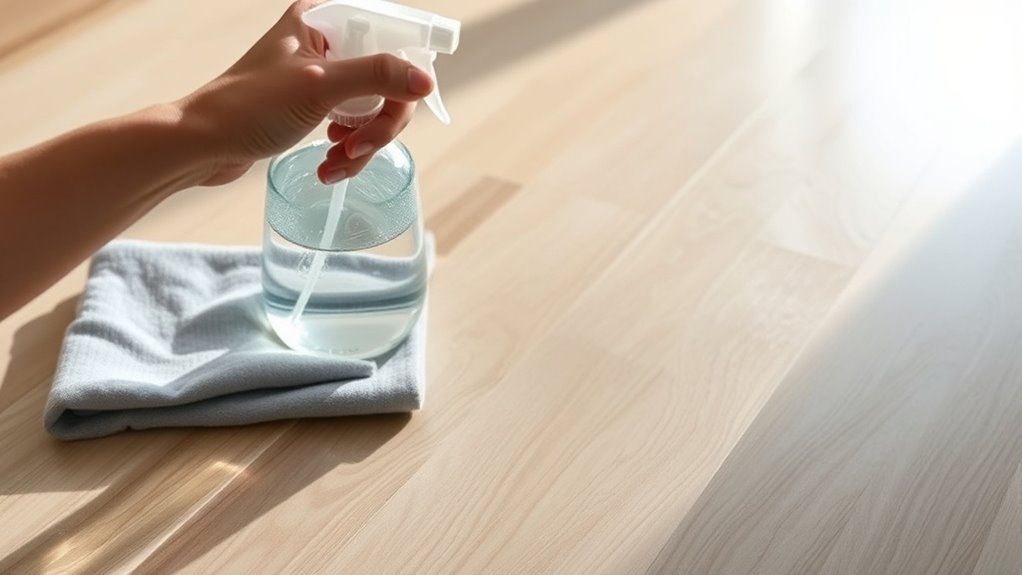
Have you ever wondered how to keep your vinyl plank flooring truly clean and sanitary? Maintaining a hygienic surface isn’t just about appearance; it’s about protecting your home from germs, mold, and bacteria. To do that effectively, you need to understand the importance of mold prevention and the right cleaning frequency. Vinyl planks are durable and resistant, but they’re still susceptible to mold growth if moisture gets trapped or cleaning isn’t consistent. Regular cleaning helps prevent mold spores from settling and multiplying, especially in areas prone to humidity or spills. You should aim to clean your floors at least once a week, but more frequent attention may be necessary in high-traffic or damp areas.
When it comes to disinfecting, the goal is to kill germs without damaging the surface. Using the right products is essential. Harsh chemicals, like bleach or ammonia-based cleaners, can degrade the vinyl over time and pose health risks. Instead, opt for gentle, EPA-approved disinfectants that are safe for use on vinyl floors. A diluted solution of white vinegar and water can be effective for routine cleaning, providing a natural disinfectant that also helps prevent mold. For stubborn stains or germs, you might consider a commercial disinfectant formulated specifically for vinyl floors, but always follow the manufacturer’s instructions for dilution and contact time.
It’s equally important to avoid certain substances that can harm your flooring or compromise its safety. Avoid abrasive scrubbers, steel wool, or harsh chemical cleaners, as these can scratch or dull the surface. Steer clear of waxes or polishes not designed for vinyl, since they can leave residues that trap dirt or create a slippery surface. Also, steer clear of excessive water — soaking the floor with too much liquid can seep into seams or cracks, fostering mold growth underneath. Instead, use a damp mop and dry the surface thoroughly afterward to prevent moisture buildup. Regular maintenance includes inspecting for moisture intrusion and addressing any issues promptly to maintain the integrity of your flooring.
In addition to choosing the right cleaning agents, maintaining proper cleaning frequency is key. Regular sweeping or vacuuming removes debris that can scratch or embed into the surface. Wiping up spills immediately prevents moisture from lingering, which could lead to mold or stain formation. By establishing a consistent cleaning routine, you not only keep your vinyl plank flooring looking great but also guarantee it remains safe and hygienic for everyone in your home. Remember, a little effort goes a long way in preserving the beauty and integrity of your floors.
Frequently Asked Questions
Can I Use Bleach on Vinyl Plank Flooring?
You shouldn’t use bleach on vinyl plank flooring because it can damage the surface and discolor it. Bleach safety is important, but for vinyl cleaning, opt for gentle disinfectants like diluted vinegar or a cleaner specifically designed for vinyl. These options effectively sanitize without harming your floors. Always follow manufacturer instructions and avoid harsh chemicals to keep your vinyl planks looking their best and safe from damage.
How Often Should I Disinfect Vinyl Planks?
You should sanitize your vinyl planks weekly or biweekly, depending on your household’s activity level. Establish a consistent cleaning frequency and disinfection schedule to keep your floors safe and spotless. Regular cleaning removes dirt and germs, while periodic disinfection ensures bacteria and viruses are eliminated. Adjust the schedule based on foot traffic or if someone’s sick. Staying consistent helps maintain your vinyl flooring’s appearance and hygiene effectively.
Are Natural Disinfectants Safe for Vinyl Flooring?
Yes, natural alternatives are generally safe for vinyl flooring, especially if you’re concerned about chemical concerns. You can use solutions like diluted vinegar or rubbing alcohol, which effectively disinfect without damaging the vinyl. Just make sure to avoid harsh chemicals or abrasive cleaners, as they can cause discoloration or surface damage. Always test a small area first and follow manufacturer guidelines to keep your flooring in great condition.
Will Vinegar Damage Vinyl Plank Surfaces?
Vinegar can be a double-edged sword for vinyl planks—while it’s a natural cleaner, it can chip away at their durability over time. If you use vinegar too often or let it sit, it could weaken the surface. To keep your vinyl flooring looking its best, stick to gentle cleaning frequency and avoid harsh acids. This way, your floors remain resilient, shining like a well-loved treasure.
What Is the Best Method to Disinfect Vinyl Safely?
To disinfect vinyl safely, you should use UV sanitizers or steam cleaning. UV sanitizers kill germs without chemicals, making them a great option for regular use. Steam cleaning uses high temperature steam to disinfect effectively without damaging the surface. Avoid harsh chemicals like bleach or ammonia, which can harm your vinyl planks. Regularly disinfect with these methods to keep your floors clean and germ-free without risking damage.
Conclusion
Think of disinfecting your vinyl plank like tending a delicate garden—choose gentle, effective solutions that nurture rather than harm. Avoid harsh chemicals that can damage its surface, just as you’d steer clear of weeds that threaten your blooms. With the right approach, your floor stays vibrant and resilient, much like a well-tended landscape. So, handle it with care, and your vinyl plank will continue to shine, a proof to your mindful touch.
Halloween Picks
halloween
As an affiliate, we earn on qualifying purchases.