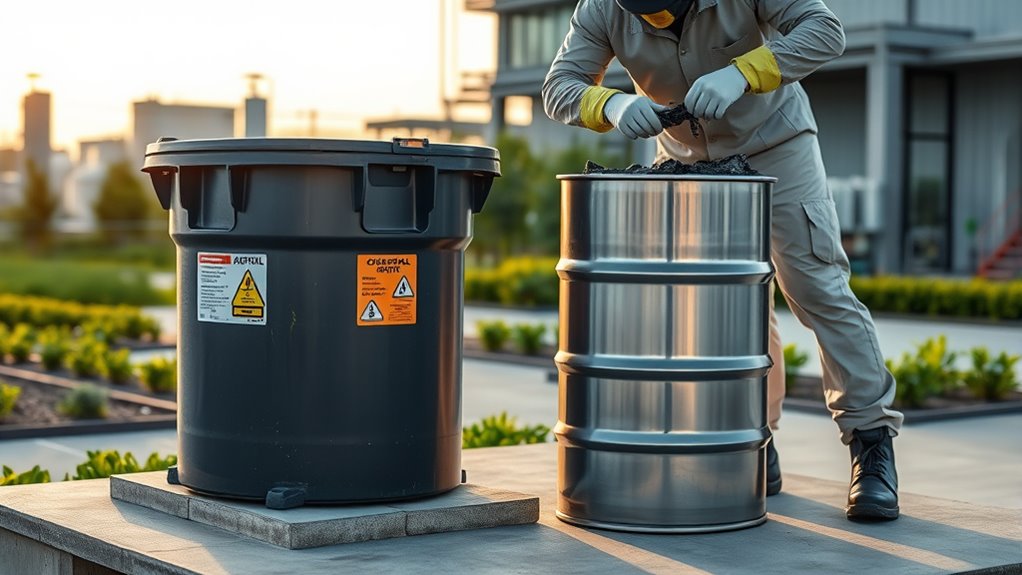

To dispose of dirty solutions legally and sustainably, you need to follow local, state, and federal waste disposal regulations. First, identify if your solution is hazardous and segregate it accordingly. Partner with licensed waste disposal providers that use eco-friendly methods, such as neutralization or on-site treatment. Keep detailed records of all activities to guarantee compliance and protect the environment. If you want to learn more about implementing best practices, continue exploring effective waste management strategies.

Get cleaning gear delivered free — and shop member deals
- Fast, free delivery on millions of items
- Access to Prime Big Deal Days deals on October 6–7
- Prime Video, Amazon Music and more included
Key Takeaways
- Identify if the solution contains hazardous substances and follow local, state, and federal regulations for disposal.
- Segregate and label the solution properly to prevent incompatible reactions and ensure safe handling.
- Partner with licensed waste disposal providers specializing in eco-friendly and sustainable waste management methods.
- Consider on-site neutralization or treatment to reduce environmental impact before disposal.
- Maintain detailed records of disposal activities, including manifests and treatment certificates, to demonstrate compliance.
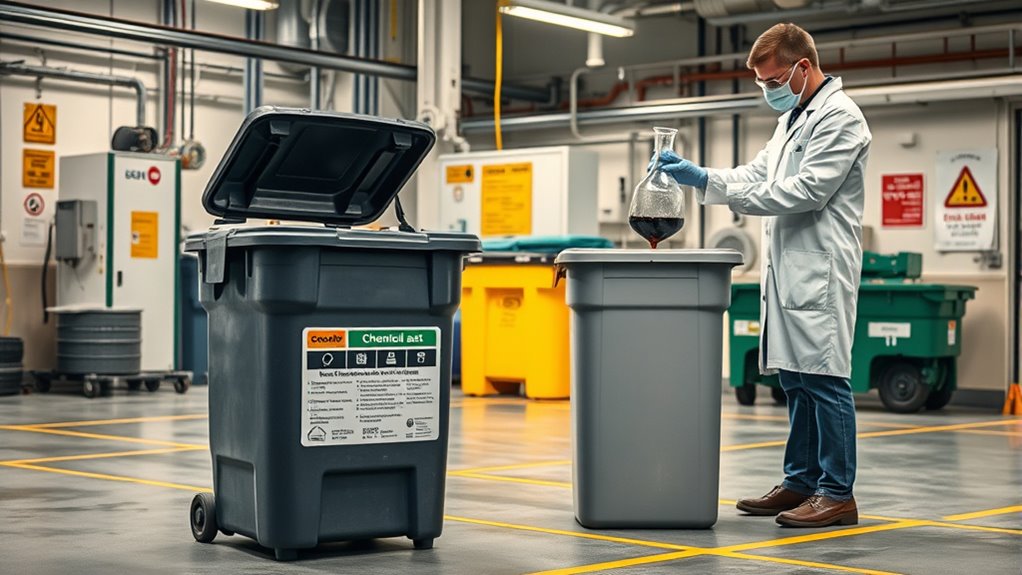
Disposing of dirty solutions responsibly is essential to protect the environment and stay compliant with regulations. When handling hazardous or contaminated liquids, understanding and adhering to chemical regulations is critical. These regulations are designed to prevent environmental contamination, protect public health, and ensure your business avoids costly penalties. To do this effectively, you need to be aware of local, state, and federal rules governing waste disposal. This includes knowing which substances are classified as hazardous waste and following specific procedures for their removal. Proper documentation, labeling, and storage are also part of compliance, helping you demonstrate responsible waste management to authorities.
Eco-friendly disposal methods are increasingly popular as businesses look to minimize their environmental impact. Instead of simply dumping waste, you can explore options that reduce pollution and conserve resources. For example, many solutions can be neutralized or treated on-site to make them less harmful before disposal. Using environmentally responsible techniques not only aligns with regulatory expectations but also enhances your company’s reputation. Implementing reuse or recycling strategies for certain chemicals can further promote sustainability, cutting down on waste and reducing the need for new raw materials.
To guarantee eco-friendly disposal, start by conducting a thorough waste assessment. Identify the types of solutions you generate and determine the safest, most sustainable disposal options available. Partnering with licensed waste disposal firms who specialize in eco-friendly methods can simplify compliance. These professionals understand the latest regulations and have the equipment to treat or recycle waste properly. They can also provide guidance on how to minimize waste generation through process improvements or alternative solutions.
Before disposal, always segregate waste based on its chemical composition. Mixing incompatible substances can cause dangerous reactions, posing health and safety risks. Proper labeling and storage are essential to prevent accidental exposure or environmental releases. Keep detailed records of waste disposal activities, including manifests, receipts, and treatment certificates, to demonstrate compliance during inspections or audits.
In addition to following legal requirements, adopting eco-friendly disposal practices benefits your business in the long run. It reduces potential liabilities, attracts environmentally conscious clients, and aligns your operations with sustainable business principles. Staying informed about new regulations and advances in waste treatment technology can help you refine your disposal processes continuously. For instance, understanding forex trading can help businesses better manage financial risks related to currency fluctuations that might impact operational costs or investments in sustainable practices. Ultimately, responsible disposal isn’t just about avoiding fines; it’s about actively protecting our planet and ensuring your operations remain sustainable and compliant for years to come.
hazardous waste disposal containers
As an affiliate, we earn on qualifying purchases.
As an affiliate, we earn on qualifying purchases.
Frequently Asked Questions
Can I Dispose of Dirty Solutions in Regular Household Trash?
You can’t just toss dirty solutions in regular household trash. Household disposal of such waste isn’t safe or legal, especially if they contain hazardous chemicals. You should follow proper waste segregation guidelines, separating hazardous from regular waste. Contact your local waste management or hazardous waste disposal center for proper disposal methods. This guarantees you’re disposing of dirty solutions responsibly, protecting the environment and your community from potential harm.
Are There Specific Permits Required for Disposing of Industrial Waste?
You might think industrial waste disposal is straightforward, but it actually requires specific permits. Industrial waste permits guarantee you meet regulatory compliance, preventing legal issues and environmental harm. Check with local and federal agencies, like the EPA, to determine if your waste qualifies as industrial. Securing the proper permits is essential before disposal, helping you stay compliant and avoid hefty fines. Always prioritize responsible waste management to protect the environment and your business.
How Do I Identify Hazardous Components in My Dirty Solution?
To identify hazardous components in your dirty solution, start with a thorough chemical analysis using appropriate testing methods. This helps you detect toxic or corrosive substances. Always wear safety equipment like gloves, goggles, and lab coats during testing to protect yourself. Once you identify hazards, you can determine proper disposal methods, ensuring safety and compliance with regulations. Regular testing keeps you aware of any changes in your solution’s composition.
What Are the Penalties for Illegal Disposal of Chemical Waste?
You might think illegal disposal of chemical waste won’t catch up with you, but the legal consequences can be severe. Authorities impose hefty environmental fines and criminal charges for improper disposal, risking hefty penalties and damage to your reputation. Staying compliant isn’t just smart—it’s essential. By understanding and following waste disposal regulations, you avoid costly fines and protect the environment, ensuring your business operates responsibly and sustainably.
Can I Recycle or Reuse the Dirty Solution Instead of Disposal?
You can often recycle or reuse dirty solutions by exploring recycling options and reuse strategies specific to your chemicals. Check if the solution can be purified or filtered for future use, or if it qualifies for industrial recycling programs. Always guarantee you follow safety guidelines and local regulations. Reusing solutions not only reduces waste but also supports sustainable practices, saving costs and minimizing environmental impact.
Conclusion
By following proper disposal methods, you can stay compliant and protect the environment. Some might think sustainable options are too costly or complicated, but investing in eco-friendly disposal is worth it—saving you from legal trouble and helping the planet. Don’t let concerns hold you back; taking responsible action today guarantees a safer, cleaner future for everyone. Make the effort to dispose of dirty solutions properly, and you’ll reap the benefits in the long run.
Fall Picks
fall essentials
As an affiliate, we earn on qualifying purchases.