To effectively document cleaning procedures for audits, you should create a detailed schedule outlining tasks, responsible staff, and their frequency, and keep logs with dates, times, and task details. Proper training records and visual proof like photos or videos enhance credibility. Store and back up records securely, ensuring easy access for review. Regularly review and update your documentation to close gaps and maintain standards. Keep going to discover how to implement these practices seamlessly and stay audit-ready.

Get cleaning gear delivered free — and shop member deals
- Fast, free delivery on millions of items
- Access to Prime Big Deal Days deals on October 6–7
- Prime Video, Amazon Music and more included
Key Takeaways
- Develop a detailed cleaning schedule specifying tasks, frequency, and responsible staff members.
- Maintain comprehensive records of cleaning activities, including dates, times, and visual evidence.
- Document staff training sessions, including topics covered, dates, and trainers, to ensure proper execution.
- Organize records securely, regularly back up digital files, and ensure easy retrieval for audits.
- Conduct periodic reviews of documentation to identify gaps, update procedures, and demonstrate continuous improvement.

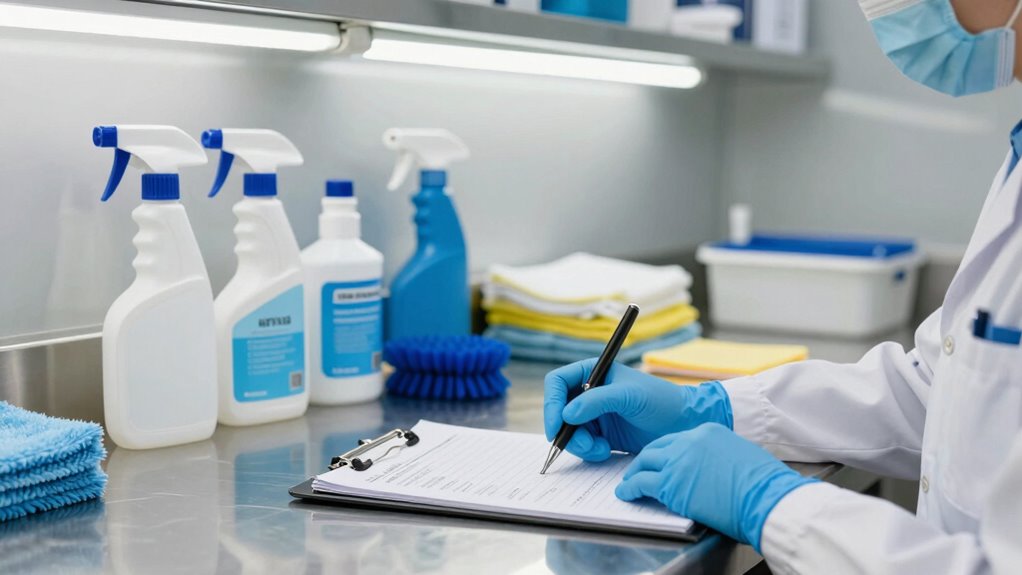
When preparing for an audit, properly documenting your cleaning procedures is essential to demonstrate compliance and maintain quality standards. A well-organized cleaning schedule is the backbone of your documentation. It clearly outlines what tasks need to be done, how often they should be performed, and who is responsible for each duty. This schedule not only keeps your team accountable but also provides auditors with concrete evidence that cleaning is systematic and consistent. Confirm your cleaning schedule is detailed, up-to-date, and accessible to all staff members, making it easy for them to follow and for auditors to review. Regular updates to your procedures can help ensure ongoing compliance with conservation principles and environmental standards. Staff training plays a critical role in guaranteeing your cleaning procedures are properly executed and documented. When staff members understand the importance of their roles, they’re more likely to perform tasks correctly and record their activities accurately. Documenting staff training sessions, including dates, topics covered, and trainer details, demonstrates that your team is equipped with the necessary knowledge and skills. Regular training updates should be scheduled and recorded to show ongoing commitment to maintaining high standards. This documentation also helps verify that all personnel are aware of any procedural changes or new protocols introduced over time. To effectively document your cleaning procedures, you should maintain detailed records of each cleaning activity. This includes logs or checklists that specify the date and time of cleaning, the specific tasks completed, and the staff member responsible. These records serve as proof that cleaning tasks are carried out according to your schedule and standards. Incorporating visual evidence such as photographs or videos where appropriate can enhance your documentation, especially for areas that require visual confirmation of cleanliness. Additionally, make sure all documentation is organized and stored securely, either digitally or physically. Digital records should be backed up regularly to prevent data loss. Consistency is key—your documentation should be uniform across all departments and easily retrievable during an audit. Periodic record reviews can help identify gaps or inconsistencies, allowing you to address issues proactively and improve overall documentation practices, which are crucial for demonstrating compliance. Maintaining accurate records also supports ongoing compliance monitoring and continuous improvement efforts.
digital cleaning schedule software
As an affiliate, we earn on qualifying purchases.
As an affiliate, we earn on qualifying purchases.
Frequently Asked Questions
How Often Should Cleaning Procedures Be Reviewed and Updated?
You should review and update cleaning procedures regularly, typically at least annually, to guarantee cleaning frequency remains effective and documentation accuracy stays high. Factors like changes in regulations, equipment, or processes may require more frequent updates. Consistent reviews help identify gaps, improve procedures, and maintain compliance. By keeping your documentation accurate and current, you ensure your cleaning practices are reliable, audit-ready, and aligned with industry standards.
Who Is Responsible for Maintaining Cleaning Documentation?
You are responsible for maintaining cleaning documentation, making certain it accurately reflects current cleaning protocols. You should regularly review and update the documentation, especially after staff training sessions or changes in procedures. It’s essential to keep the records clear, organized, and accessible. By doing so, you help guarantee staff training remains effective, and the cleaning protocols stay compliant with audit requirements, ultimately supporting a safe and compliant environment.
What Tools Are Recommended for Documenting Cleaning Activities?
You should use digital tools like electronic cleaning schedules and maintenance logs to document cleaning activities effectively. These tools help you track cleaning schedules, monitor equipment maintenance, and guarantee compliance. By maintaining detailed records, you can easily verify that all cleaning tasks are completed on time and equipment is properly maintained. Using software or digital forms simplifies documentation, improves accuracy, and makes audit preparation more efficient.
How Do You Handle Undocumented Cleaning Discrepancies?
Think of yourself as a detective uncovering the truth. When you encounter undocumented cleaning discrepancies, you act swiftly to guarantee cleaning consistency. Start by investigating the discrepancy thoroughly, noting all details, and documenting your findings. By doing so, you maintain audit readiness and prevent recurrence. This proactive approach not only ensures compliance but also reinforces your commitment to high standards and quality control.
Can Digital Records Replace Paper Documentation for Audits?
Yes, digital records can replace paper documentation for audits through a successful digital migration. Using paper alternatives like electronic logs and cloud-based systems streamlines your process, making it easier to access, update, and secure your cleaning procedures. Digital documentation enhances compliance by providing clear, organized records that are easy to audit. Just make certain your digital systems are validated and backed up regularly to meet audit standards effectively.
Conclusion
By thoroughly documenting your cleaning procedures, you’re building a sturdy bridge that guides auditors smoothly across your quality standards. Clear, detailed records act as your trusty map, showing exactly how you maintain cleanliness and compliance. Keep your documentation accurate and up-to-date, and you’ll turn the often intimidating audit process into a walk in the park. Remember, well-kept records aren’t just paperwork—they’re the keys to opening trust and excellence in your operations.
Fall Picks
fall essentials
As an affiliate, we earn on qualifying purchases.