For laminate floors, use a dry mop for regular dusting and sweeping to prevent moisture damage and keep the finish intact. Save damp mops for deeper cleaning after spills or heavy dirt buildup, but only slightly dampen to avoid warping. Knowing when to switch between dry and damp cleaning helps protect your floors and extend their life. Want tips on choosing the right method for every situation? Keep going for more helpful insights.
Listen free for 30 days with Audible
Thousands of audiobooks and originals — cancel anytime.
As an affiliate, we earn on qualifying purchases.
Key Takeaways
- Dry mops are ideal for daily dusting and sweeping to prevent dirt buildup without water damage.
- Damp mops are best for periodic deep cleaning and removing stubborn stains or sticky spots.
- Use a slightly damp cloth and proper cleaning solutions to avoid excess moisture that can warp laminate floors.
- Regularly alternate between dry and damp cleaning routines to maintain floor appearance and longevity.
- Avoid harsh chemicals and excessive water to prevent swelling, warping, or damage to laminate surfaces.
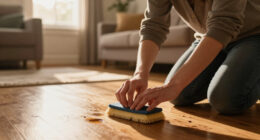
When it comes to maintaining the appearance of your laminate floors, choosing the right cleaning method makes a big difference. One of the most important decisions you’ll face is whether to use a dry mop or a damp mop during your cleaning routines. Your choice depends largely on the cleaning frequency and the specific maintenance routines you follow. If you clean your floors regularly, a dry mop can be enough to keep dust and debris at bay without risking damage. For more thorough cleaning, especially after high-traffic days or spills, a damp mop might be necessary, but it has to be used carefully.
Choosing between dry and damp mops depends on cleaning frequency and routine to protect laminate floors.
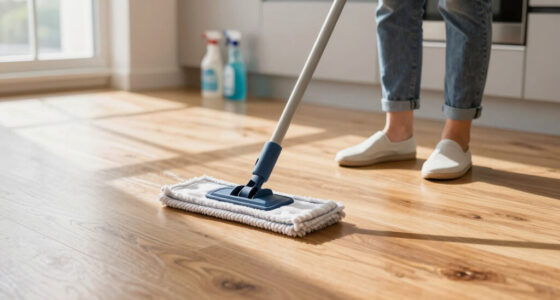
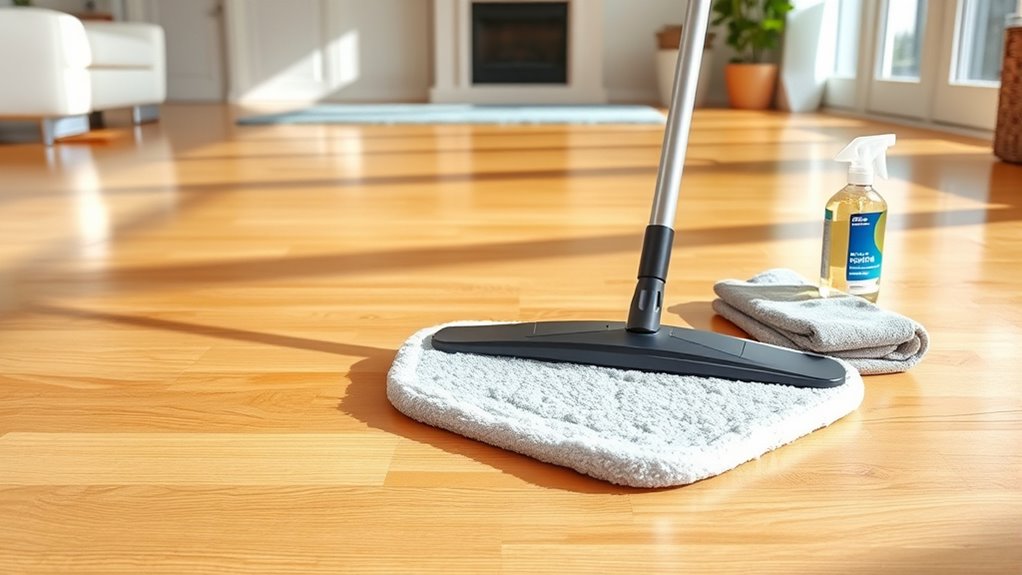
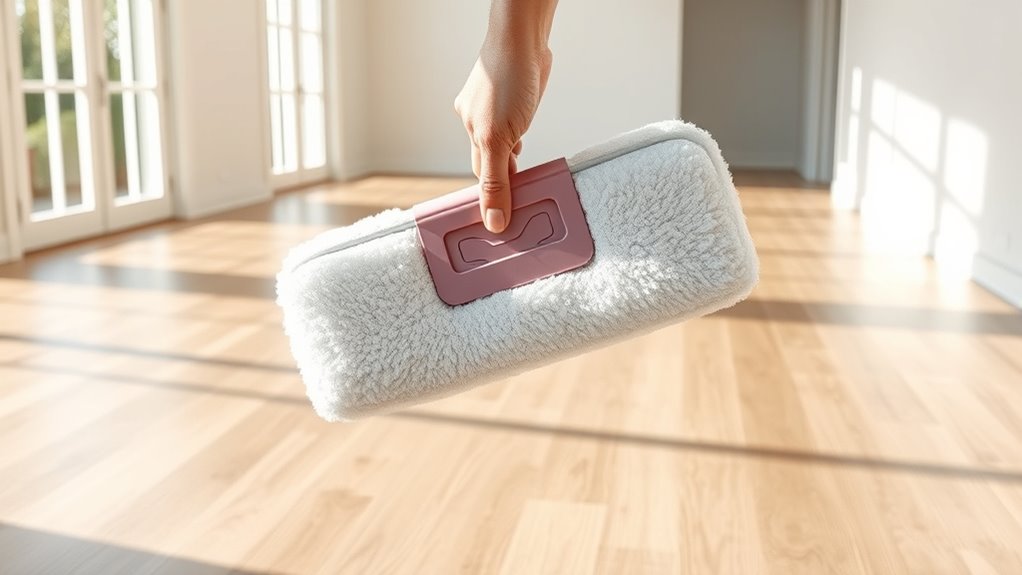
A dry mop is typically lightweight and easy to maneuver, making it ideal for daily dusting or sweeping. It effectively lifts dirt, pet hair, and crumbs without introducing moisture that could seep into the seams or warp the laminate. If your maintenance routines involve sweeping or dusting every day, a dry microfiber cloth or mop is your best bet. It minimizes the risk of water damage, which is *vital* since excess moisture can cause the laminate to swell or warp over time. By sticking to dry cleaning, you prolong the lifespan of your floors and keep their finish looking fresh.
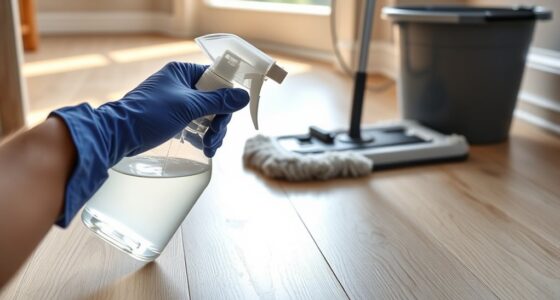
However, when your floors accumulate sticky spots, footprints, or stubborn dirt, a damp mop becomes more effective. But here’s the key: you should never drench the mop. Wring it out thoroughly so it’s just slightly damp, not wet. Using a damp mop with the proper cleaning solutions—preferably a laminate floor cleaner or a mixture of water and a few drops of mild dish soap—can effectively remove grime without harming the surface. Remember, frequent use of a damp mop isn’t necessary; it’s best reserved for periodic deep cleaning or when your maintenance routines call for a more thorough refresh.
Additionally, understanding the impact of moisture on laminate flooring will help you make better cleaning choices and avoid costly damage over time. Timing is everything. For routine cleaning, stick with dry mopping. Save damp mopping for when you notice buildup or after spills. Also, avoid harsh chemicals, abrasive tools, or excessive water, as these can deteriorate the laminate’s finish over time. Regular cleaning frequency—such as dusting daily and damp mopping weekly—helps maintain your floors’ appearance and structural integrity. Ultimately, understanding when to use each method will help you balance cleanliness with longevity, ensuring your laminate floors stay beautiful for years to come.

BPAWA Microfiber Mops for Floor Cleaning: Flat Mop for Hardwood Tile Wood
- Adjustable Length Handle: Extends from 32 to 59 inches
- Reusable Washable Pads: Includes 4 durable, super absorbent pads
- Lightweight and Sturdy Design: Flexible for easy maneuvering
As an affiliate, we earn on qualifying purchases.
As an affiliate, we earn on qualifying purchases.
Frequently Asked Questions
Can I Use Vinegar to Clean Laminate Floors?
You can use vinegar cleaning for laminate maintenance, but it’s best to do so sparingly. Mix a small amount of vinegar with water to create a gentle cleaning solution, avoiding harsh concentrations that could damage your floor. Always damp mop—never soak the floor—and quickly dry it afterward. Vinegar cleaning is effective for removing grime, but overuse may dull your laminate’s finish, so use it cautiously and sparingly.
How Often Should I Damp Mop Laminate Flooring?
You should damp mop your laminate flooring once a week to keep it clean and well-maintained. Regular mopping prevents dirt buildup, reduces scratches, and maintains shine. Follow maintenance tips like using a damp, not wet, mop and avoiding harsh chemicals. Mopping frequency depends on foot traffic—more often in busy areas—and guarantees your floors stay pristine and durable. Stick to this routine for long-lasting, beautiful laminate floors.
Is Steam Cleaning Safe for Laminate Floors?
Steam cleaning isn’t safe for laminate floors because the high heat and moisture pose risks, like warping or swelling. While it might seem effective, the intense steam can damage the laminate’s surface and compromise its safety. To protect your flooring, stick to damp or dry mopping methods. These are gentler, help maintain the laminate’s integrity, and prevent potential risks associated with steam cleaning.
What Cleaning Products Are Best for Laminate Surfaces?
Imagine a gentle rain washing over your laminate surface, restoring its shine without damage. For laminate maintenance, use mild, pH-balanced cleaning products specifically designed for laminate floors. Avoid harsh chemicals or abrasive cleaners. Pair these with soft cleaning tools like microfiber mops or cloths to prevent scratching. Regularly using these products and tools keeps your floors looking pristine, highlighting their natural beauty while preserving their durability.
Can I Use a Regular Mop on Laminate Floors?
You can use a regular mop on laminate floors, but choose the right type. A microfiber or flat mop works best for cleaning methods, as they’re gentle and effective. Avoid soaking the mop in water; instead, dampen it lightly to prevent damage. Dry mops are great for dusting, while damp mops handle stains. Always follow manufacturer recommendations for your specific laminate flooring to keep it looking its best.
Conclusion
Choosing between dry and damp mops for your laminate floors is like finding the perfect brushstroke for a beautiful painting. A dry mop keeps your floor shining like a mirror, while a damp mop gently cleanses away dirt, revealing its true luster. When you strike the right balance, your floors stay pristine and inviting—like a well-tended garden in full bloom. So, pick your method wisely, and let your floors tell a story of care and shine.
Back to school Picks
back to school
As an affiliate, we earn on qualifying purchases.