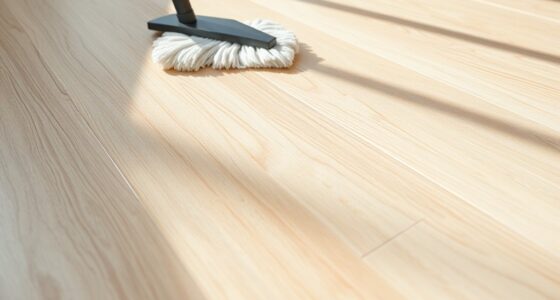
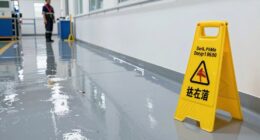
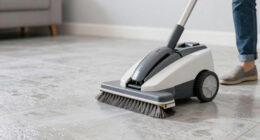
For polished concrete floors, dry mops are best for quick dusting and debris removal, maintaining shine and preventing dullness. Use damp mops for deeper cleaning, especially to lift stains, grease, or chemical residues, but be careful not to oversaturate the surface. Switching between dry and damp mops based on your needs keeps your floor looking its best and extends its lifespan. To discover the right technique for your space, keep exploring the best practices.
Key Takeaways
- Use dry mops for routine dusting and debris removal to maintain shine and prevent dirt buildup.
- Employ damp mops for deep cleaning, stain removal, and breaking down chemical residues effectively.
- Avoid oversaturating the floor with water during damp mopping to prevent long-term damage.
- Combine both methods regularly for optimal polish protection and extended floor lifespan.
- Properly wring damp mops and dry the surface afterward to prevent moisture-related cracks or damage.

Polished concrete floors require regular cleaning to maintain their shine and durability, but choosing between a dry or damp mop can make a difference. The decision impacts not only how well your floor looks but also how effectively you handle different types of dirt, stains, and chemical residues. A dry mop is excellent for quick dusting and picking up loose debris, while a damp mop offers deeper cleaning, especially when dealing with stubborn stains or chemical residues. Knowing when to use each method ensures your floor stays pristine without unnecessary wear or damage.
Regularly choose between dry and damp mops to keep polished concrete floors spotless and protected.
When it comes to chemical cleaning, a damp mop is typically your best choice. If you need to remove grease, adhesives, or other chemical stains, using a damp mop helps dilute and lift these substances from the surface. It allows cleaning solutions to work more effectively, breaking down residues without scratching or dulling the polished finish. For routine stain removal, a damp mop with a pH-neutral cleaner can quickly tackle spots caused by spills or dirt tracked in from outside. Just be cautious not to oversaturate the floor, as excess water can seep into seams or cracks and cause long-term damage.
On the other hand, a dry mop is ideal for maintaining the shine on your polished concrete and prevents the buildup of dust and fine particles that can dull its appearance. Regular dry mopping helps keep the surface free of surface dirt that can scratch or dull the finish over time. It’s especially useful between deep cleans or after chemical cleaning sessions, to remove any remaining dust or residue left behind. In environments where dust or debris is prevalent, frequent dry mopping ensures the surface remains smooth and reflective.
While damp mops are effective for deep cleaning and stain removal, they require careful use to avoid excess moisture. Always wring out your damp mop thoroughly before use, and dry the floor afterward if needed, to prevent water from penetrating the concrete. Conversely, dry mops are quick and convenient, requiring no solutions or rinsing, making them perfect for daily maintenance. Combining both methods—dry mopping regularly to keep debris at bay and damp mopping periodically for chemical cleaning or stain removal—provides an extensive approach for maintaining polished concrete floors.
Additionally, choosing appropriate cleaning tools and understanding the properties of polished concrete can help prevent damage and extend the lifespan of your floors.

Microfiber Mops for Hardwood Floor Cleaning – BPAWA Flat Floor Mop with 4 Washable Pads for Laminate Wood Tile Vinyl Home Kitchen Bathroom – 59" Adjustable Handle
Microfiber Mops for Floor Cleaning: Flat floor mop with adjustable long handle, flexible lightweight but sturdy, great for…
As an affiliate, we earn on qualifying purchases.
As an affiliate, we earn on qualifying purchases.
Frequently Asked Questions
How Often Should I Dry Mop My Polished Concrete Floor?
You should dry mop your polished concrete floor at least once a week to maintain its shine and prevent dirt buildup. Incorporate this into your regular maintenance schedule, especially if you notice dust or debris accumulating. If your space is high-traffic, consider dry mopping more frequently, like every few days. Consistent dry mopping keeps your floor looking fresh, prolongs its life, and minimizes the need for deep cleaning.
Can I Use Vinegar to Damp Mop Polished Concrete?
Ever wonder if vinegar is safe for your polished concrete? While vinegar is an acidic cleaner, it’s not recommended for damp mopping because it can damage the surface over time. Instead, use pH-neutral or specially formulated sealing solutions to keep your floor looking its best. Acidic cleaners like vinegar may break down the sealant, leading to stains or deterioration. Stick to gentle, concrete-specific products for long-lasting shine and protection.
What Cleaning Products Are Safe for Polished Concrete?
You should use pH-neutral cleaners specifically designed for polished concrete to keep it safe. Avoid harsh chemical cleaners that can damage the surface. Stick with gentle, non-abrasive solutions and regularly damp mop with water or a mild cleaner. Consider sealing solutions periodically to protect the finish. Always read product labels and test in a small area first to verify compatibility, maintaining that sleek, polished look without harm.
How Do I Prevent Streaks When Damp Mopping?
Did you know that improper mopping techniques can cause streaks on polished concrete? To prevent this, use a clean, well-wrung damp mop, focusing on consistent pressure and overlapping strokes. Regular cleaning frequency helps avoid dirt buildup, reducing streaks. Always rinse your mop frequently and switch to a clean section of the pad. By following these tips, you’ll keep your polished concrete looking shiny and streak-free with minimal effort.
Is Steam Cleaning Suitable for Polished Concrete Floors?
Steam cleaning can be suitable for polished concrete floors if done carefully, but it’s not always ideal for regular maintenance. It’s best to use it sparingly and only occasionally, as part of your cleaning schedule, to avoid damage. Regular dry or damp mopping is usually enough for polished concrete maintenance. Always test a small area first, and make certain your steam cleaner has adjustable settings to prevent excessive moisture or heat.

6' Courtclean Damp Mop System
Effective Cleaning: Features a 100% cotton towel that efficiently absorbs dust, dirt, and moisture for a thorough clean…
As an affiliate, we earn on qualifying purchases.
As an affiliate, we earn on qualifying purchases.
Conclusion
Whether you choose to dry mop or damp mop your polished concrete, the goal remains the same: maintain its shine, preserve its durability, and keep it looking its best. Dry mopping quickly removes dust and debris, while damp mopping effectively tackles stains and grime. Both methods serve their purpose—so pick what suits your needs, use it consistently, and enjoy a stunning, long-lasting polished concrete surface that’s always ready to impress.

Zep Neutral PH Industrial Floor Cleaner – 1 Gallon – ZUNEUT128 – Concentrated Pro Trusted All-Purpose Floor Cleaner
Maintains polish without stripping protective coating
As an affiliate, we earn on qualifying purchases.
As an affiliate, we earn on qualifying purchases.

CLEANHOME Microfiber Dust Mop for Hardwood Floor Cleaning, Dry and Wet Baseboard and Floor Duster, Household Cleaning Tool for Kitchen, Bathroom
Microfiber Dust Mop for Deep Cleaning:The microfiber mop designed to excel as a floor mop for deep cleaning….
As an affiliate, we earn on qualifying purchases.
As an affiliate, we earn on qualifying purchases.