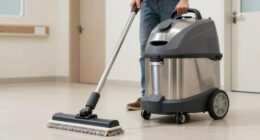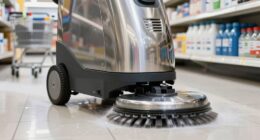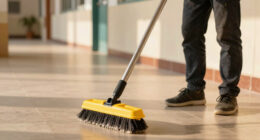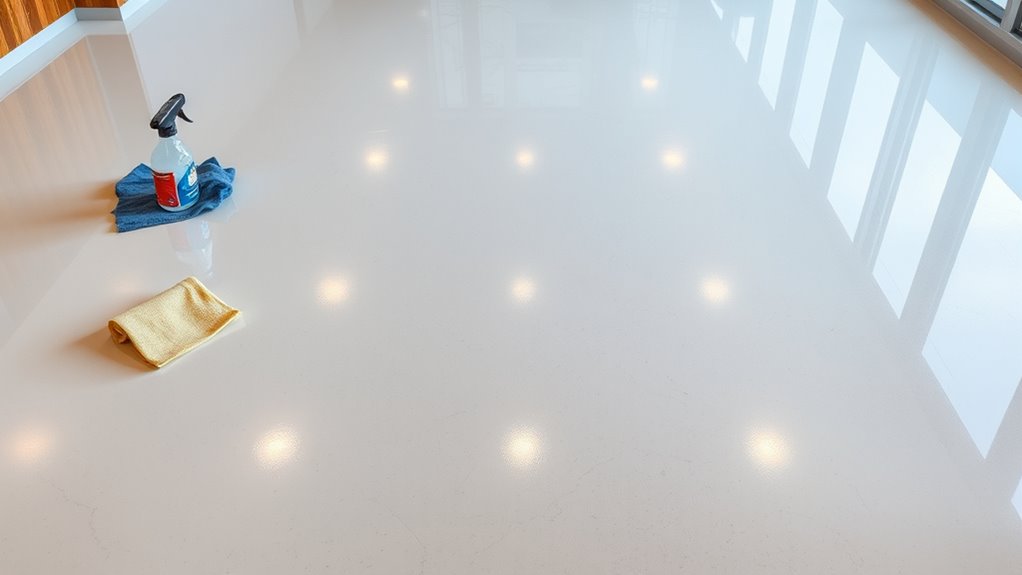

Many people make common mistakes when cleaning epoxy floors, like using excess water, harsh chemicals, or abrasive tools that can damage the surface. Rushing cleaning or neglecting regular maintenance also leads to dullness and scratches. To keep your floors looking their best, it’s best to use gentle, damp mops with microfiber heads and avoid harsh cleaners or scouring pads. Stay tuned to discover easy fixes that will protect and preserve your epoxy surface for years to come.
Key Takeaways
- Avoid using excessive water or soaking the floor, as it can cause streaks and damage the epoxy surface.
- Steer clear of harsh chemicals like bleach or ammonia that can dull or strip the epoxy’s protective layer.
- Don’t neglect regular sweeping and cleaning, which prevent dirt buildup that can scratch or dull the finish.
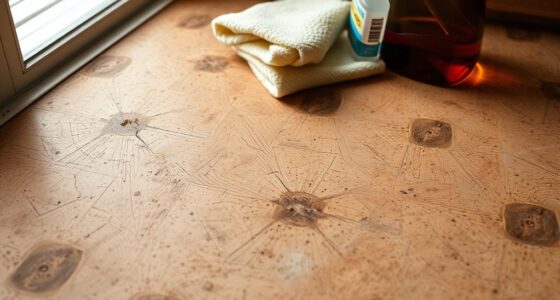
- Refrain from using abrasive scrubbers or stiff brushes that scratch the epoxy surface.
- Always wring out the mop thoroughly and dry the floor after cleaning to prevent water damage and streaks.
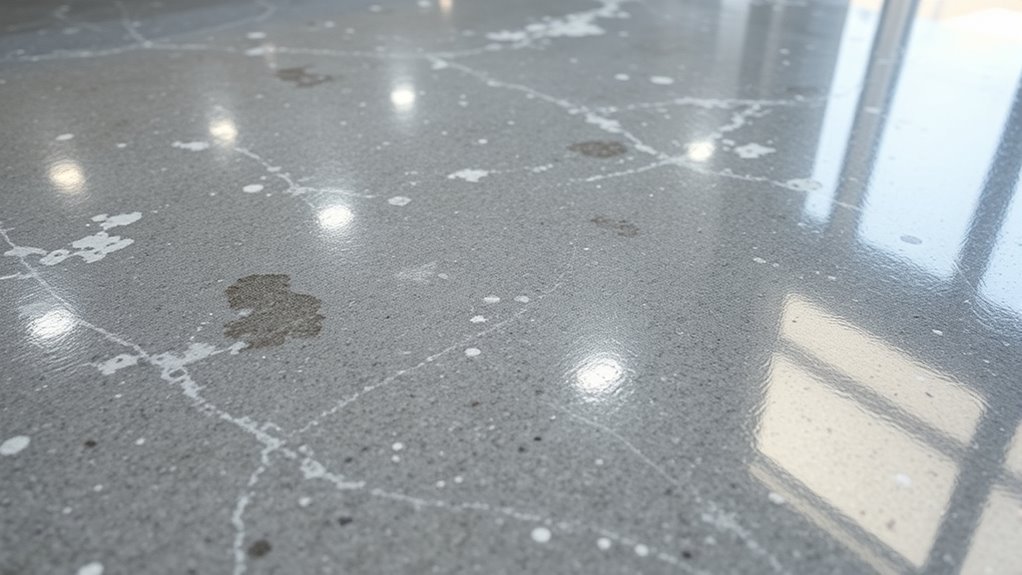
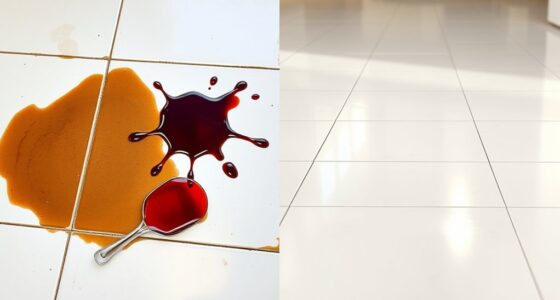
Cleaning epoxy floors might seem straightforward, but making common mistakes can damage their finish and reduce their lifespan. One of the biggest errors people make is using improper mopping methods. You might think that soaking the floor with excessive water or using a rough mop is okay, but that can lead to streaks, dullness, or even damage to the epoxy coating. Instead, opt for a damp mop with a microfiber head, which cleans effectively without leaving excess moisture. Make sure you wring out the mop thoroughly so that it’s just damp, not soaking wet. This prevents water from seeping into cracks or seams, which can weaken the epoxy over time. Additionally, avoid scrubbing aggressively, as abrasive motions or stiff brushes can scratch or dull the finish. Gentle, controlled mopping is the best way to maintain the shine and integrity of your epoxy floor.
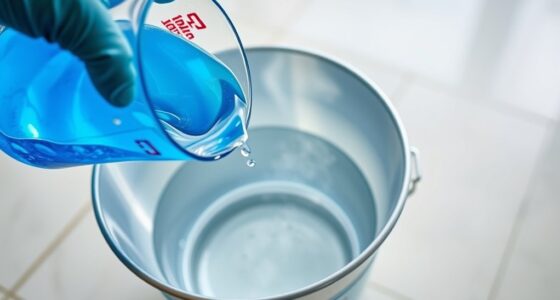
Another common mistake involves your cleaning product choices. Many people reach for harsh chemicals like ammonia, bleach, or abrasive cleaners, believing they’ll get the floor spotless. However, these substances can strip away the epoxy’s protective layer, causing it to become dull or discolored. Instead, choose pH-neutral, epoxy-safe cleaning solutions that are specially formulated for coated surfaces. Simple solutions like mild dish soap diluted in water often do the trick for regular maintenance. For tougher stains, you can use a mixture of water and a small amount of vinegar, but always test a small area first to ensure it doesn’t affect the finish. Avoid using steel wool, scouring pads, or any abrasive scrubbers, as they can scratch the surface and diminish its smooth appearance.
It’s also a mistake to neglect regular cleaning or to clean infrequently, thinking your epoxy floor can take care of itself. Regular sweeping removes dirt and debris that can act as abrasives if left to grind into the surface when you mop. When you do deep clean, always follow up with a proper rinsing and dry the floor thoroughly to prevent water spots or streaks. Using the right mopping methods combined with appropriate cleaning product choices will extend the life of your epoxy floors and keep them looking their best. Remember, patience and care go a long way in preserving the glossy, durable finish that makes epoxy floors so attractive and resilient. Incorporating proper maintenance techniques can significantly prolong the appearance and durability of your epoxy surfaces.

Oreck Commercial Orbiter Hard Floor Cleaner Machine, Multi-Purpose Floor Cleaning, Random Orbital Drive, Wide Cleaning Path, 50-Foot Long Cord, ORB550MC, Gray/Red
MULTI-PURPOSE CLEANING: Commercial grade cleaner and effective on all types of flooring surfaces. Sand, refinish, strip, scrub, wax,...
As an affiliate, we earn on qualifying purchases.
Frequently Asked Questions
Can I Use Vinegar to Clean Epoxy Floors?
You shouldn’t use vinegar to clean epoxy floors because of vinegar dangers. Cleaning with vinegar can break down the epoxy’s protective coating over time, leading to dullness or damage. Instead, opt for a pH-neutral cleaner or a gentle soap mixed with water. This way, you keep your epoxy floors shiny and protected, avoiding the risks associated with cleaning with vinegar. Always check manufacturer recommendations before cleaning.
How Often Should I Deep Clean My Epoxy Floors?
You should deep clean your epoxy floors every 1-3 months, depending on foot traffic and dirt buildup. Use proper mopping techniques with a damp mop and a gentle cleaner to avoid damage. Regular cleaning helps maintain their shine and durability. If you notice stubborn stains or grime, increase cleaning frequency temporarily. Consistent deep cleaning guarantees your epoxy floors stay looking fresh and last longer.
Are There Eco-Friendly Cleaning Options for Epoxy Floors?
Yes, you can opt for eco-friendly cleaning options for your epoxy floors. Using natural solutions like vinegar diluted with water or a gentle dish soap can effectively clean without harsh chemicals. These eco-friendly cleaning methods are safe for the environment and your family, helping maintain the epoxy’s shine. Regularly using natural solutions keeps your floors clean and prolongs their lifespan while reducing your carbon footprint.
What Temperature Is Best for Cleaning Epoxy Floors?
You should keep the temperature between 60-80°F when cleaning epoxy floors. Temperature control helps prevent damage to the epoxy surface and guarantees cleaning solutions work effectively. Avoid using hot water, as it can soften or discolor the epoxy, and cold water may be less effective at cleaning. Stick to this ideal range to maintain your floor’s durability and appearance, and always use appropriate cleaning solutions for the best results.
Can I Use a Steam Cleaner on Epoxy Flooring?
You might think steam cleaning is a quick fix, but it’s not ideal for epoxy floors. Using a steam cleaner can actually strip away your wax coatings and cause damage over time. Instead, opt for gentle cleaning methods that preserve your epoxy’s shine. Steam cleaning isn’t worth the risk, so stick to mild detergents and soft cloths to keep your floors looking their best without the unintended consequences.

Battery Powered Walk Behind Mini Automatic Floor Scrubber Machine – Compact & Portable, 15” Cleaning Width, 90-Minute Runtime, 170 RPM – Ideal for Small Commercial Spaces, Offices, Retail & More
Compact & Efficient Cleaning – Designed for small commercial spaces, this mini automatic floor scrubber features a 15-inch...
As an affiliate, we earn on qualifying purchases.
Conclusion
Now that you know the common epoxy floor cleaning mistakes, you’re armed with the secret recipe for a sparkling, resilient surface. Think of your floor as a delicate dance partner—treat it with gentle care, and it’ll shine like a star on a clear night. Avoid these pitfalls, and your epoxy floors will stay vibrant and flawless, like a masterpiece that tells a story of care and attention. Keep cleaning smart, and let your floors steal the show.
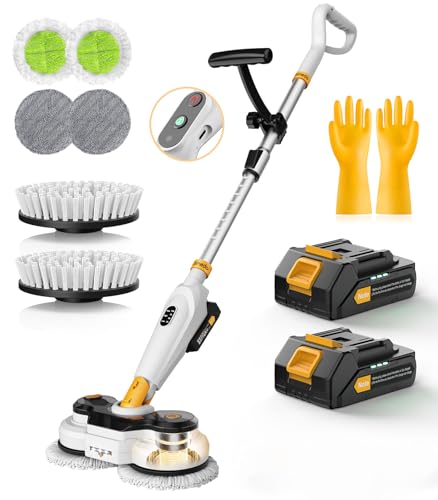
qimedo Battery Electric Mop M3, 800RPM Cordless Electric Power Scrubber & Mops for Floor Cleaning, Best Automatic Spin Mops with Smart Display,Rotating Mop with LED Light & Water Spray
【𝐈𝐧𝐧𝐨𝐯𝐚𝐭𝐢𝐯𝐞 𝐇𝐢𝐠𝐡 𝐑𝐏𝐌 𝐄𝐥𝐞𝐜𝐭𝐫𝐢𝐜 𝐌𝐨𝐩 𝟐-𝐢𝐧-𝟏】This is the"ONLY"2-in-1 Electric Mop and Electric Scrubber on the market ! Battery...
As an affiliate, we earn on qualifying purchases.

qimedo 800RPM Cordless Electric Mop, 6000mAh Battery Electric Power Scrubber & Mops for Floor Cleaning, Best Automatic Spin Mops with Smart Display,Rotating Mop with LED Light & Water Spray
【𝐈𝐧𝐧𝐨𝐯𝐚𝐭𝐢𝐯𝐞 𝐇𝐢𝐠𝐡 𝐑𝐏𝐌 𝐄𝐥𝐞𝐜𝐭𝐫𝐢𝐜 𝐌𝐨𝐩 𝟐-𝐢𝐧-𝟏】This is the"ONLY"2-in-1 Electric Mop and Electric Scrubber on the market ! Battery...
As an affiliate, we earn on qualifying purchases.