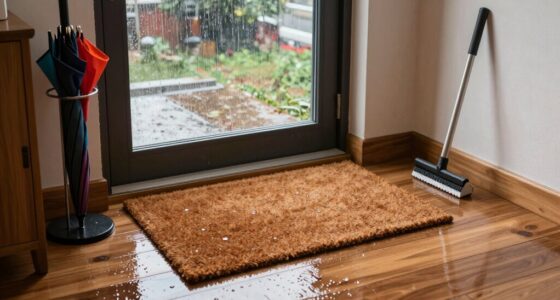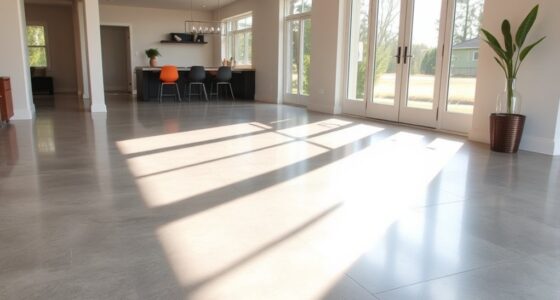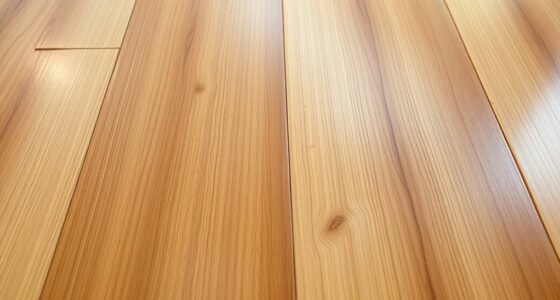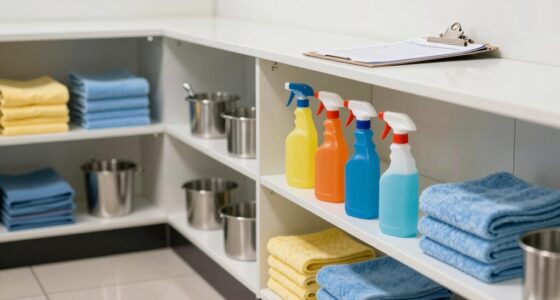
Your floor type influences the cleaning methods you should use. For hardwood, stick to gentle mops and avoid soaking the surface, while tile floors need regular mopping and grout cleaning. Vinyl or linoleum require mild cleaners and light pressure, and carpeted areas benefit from frequent vacuuming and occasional deep cleaning. Each surface needs specific care to stay its best; exploring more will give you the tips to keep your floors spotless and well-maintained.

Get cleaning gear delivered free — and shop member deals
- Fast, free delivery on millions of items
- Access to Prime Big Deal Days deals on October 6–7
- Prime Video, Amazon Music and more included
Key Takeaways
- Different floor materials require specific cleaning tools and solutions to prevent damage and maintain appearance.
- Hardwood floors need gentle mopping and avoidance of harsh chemicals to preserve their finish.
- Tile and grout floors benefit from targeted cleaning of grout lines and appropriate tile-specific cleaners.
- Vinyl and linoleum floors should be cleaned with damp mops and mild cleaners to avoid surface deterioration.
- Carpeted surfaces require regular vacuuming and periodic deep cleaning, with no mopping involved.
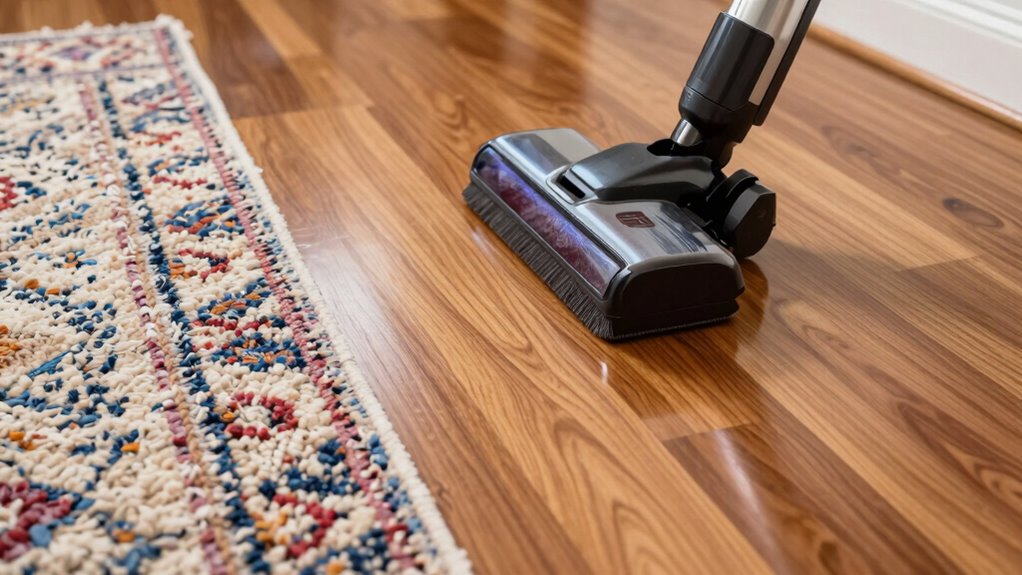
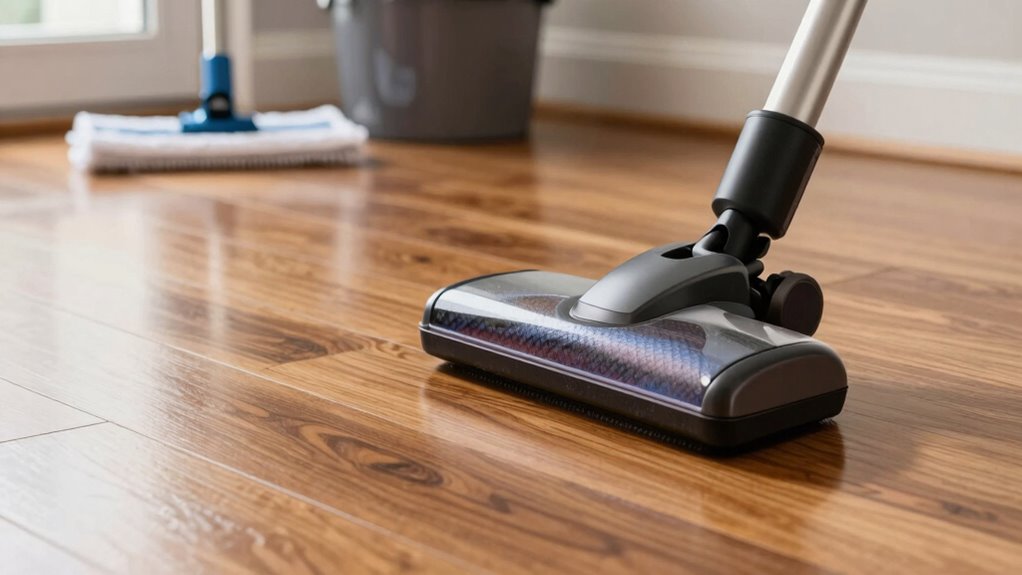
Choosing the right cleaning method depends heavily on your floor type, as each surface requires specific care to stay looking its best. For hardwood floors, your goal is to preserve the wood’s finish while keeping them clean. You should use gentle mopping techniques with a damp mop—avoid soaking the floor and steer clear of harsh chemicals that could damage the finish. Regular vacuuming is essential for hardwood as well, but you need to determine the right vacuuming frequency. Too often, and you risk scratching the surface; too infrequently, and dirt and debris can accumulate, scratching the finish over time. Usually, vacuuming once or twice a week suffices, but high-traffic areas may need more frequent attention. When choosing a vacuum, selecting one with appropriate brush settings can help prevent damage to delicate surfaces.
Choose the right cleaning method for your floor type to preserve its appearance and longevity.
Tile floors are more durable, but they still require specific care. For tile, you can be more aggressive with your mopping techniques. A thorough mop with a suitable tile cleaner can remove grime and prevent stains. Since grout lines tend to trap dirt, consider using a small brush or a toothbrush to clean them effectively. Vacuuming is still important, especially if you have debris like dust or small stones that could scratch the surface or settle into grout lines. Depending on your household activity, vacuuming tile floors once or twice a week is usually enough. If you notice grout lines darkening, increase your cleaning frequency or add occasional deep cleaning to prevent mold or mildew buildup.
Vinyl and linoleum floors are quite resilient but still demand proper cleaning. For these surfaces, you can use a damp mop with a mild cleaner, but avoid abrasive scrubbing that can dull the finish. Vacuuming helps remove loose dirt and debris, reducing the need for frequent mopping. Weekly vacuuming is typically enough, but in homes with pets or high foot traffic, you might want to vacuum more often to prevent scratches and maintain a fresh look. When mopping, focus on using light pressure and changing your water frequently to avoid spreading dirt around. Proper cleaning techniques are essential to maintaining the longevity of these resilient surfaces.
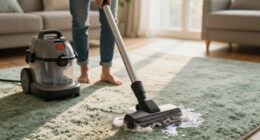
Carpeted surfaces require a completely different approach. Regular vacuuming is your best defense against dirt and dust, and the vacuuming frequency depends on how much foot traffic your carpet gets. For busy households, vacuum at least twice a week, and more often in high-traffic zones. Deep cleaning with a carpet cleaner or professional service every 6 to 12 months keeps your carpet looking fresh and extends its lifespan. While mopping techniques don’t apply here, maintaining a regular vacuuming schedule is key to keeping your floors clean and healthy.
As an affiliate, we earn on qualifying purchases.
Frequently Asked Questions
How Often Should Different Floor Types Be Cleaned?
You should follow frequency guidelines tailored to your floor type. For high-traffic areas like tile or hardwood, clean daily or every few days to maintain hygiene. Less-used floors like carpets may need weekly vacuuming and monthly deep cleaning. Create a cleaning schedule based on foot traffic and dirt accumulation. Regular cleaning prevents buildup, prolongs floor life, and keeps your space looking fresh. Adjust the schedule as needed for maximum results.
Are There Eco-Friendly Cleaning Options for All Floor Types?
You can absolutely find eco-friendly solutions for all floor types. Think of it as hitting two birds with one stone—using sustainable products not only keeps your floors clean but also protects the environment. Many brands now offer eco-friendly cleaning solutions suitable for wood, tile, laminate, and more. Look for products with natural ingredients or certifications like USDA Organic or Green Seal to guarantee you’re making a responsible choice.
Can Specific Cleaning Methods Damage Certain Flooring Materials?
Yes, specific cleaning techniques can cause floor damage, especially if you use harsh chemicals or abrasive tools. For example, scrubbing hardwood floors with steel wool can scratch the surface, while excessive water on laminate or vinyl might cause warping or swelling. Always match cleaning methods to your floor type, and avoid aggressive scrubbing or unsuitable products to guarantee floor damage. Proper care ensures your floors stay beautiful and durable.
What Safety Precautions Should Be Taken During Cleaning?
Cleaning safely is a tightrope walk—you need to avoid slip hazards and chemical sensitivities. Always wear slip-resistant shoes and gloves, and ventilate the area well. Use the correct cleaning products for your floor type, avoiding harsh chemicals that could trigger sensitivities. Keep cords out of walkways, and put up warning signs. These precautions help prevent accidents and protect your health during cleaning.
How Do Cleaning Costs Vary by Floor Type?
Cleaning costs vary by floor type, with cost comparison influenced by maintenance frequency and cleaning supplies needed. For example, carpets often require more frequent deep cleaning, increasing costs, while tile floors usually need less intensive upkeep. You’ll find hardwood floors are relatively easy to maintain but may need special products. Understanding these differences helps you budget effectively, balancing initial expenses and ongoing maintenance to keep your floors clean without overspending.
Conclusion
Just like choosing the right shoes for different terrains, selecting the proper cleaning method depends on your floor type. I once tried using a mop on my hardwood, only to scratch the surface—lesson learned. Remember, a little research goes a long way; over 80% of homeowners find their floors last longer when they use the correct cleaning techniques. So, take the time to match your method to your floor, and you’ll keep it looking beautiful for years to come.
Fall Picks
fall essentials
As an affiliate, we earn on qualifying purchases.