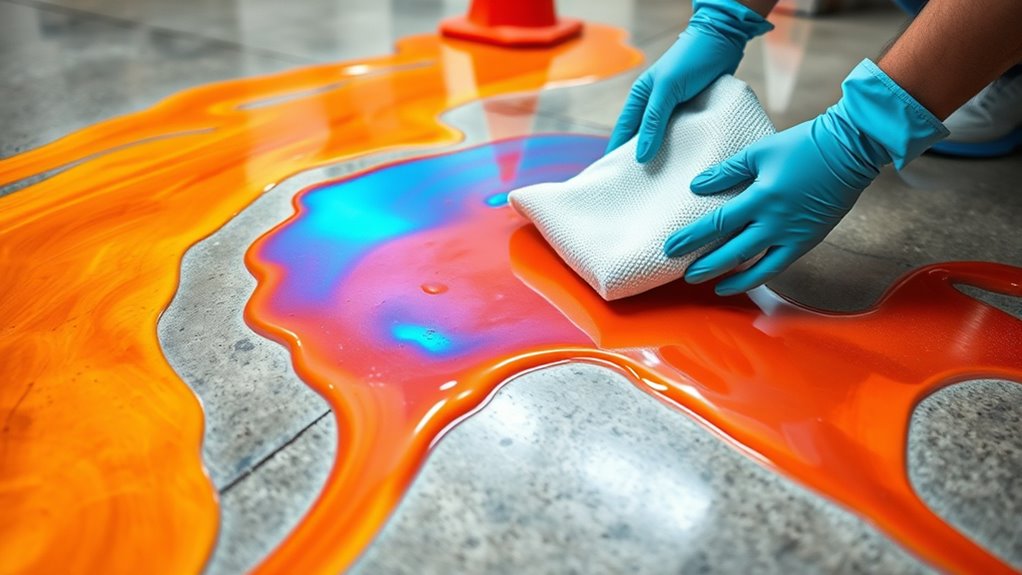

When a chemical spill occurs on a hard floor, prioritize your safety by donning appropriate PPE like gloves, goggles, and respiratory protection. Isolate the spill area and contain it with absorbent materials such as spill pads or socks to prevent spreading. Identify the chemical using labels or SDS and follow proper handling procedures. Carefully clean and decontaminate the area, disposing of waste safely. For detailed steps and precautions, continue exploring effective spill management strategies.
Key Takeaways
- Immediately wear appropriate PPE to protect against chemical exposure before starting cleanup.
- Isolate the spill area and use absorbent materials like spill pads or socks to contain the liquid.
- Identify the chemical type and consult the SDS for proper handling and reaction precautions.
- Carefully apply absorbents to soak up the spill, avoiding water unless specified as safe by the SDS.
- Properly dispose of contaminated materials in designated hazardous waste containers and decontaminate the area thoroughly.

Chemical spills on hard floors can pose serious safety risks if not handled promptly and properly. When you encounter a spill, your first priority should be to prevent the chemical from spreading further and to protect yourself and others from exposure. This is where safety equipment becomes essential. Always wear appropriate personal protective gear such as gloves, goggles, and a respirator if necessary. These items help shield your skin, eyes, and respiratory system from harmful vapors or contact with the chemical. Having the right safety equipment ready before you start cleanup ensures you can act quickly and safely without risking contamination or injury.
Once you’re equipped, focus on establishing spill containment. This involves isolating the spill area to stop the chemical from spreading to other parts of the facility. Use absorbent materials like spill pads, booms, or spill socks to encircle and contain the spill. If the chemical is liquid, placing absorbent materials around the perimeter of the spill prevents it from migrating onto other surfaces or into drains, which could lead to environmental contamination or further hazards. Spill containment not only minimizes damage but also makes cleanup more manageable. It’s essential to act swiftly to deploy these containment measures, especially if the spill involves hazardous or corrosive chemicals. Proper use of spill containment techniques is crucial for effective cleanup and safety.
After containing the spill, you should assess the situation carefully. Determine the type and extent of the chemical involved, referencing the Safety Data Sheet (SDS) for proper handling instructions. This step helps you decide on the appropriate cleanup procedures and disposal methods. Remember, never attempt to clean a spill with water if it’s a reactive chemical—using the wrong substance can worsen the situation or create dangerous reactions. Instead, follow your facility’s protocols for hazardous waste disposal, which usually involves sealing the contaminated absorbent materials in designated containers for proper disposal.
Throughout the cleanup process, your focus should remain on safety and containment. Avoid rushing, as hasty actions can lead to accidents or chemical exposure. Keep other personnel away from the spill area until it’s fully cleaned and the hazard is neutralized. Once the spill is controlled and the chemical is absorbed, thoroughly clean and decontaminate the affected area, ensuring no residues remain. Proper documentation of the incident is also critical for safety records and future prevention plans. Handling chemical spills on hard floors requires a calm, organized approach that prioritizes safety equipment and spill containment. By acting quickly and carefully, you protect yourself, your colleagues, and the environment from potential harm.
Frequently Asked Questions
What Protective Gear Is Recommended for Chemical Spill Cleanup?
You should wear appropriate personal protective equipment, including gloves, goggles, and a chemical-resistant apron, to stay safe during spill cleanup. Make certain you’re using proper spill containment methods, like absorbent materials or spill kits, to prevent the chemical from spreading. Always check the safety data sheet for specific PPE recommendations for the chemical you’re handling, and work cautiously to protect yourself and the environment.
How Can I Prevent Chemical Spills From Occurring?
To prevent chemical spills, you should implement spill containment measures, such as proper storage containers and secondary containment trays. Regularly inspect and maintain equipment to avoid leaks. Enhance your emergency preparedness by training staff on spill prevention protocols and safe handling procedures. Keep hazardous materials clearly labeled and stored away from high-traffic areas. These proactive steps minimize risks and ensure a safer environment, reducing the chances of accidental spills occurring.
Are There Specific Cleaning Agents for Different Chemicals?
You’re right to wonder if specific cleaning agents exist for different chemicals. Yes, using chemical neutralizers tailored to each chemical can make a huge difference. Spill containment and proper neutralizers are vital to prevent further damage. Always identify the chemical first, then select the appropriate neutralizer, guaranteeing safety. This targeted approach minimizes risks and ensures effective cleanup, protecting both people and surfaces from potential hazards lurking within each spill.
How Long Should I Ventilate the Area After a Spill?
You should ventilate the area for at least 30 minutes to an hour after a chemical spill, depending on the chemical’s toxicity and fumes. Guarantee continuous air circulation by opening windows and doors, and using fans if available. Keep people away from the area during this time. Proper ventilation helps disperse harmful vapors, reducing health risks and preventing further contamination. Always follow safety guidelines for specific chemicals involved.
What Should I Do if Someone Is Exposed to the Chemical?
If someone’s exposed to the chemical, you should act quickly by initiating first aid and emergency response. Remove them from the contaminated area to prevent further exposure. Rinse their skin or eyes with plenty of water for at least 15 minutes, and avoid giving them anything to eat or drink unless instructed. Call emergency services immediately, and provide first aid until professional help arrives, prioritizing their safety and well-being.
Conclusion
So, next time you see a chemical spill, remember—it’s not just a mess, it’s a wake-up call. Clean it up promptly and safely, or turn your workplace into a modern art installation of hazardous stains. After all, who needs safety protocols when you can enjoy the thrill of the unknown? Stay vigilant, stay cautious—because ignoring spills isn’t just reckless, it’s a masterpiece of poor judgment. Safety first, or enjoy your accidental abstract masterpiece.