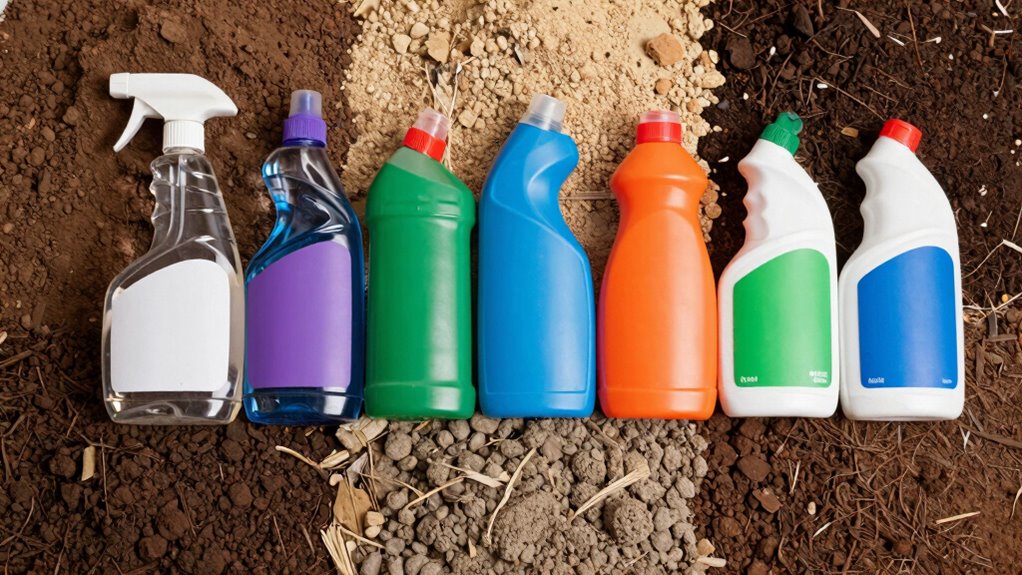

To match cleaning chemicals to soil types, first identify the soil you’re dealing with—greasy, mineral, organic, or particulate. Use alkaline cleaners for greasy soils, acidic solutions for mineral deposits, and neutral or slightly acidic products for organic stains like food. Consider pH levels to guarantee chemical compatibility and avoid damage. Understanding soil chemistry helps you choose the right, eco-friendly solution that’s both effective and safe. Keep exploring for tips to perfect your cleaning approach.
Prime for Young Adults — start your free trial
Fast free delivery, streaming and member deals for eligible 18–24 year olds.
As an affiliate, we earn on qualifying purchases.
Key Takeaways
- Identify the soil type (oily, mineral, organic, particulate) to select an appropriate cleaning method.
- Match pH levels: use alkaline for greasy soils, acidic for mineral deposits, and neutral for organic soils.
- Choose eco-friendly cleaners with natural ingredients suited to the soil’s chemistry.
- Assess soil composition to prevent chemical overuse or surface damage.
- Tailor chemical selection to optimize cleaning efficiency and environmental safety.

Have you ever wondered why certain cleaning chemicals work better on specific soils? The answer often lies in understanding the nature of the soil you’re dealing with and choosing the right chemical accordingly. Different soils—whether oily, mineral-based, organic, or particulate—require tailored approaches to achieve effective cleaning. Recognizing these differences ensures you don’t waste time or resources, and it helps protect the environment in the process.
When selecting a cleaning agent, consider eco-friendly alternatives first. These are designed to be less harsh on the environment while still being effective, often utilizing natural ingredients like plant-based surfactants or biodegradable compounds. Eco friendly alternatives can be especially useful when cleaning delicate surfaces or areas where chemical runoff might impact local ecosystems. They are typically formulated with pH balancing techniques in mind, ensuring that the solution’s acidity or alkalinity is appropriate for the soil type. For example, a mildly alkaline cleaner works well on greasy soils, breaking down fats and oils efficiently without damaging the surface, while acidic cleaners excel at removing mineral deposits or rust.
Matching the chemical’s pH level to the soil type is crucial. For oily soils, a cleaner with a higher pH—more alkaline—breaks down lipids and greases effectively. Conversely, soils that are mineral-based or contain deposits respond better to acidic solutions that dissolve mineral salts and scale. Organic soils, like food stains or biological matter, often require neutral or slightly acidic cleaners to prevent setting the stain or damaging the surface. Using pH balancing techniques allows you to customize cleaning solutions for specific soils, maximizing their efficiency while minimizing environmental impact. This approach also reduces the need for harsh chemicals, making the cleaning process safer for you and the environment.
Understanding soil types and matching them with the right chemical pH and eco friendly alternatives helps you clean smarter, not harder. It’s about assessing the soil’s composition first—whether it’s greasy, mineral-laden, organic, or particulate—and selecting a cleaner that’s designed to target those soils specifically. Recognizing the importance of soil chemistry can guide you toward more effective cleaning solutions. By doing so, you avoid overusing chemicals that may be unnecessary or damaging. Additionally, knowing how soil composition affects cleaning effectiveness can help you choose the most appropriate and sustainable solutions. Instead, you opt for solutions that are effective, sustainable, and safer for everyone involved. With careful selection, you’ll discover that cleaning becomes more efficient, cost-effective, and environmentally responsible. Ultimately, by paying attention to soil types and employing proper pH balancing techniques with eco friendly alternatives, you can achieve a cleaner space while protecting the planet.
eco-friendly alkaline cleaner for greasy soils
As an affiliate, we earn on qualifying purchases.
As an affiliate, we earn on qualifying purchases.
Frequently Asked Questions
Can Different Soil Types Require the Same Cleaning Chemical?
Different soil types generally don’t require the same cleaning chemical because chemical compatibility and soil pH vary. You need to select cleaning agents suited for specific soil conditions; for instance, alkaline cleaners work well on greasy soils, while acidic cleaners are better for mineral deposits. By understanding the soil pH and ensuring chemical compatibility, you can choose the most effective cleaning chemical for each soil type, avoiding damage and ensuring thorough cleaning.
How Do Environmental Factors Affect Chemical-Soil Interactions?
Environmental factors like soil pH and organic content markedly influence chemical-soil interactions. You’ll find that acidic or alkaline soils alter chemical effectiveness, making some cleaners less effective or causing unwanted reactions. High organic content can bind chemicals, reducing their cleaning power. To optimize results, you need to adjust your cleaning approach based on these factors, ensuring the chemicals you use are compatible with the soil’s pH and organic matter levels for better cleaning outcomes.
Are There Eco-Friendly Options for Various Soil Types?
Think of eco-friendly formulations as gentle guardians for your soil. You can choose products that are biodegradable and free from harsh chemicals, ensuring soil compatibility and environmental safety. Look for certifications like USDA Organic or EcoLogo to guide your choices. These options protect diverse soil types, maintaining their health while effectively cleaning. By selecting eco-conscious solutions, you foster a cleaner environment and demonstrate your commitment to sustainable practices.
How Often Should Cleaning Chemicals Be Tested on New Soils?
You should test cleaning chemicals on new soils at least once every few months to guarantee chemical stability and soil compatibility. Regular testing helps identify any changes in soil composition that could affect chemical effectiveness or cause damage. By monitoring these factors, you can adjust your cleaning protocols promptly, maintaining safety and efficiency. Consistent testing ensures your cleaning chemicals remain effective and compatible with evolving soil conditions.
What Safety Precautions Are Necessary When Mixing Chemicals for Different Soils?
When mixing chemicals for different soils, you need to prioritize safety. Always handle chemicals with proper chemical handling techniques, and wear appropriate safety gear, including gloves, goggles, and a mask. Work in a well-ventilated area to avoid fumes, and follow manufacturer instructions carefully. Keep a spill kit nearby, and never mix chemicals without knowing their compatibility. These precautions safeguard you from harmful reactions and guarantee safe, effective cleaning.
Conclusion
Think of cleaning chemicals as keys and soil types as locked doors. When you choose the right key, the door opens effortlessly, revealing a fresh, spotless space. But using the wrong key can cause frustration and damage. By matching your cleaning chemicals to the soil type, you’re not just cleaning; you’re revealing the true beauty beneath the dirt. With the right match, your space transforms from chaos to clarity, like dawn breaking through the night.
NFL season / tailgating Picks
team gear
As an affiliate, we earn on qualifying purchases.