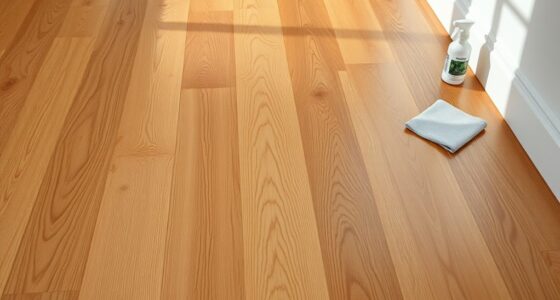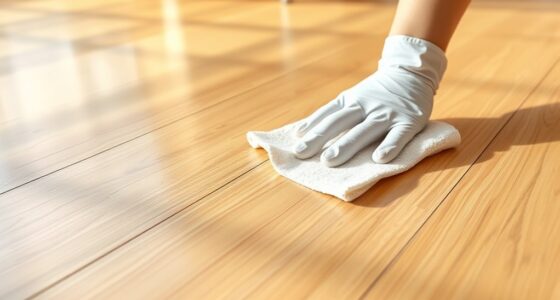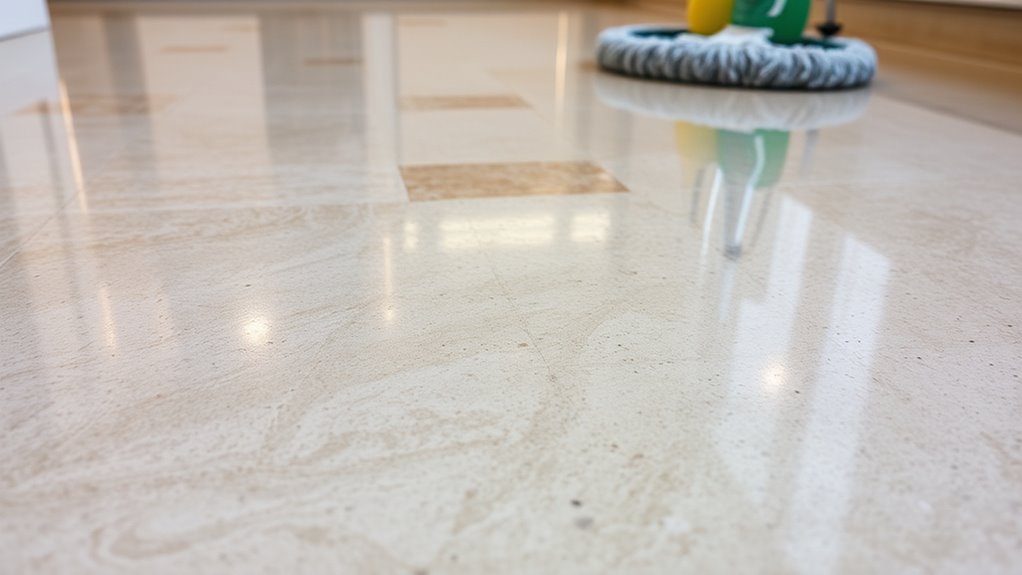
Before you mop your natural stone, take preventative steps to stop scratches. First, clear the surface of dirt, grit, and debris with a soft, damp microfiber cloth—dirt acts as an abrasive and can cause damage during cleaning. Consider applying a penetrating sealant to create a protective barrier against scratches and stains, and always use pH-neutral cleaners. Keep objects lifted and avoid dragging furniture. For more tips on safeguarding your stone, keep exploring.

Get cleaning gear delivered free with Prime
- Fast, free delivery on millions of items
- Prime Video, Amazon Music and more included
- Member-only deals all year
Key Takeaways
- Remove dirt and grit with a soft microfiber cloth or damp mop before mopping to prevent abrasions.
- Use gentle, pH-neutral cleaners specifically formulated for natural stone to avoid surface damage.
- Avoid using abrasive scrubbers or scouring pads that can leave scratches on the stone.
- Regularly clean and promptly wipe spills to prevent dirt buildup that can cause scratching.
- Protect the surface with sealants and prevent heavy or rough objects from dragging across it.

Natural stone surfaces add elegance to any space, but scratches can quickly ruin their beauty. Before you start mopping, it’s essential to understand how proper cleaning techniques and protective coatings can keep your stone looking pristine. Scratches often occur when abrasive cleaners or rough scrubbing tools are used, so choosing the right cleaning methods is your first line of defense. Instead of harsh chemicals, opt for gentle, pH-neutral cleaners specifically formulated for natural stone. Damp mop using soft microfiber cloths or sponges to lift dirt and debris without scratching the surface. Avoid using abrasive scrubbers or scouring pads, which can leave visible marks and dull the stone’s natural shine.
In addition to careful cleaning techniques, applying protective coatings can markedly reduce the risk of scratches. These coatings act as a shield, creating a thin barrier that minimizes the impact of everyday wear and tear. You might consider sealing your natural stone with a penetrating or topical sealant, which helps prevent dirt and moisture from settling into tiny pores where scratches can deepen. Regular resealing—usually every one to three years—helps maintain this protective layer, especially in high-traffic or prone areas. When applying a protective coating, follow the manufacturer’s instructions precisely to ensure even coverage and maximum effectiveness.
It’s also important to be mindful of what you place on your stone surfaces. Using coasters, mats, and pads under heavy objects or items with rough bottoms can prevent unnecessary scratches. When moving furniture or other heavy items, lift rather than drag them across the surface. This simple step can avoid accidental scratches that might mar the smooth finish. Cleaning your stone regularly and promptly removing spills or debris also helps maintain its integrity. Dirt and grit can act like tiny abrasives, so keeping your surface free of particles reduces the chance of scratching during cleaning.
Frequently Asked Questions
Can I Use Vinegar to Clean Natural Stone Surfaces Safely?
You shouldn’t use vinegar to clean natural stone surfaces because it’s an acidic cleaner that can damage the pH balance of the stone. Vinegar might seem effective, but it can etch or dull the surface over time. Instead, opt for pH-neutral cleaners specifically designed for natural stone; they clean effectively without harming the delicate surface. Always check labels to ensure your cleaner is safe for natural stone.
How Often Should I Seal My Natural Stone Floors?
Think of your natural stone floors as a shield protecting your home. To keep that shield strong, you should seal your floors every 1 to 3 years, depending on foot traffic and wear. Stick to a regular maintenance schedule, and you’ll prevent stains and scratches. This proactive approach guarantees your floors stay beautiful and durable, much like a well-maintained fortress standing the test of time.
What Are the Best Tools to Prevent Scratches During Cleaning?
To prevent scratches during cleaning, use microfiber cloths for gentle dusting and wiping, as they won’t scratch your natural stone. When deeper cleaning is needed, opt for soft bristle brushes to loosen dirt without damaging the surface. Avoid abrasive tools or pads. Regularly switch out your cleaning tools to keep them clean and effective, ensuring your stone stays scratch-free and beautifully maintained.
Are There Specific Cleaning Products I Should Avoid?
Did you know that using the wrong cleaning products can damage natural stone in just weeks? You should avoid abrasive cleaners and acidic solutions because they can etch or dull the surface. Stick to pH-neutral cleaners specifically made for natural stone, and always test a small area first. This way, you protect your stone from scratches and maintain its natural beauty longer.
How Can I Identify the Type of Natural Stone I Have?
To identify your natural stone, examine its material characteristics like color, pattern, and texture. You can perform a simple stone identification test by scratching it lightly with a fingernail or a coin—if it scratches easily, it might be softer. Additionally, consult a professional or use a stone identification kit for accurate results. Recognizing your stone type helps you choose proper cleaning methods and avoid damage.
Conclusion
By taking these simple steps before mopping, you can keep your natural stone looking as stunning as the day it was installed. Think of your stone as a delicate masterpiece—treat it gently, and it’ll reward you with timeless beauty. Remember, a little care goes a long way in preventing scratches and preserving its elegance. So, handle your natural stone with the same finesse as a work of art, and it’ll continue to impress for years to come.
Fall Picks
fall essentials
As an affiliate, we earn on qualifying purchases.