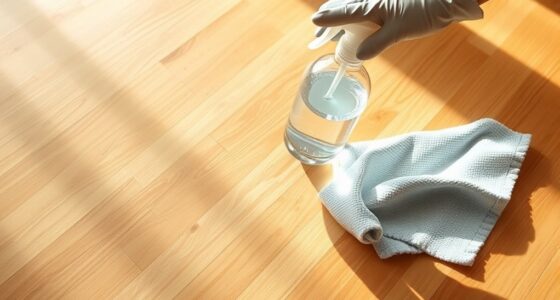

To troubleshoot streaky floors effectively, start by inspecting the surface and removing loose debris with a vacuum or broom. then, prepare the surface with a damp microfiber cloth to loosen grime. Use compatible, pH-neutral cleaning solutions and guarantee your mop is properly wrung out to minimize excess moisture. Dry the floor promptly and regularly check your tools and cleaning agents for residues. Follow this step-by-step process to resolve streaks, and discover more tips for spotless floors as you continue.

Get cleaning gear delivered free with Prime
- Fast, free delivery on millions of items
- Prime Video, Amazon Music and more included
- Member-only deals all year
Key Takeaways
- Verify floor surface is free of debris before cleaning to prevent streaks caused by dirt particles.
- Ensure cleaning solutions are compatible, properly diluted, and do not leave residue that causes streaks.
- Use a well-wrung mop and promptly dry the floor to minimize excess moisture and uneven evaporation.
- Regularly clean and maintain tools like mops and microfiber cloths to avoid dirt transfer and residue buildup.
- Troubleshoot persistent streaks by inspecting for improper surface prep, incompatible cleaners, or inadequate drying practices.

Ever wonder why your floors sometimes end up streaky after cleaning? It can be frustrating to put in the effort only to see unsightly marks left behind. The key to achieving streak-free floors starts with understanding the significance of proper surface preparation and selecting the right cleaning solutions. Before you even begin mopping, take a moment to inspect your floor. Remove loose dirt and debris with a broom or vacuum. This step is vital because dirt trapped on the surface can cause streaks when you mop, making it seem like your cleaning efforts are futile. Once the surface is free of loose particles, focus on surface preparation. Use a damp microfiber cloth or mop to wipe down the floor, ensuring that any existing grime or residues are loosened and removed. This helps prevent the buildup of residues that can cause streaking when combined with cleaning solutions. Additionally, choosing a high-quality mop can significantly improve your cleaning results by ensuring even distribution of cleaning agents and effective dirt removal.
Choosing the right cleaning solutions is equally important. Not all cleaners are compatible with every flooring type, so always check manufacturer recommendations. Using overly harsh or incompatible cleaning agents can leave behind film or residue, which results in streaks. For example, oil-based cleaners may leave a greasy film that’s tough to remove, while some all-purpose cleaners can leave behind soap scum that causes streaks. To avoid this, opt for pH-neutral cleaners designed specifically for your floor type. Dilute your cleaning solution properly—using too much concentrate can leave behind excess residue, and using too little might not clean effectively, both of which can contribute to streaks.
Another common mistake is applying too much water during mopping. Excess moisture takes longer to dry and can cause streaks if it evaporates unevenly. Use a well-wrung mop to ensure you’re not saturating the surface. After mopping, dry the floor promptly with a clean, dry microfiber cloth or a squeegee to prevent water spots and streaks. If streaks still persist, examine your cleaning tools—residue from dirty mops or sponges can transfer dirt back onto the floor, exacerbating streaks. Regularly wash your mops and sponges to keep your cleaning process effective.
microfiber floor cleaning cloths
As an affiliate, we earn on qualifying purchases.
As an affiliate, we earn on qualifying purchases.
Frequently Asked Questions
How Often Should I Clean My Floors to Prevent Streaks?
You should establish a cleaning schedule that suits your floor type and foot traffic. Mopping frequency varies, but generally, cleaning your floors at least once a week helps prevent streaks. For high-traffic areas, consider more frequent mopping, maybe every 2-3 days. Consistent cleaning reduces dirt buildup and avoids streaks, keeping your floors looking shiny and new. Adjust your schedule based on how much dirt and dust accumulate over time.
Are Certain Cleaning Products Better for Streak-Free Floors?
Imagine the frustration of streaky floors after cleaning. When choosing cleaning products, you want options that deliver a pristine finish. Natural cleaning solutions often outperform chemical-based products, offering streak-free results without harsh residues. Comparing cleaning products helps you find the best for your floors, ensuring a shiny, streak-free surface every time. You’ll feel confident knowing you’re using safe, effective solutions that leave your floors spotless and beautiful.
Can Hard Water Cause Streaks on My Floors?
Hard water can definitely cause streaks on your floors because of its high mineral content. Water quality plays a big role in how your floors look after cleaning. When you use cleaning solutions, minerals in hard water can leave behind spots and streaks. To avoid this, consider using water softeners or mixing your cleaning solutions with distilled water. This way, you’ll keep your floors streak-free and looking their best.
Does the Type of Flooring Affect Streak Formation?
Yes, your floor material impacts streak formation. For example, glossy surfaces like tile or laminate are more prone to visible streaks, especially if you don’t clean frequently. The type of flooring influences how you should clean and how often, because some materials need gentle, specific products. Regular cleaning helps prevent buildup that causes streaks, regardless of the floor type, but knowing your floor material helps you choose the best cleaning routine to keep it streak-free.
How Can I Remove Stubborn Streaks Effectively?
To remove stubborn streaks effectively, start by choosing the right cleaning tools like microfiber mops or soft cloths that don’t leave lint. Use eco-friendly solutions such as diluted vinegar or gentle floor cleaners to break down residues. Avoid harsh chemicals, and always rinse with clean water. Regularly change your cleaning tools to prevent streaks, and guarantee the floor dries completely to achieve a streak-free shine.
Conclusion
Just like a chef perfects their signature dish, mastering your floor’s shine takes patience and the right steps. I once struggled with streaky floors until I discovered the importance of proper mopping technique and product choice. Now, your floors can go from a cloudy mess to mirror-like gleam, proving that troubleshooting is simply about finding the right ingredients and method. Keep experimenting, and you’ll soon enjoy streak-free floors that truly shine.
Halloween Picks
halloween
As an affiliate, we earn on qualifying purchases.