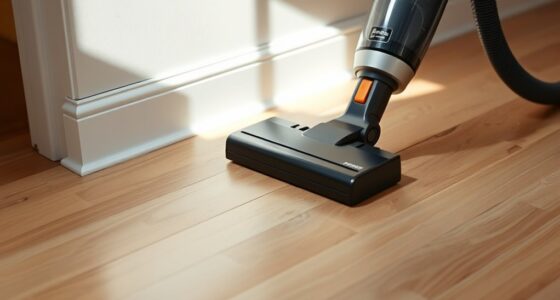

Implementing cleaning robots in your warehouse changes your practices by making cleaning faster, safer, and more consistent. You’ll automate routine tasks, freeing your staff for more complex activities, and operate seamlessly around the clock. These robots also improve safety by reducing slip hazards and debris. However, you’ll need ongoing maintenance and integration efforts to guarantee peak performance. Curious about how to get the most out of these innovations? Keep exploring to discover more insights.

Get cleaning gear delivered free with Prime
- Fast, free delivery on millions of items
- Prime Video, Amazon Music and more included
- Member-only deals all year
Key Takeaways
- Increased reliance on automation reduces manual cleaning efforts and enhances operational efficiency.
- Regular maintenance and sensor calibration become critical to ensure robot performance.
- Initial planning and integration improve route optimization and system compatibility.
- Continuous monitoring and troubleshooting address environmental and technical challenges promptly.
- Overall, cleaning robots lead to safer, more consistent cleanliness and a competitive advantage.
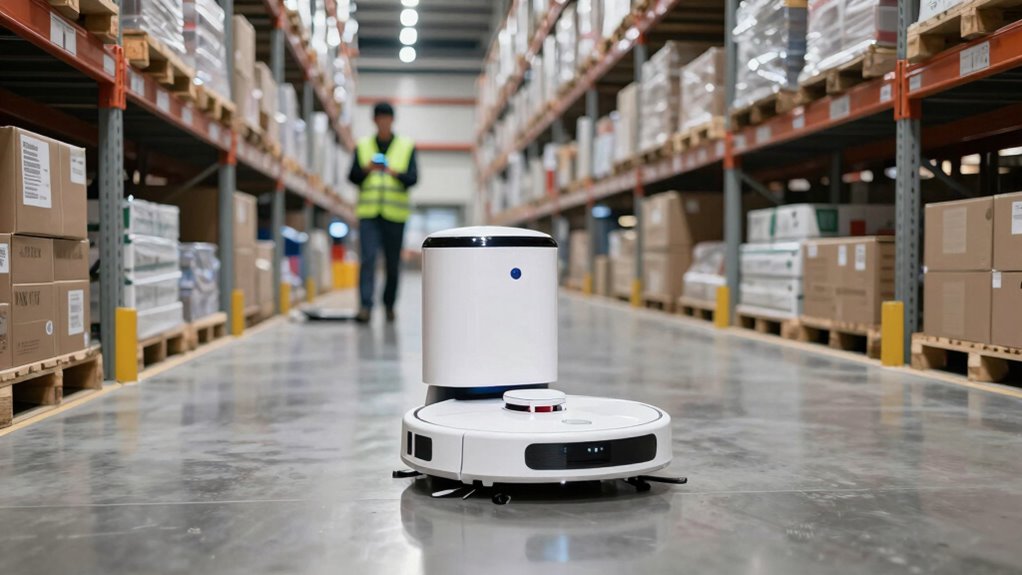
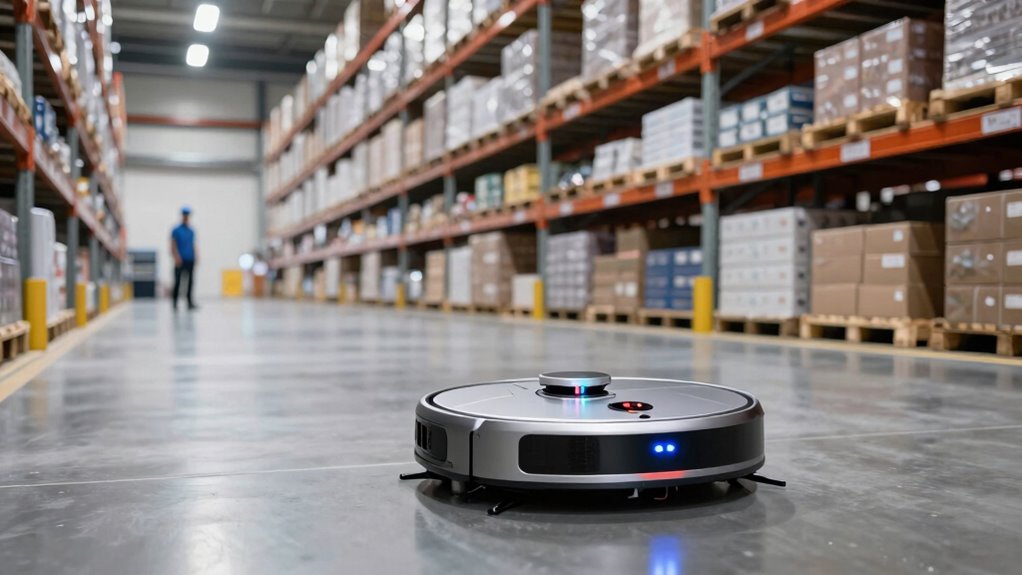
Cleaning robots are transforming warehouse maintenance by providing efficient, automated solutions that keep large spaces tidy with minimal human intervention. These robots bring significant automation benefits, streamlining what used to be labor-intensive tasks and freeing up your staff to focus on more complex or value-added activities. Instead of relying on manual cleaning crews, you can deploy robots that work around the clock, guaranteeing consistent cleanliness without the need for breaks or shift changes. This not only boosts operational efficiency but also enhances safety by reducing the chances of slip-and-fall accidents caused by spills or debris.
However, integrating cleaning robots isn’t without its maintenance challenges. One of the main hurdles is guaranteeing these machines stay operational in a busy warehouse environment. Dust, debris, and uneven surfaces can affect sensors and moving parts, leading to breakdowns or reduced effectiveness if not properly maintained. You’ll need to establish regular maintenance routines, including cleaning the robots themselves, updating software, and inspecting mechanical components. Failing to do so can negate the automation benefits, causing downtime and increased repair costs. Additionally, the sensor technology used in these robots is sensitive to environmental conditions, requiring careful calibration and protection. Proper environmental management can help extend the lifespan of these sensors and maintain their accuracy, which is a crucial aspect of indoor air quality management. Implementing a proactive maintenance strategy can also help prevent costly repairs and extend the overall lifespan of the robots. Regular environmental assessments can further ensure optimal operation and reduce unexpected issues.
The initial setup of cleaning robots also requires careful planning. You need to map out the warehouse layout, identify high-traffic zones, and determine the best routes for the robots to take. This planning phase is vital because it influences how effectively the robots can perform their tasks and how quickly they can adapt to changes in your warehouse environment. Additionally, you’ll want to integrate these robots with your existing management systems, which may involve some technical challenges but ultimately results in better oversight and control. Proper integration can also enhance automation capabilities, making your entire warehouse operation more seamless.
Once operational, cleaning robots can handle a variety of tasks, from sweeping floors to scrubbing surfaces, often with little supervision. They come equipped with sensors that detect obstacles and adjust their paths accordingly, but you still need to monitor their performance and troubleshoot issues as they arise. Over time, you may encounter challenges related to battery life, navigation in complex layouts, or compatibility with other automated equipment. Addressing these issues proactively ensures you maximize the automation benefits while minimizing maintenance challenges. Understanding the environmental factors affecting robot performance can help optimize their operation and reduce downtime. Incorporating biodiversity considerations, such as minimizing environmental impact and waste, can also contribute to a more sustainable warehouse operation.
In the end, adopting cleaning robots in your warehouse can revolutionize your maintenance practices, making them faster, safer, and more reliable. But success hinges on understanding the maintenance challenges involved and committing to ongoing care and system updates. When managed properly, these robots will not only keep your warehouse spotless but also optimize your overall workflow, giving you a competitive edge in efficiency and safety.
As an affiliate, we earn on qualifying purchases.
Frequently Asked Questions
How Do Cleaning Robots Handle Obstacle Navigation in Busy Warehouses?
You’ll find cleaning robots handle obstacle navigation in busy warehouses through advanced obstacle detection systems and sophisticated navigation algorithms. These robots actively scan their environment with sensors, instantly identifying obstacles. Their navigation algorithms then calculate the safest path around objects, even in crowded spaces. This combination allows them to move efficiently and avoid collisions, ensuring thorough cleaning without disrupting warehouse operations.
What Is the Maintenance Process for Warehouse Cleaning Robots?
Did you know that proper maintenance extends a cleaning robot’s lifespan by up to 30%? You should regularly check and clean sensors, brushes, and filters, and keep an eye on robot energy management to guarantee efficiency. Implement a routine maintenance scheduling system that includes software updates and battery checks. This proactive approach minimizes downtime, keeps your robots running smoothly, and maximizes their cleaning performance in busy warehouses.
How Do Robots Coordinate With Human Workers Safely?
You guarantee safe robot-human interaction by implementing strict safety protocols and clear communication measures. Robots are equipped with sensors and emergency stop features to detect human presence and prevent accidents. You also train staff on safe procedures around robots, emphasizing awareness of their operation zones. Regularly updating safety protocols and monitoring robot behavior help maintain a secure environment, fostering seamless collaboration between humans and robots in your warehouse.
What Is the Typical Lifespan of a Warehouse Cleaning Robot?
You can expect a warehouse cleaning robot to last around 3 to 5 years, depending on your robot’s durability and how well you maintain it. Battery longevity plays a key role, often lasting 1 to 2 years before needing replacement or reconditioning. Regular maintenance, proper charging, and adherence to manufacturer guidelines can extend your robot’s lifespan, ensuring it stays efficient and effective throughout its operational life.
Are Cleaning Robots Customizable for Different Warehouse Layouts?
They say, “The devil is in the details,” and that’s true for cleaning robots too. You’ll find that many cleaning robots are highly customizable, allowing you to adapt them to different warehouse layouts. With features like robot customization and layout adaptability, you can tailor the robot’s functions and routes to fit your specific space. This flexibility guarantees efficient cleaning, regardless of how complex or unique your warehouse setup is.
Conclusion
As cleaning robots become more integrated into warehouse operations, what’s next could surprise you. Will they fully replace human workers, or will new roles emerge? How will your routines adapt to this rapid change? One thing’s certain: the future holds unexpected twists, and staying ahead means embracing innovation now. Are you ready to see how these robots will reshape your warehouse’s efficiency—and perhaps, your own role? The next chapter is just beginning.
Fall Picks
fall essentials
As an affiliate, we earn on qualifying purchases.