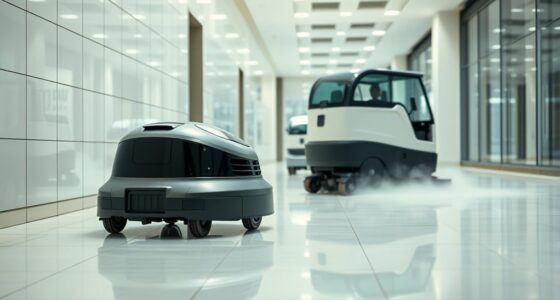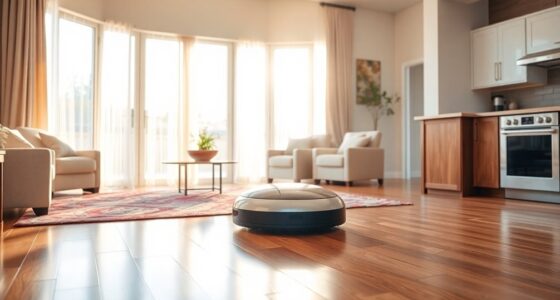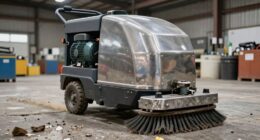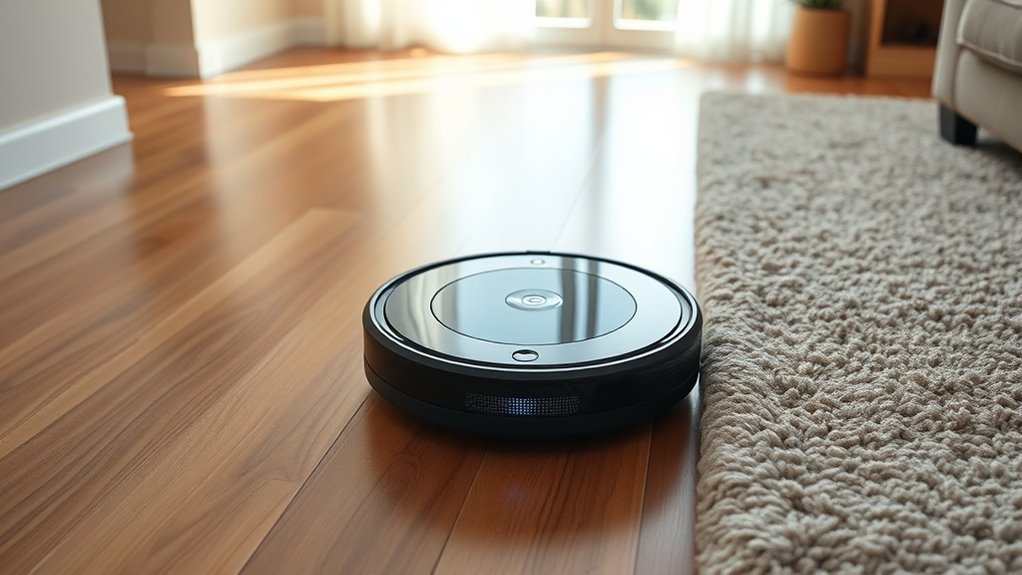

Modern robotic vacuums are designed to handle multiple floor types like hardwood, tile, and carpet seamlessly. They use sensors to detect surface changes and automatically adjust suction power and brush height. This guarantees thorough cleaning and ideal motor use across different surfaces. By switching modes on the fly, they make managing mixed floors easy. Keep pursuing details, and you’ll discover how these intelligent features keep your home clean with minimal effort.
Key Takeaways
- Modern robotic vacuums automatically detect and adapt to different floor surfaces for optimal cleaning.
- Sensors identify transitions and adjust suction power and brush height accordingly.
- Multi-surface brushes facilitate seamless movement across hardwood, tile, carpet, and laminate.
- Use boundary markers or virtual barriers to manage specific areas or sensitive surfaces.
- Regular maintenance and software updates ensure accurate surface recognition and efficient operation.
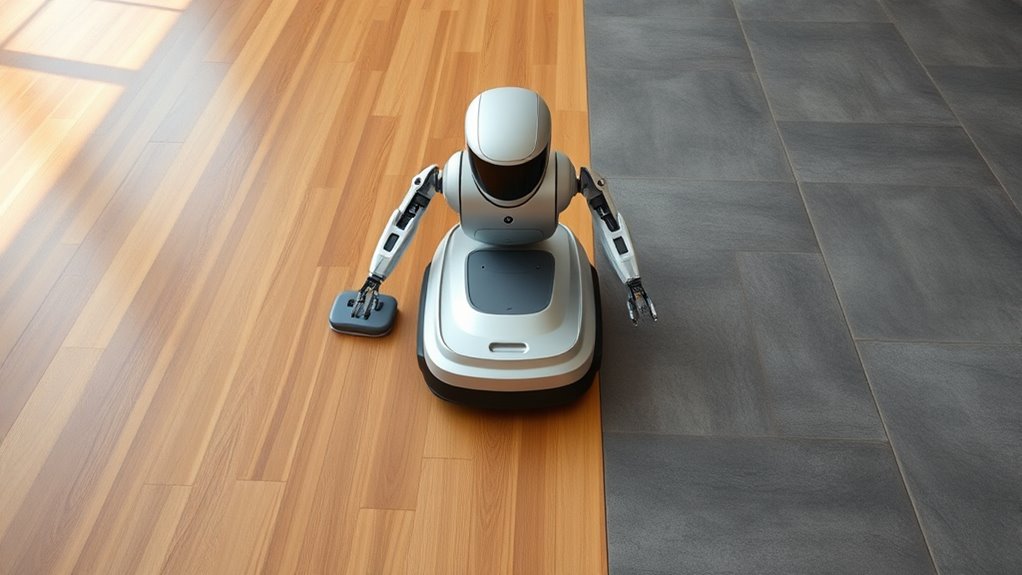
Managing different floor types with a single robot can seem intimidating, but modern cleaning technology makes it straightforward. Today’s robotic vacuums are equipped with advanced robot navigation systems that adapt seamlessly to various surfaces. Whether you have hardwood, tile, carpet, or laminate, these robots can handle transitions smoothly without you needing to intervene. The key lies in their ability to recognize floor types and adjust their cleaning strategies accordingly, ensuring thorough coverage and optimal cleaning performance.
Modern robotic vacuums seamlessly adapt to various floor types for efficient, hands-free cleaning.
When it comes to floor transition strategies, your robot’s sensors play a crucial role. They detect changes in surface texture, height, and material, allowing the robot to modify its cleaning behavior on the fly. For example, upon approaching a carpeted area, the robot might increase suction power or adjust its brush height for deeper cleaning. When moving back onto a hard floor, it reverts to a gentler setting, conserving power and preventing unnecessary wear. This adaptability not only improves cleaning effectiveness but also extends the lifespan of the robot’s components.
Many modern robots are designed with multi-surface brushes and intelligent navigation algorithms that facilitate smooth transitions. These systems map your home, recognizing different zones and adjusting their cleaning routes accordingly. Some models even feature automatic floor type detection, enabling them to switch between cleaning modes without manual input. This means you don’t have to worry about manually changing settings or obstacles—your robot handles it all, navigating from a plush rug to a sleek tile floor effortlessly. Additionally, accurate surface detection enhances their ability to adapt to unexpected changes, ensuring consistent cleaning performance across all surfaces.
Effective floor transition strategies also involve planning your space’s layout. Clearing clutter and marking high-traffic or sensitive areas helps your robot navigate more confidently. Regularly cleaning its sensors and updating its mapping software ensure it maintains accurate awareness of your home’s layout, which is essential for handling mixed surfaces. Additionally, placing boundary strips or virtual barriers can help guide the robot away from areas where transitions are tricky or where specific cleaning modes aren’t suitable.
Ultimately, managing different floor types with one robot becomes less of a hassle when you understand how its navigation and transition strategies work. These devices are designed to adapt dynamically, making your cleaning routine more efficient and less hands-on. As long as your robot is equipped with good sensors, smart mapping, and adjustable settings, you can trust it to tackle various surfaces with minimal intervention. This technology not only simplifies your chores but also ensures that each part of your home receives the appropriate level of cleaning, all from a single, capable device.

Tikom Robot Vacuum and Mop Combo, 5000Pa Robotic Vacuum Cleaner, 150 Min Max, App & Remote Control, Ideal for Hard Floor, Carpet, Pet Hair, Self-Charge(G8000 Max)
5000Pa Strong Suction: Robot Vacuum With 5000Pa suction power, it effortlessly removes pet hair, dust, and debris from…
As an affiliate, we earn on qualifying purchases.
As an affiliate, we earn on qualifying purchases.
Frequently Asked Questions
How Does the Robot Detect Different Floor Types Automatically?
The robot detects different floor types automatically through sensor calibration and floor recognition. It uses specialized sensors to analyze surface textures, vibrations, and resistance, adjusting its settings as needed. During operation, it continuously calibrates these sensors for accuracy, ensuring effective cleaning across various surfaces. This intelligent floor recognition allows the robot to optimize cleaning methods, making it versatile and efficient on mixed floor types without manual intervention.
Can the Robot Prioritize Specific Areas for Cleaning?
Yes, you can prioritize specific areas for cleaning. The robot allows you to set cleaning zones or areas, enabling you to focus on high-traffic spots or mess-prone zones first. By using the app or control interface, you can customize area prioritization, ensuring the robot concentrates on designated cleaning zones. This feature helps optimize cleaning efficiency, especially in homes with mixed floor types or busy, high-traffic areas.
What Maintenance Is Required for Optimal Performance?
Oh, the joy of robot maintenance! To keep your robot running smoothly, regularly check its battery longevity and recharge before it’s fully drained. Don’t forget dustbin maintenance—empty it often to prevent clogs and guarantee efficient cleaning. Clean sensors and brushes weekly for peak performance. With just a little effort, your robot will happily tackle your floors, no matter the surface, without losing its spark—or battery life.
How Does the Robot Handle Unexpected Obstacles on Varied Floors?
You’ll find the robot excels at obstacle navigation by detecting and adapting to unexpected objects quickly. During floor shifts, it smoothly adjusts its sensors and cleaning modes to handle different surfaces, ensuring efficient cleaning without interruption. Its smart navigation system prevents falls and collisions, making sure it navigates obstacles across varied floors confidently. This adaptability guarantees thorough cleaning, even when surprises appear mid-task, keeping your space consistently spotless.
Is There a Limit to the Number of Floor Types the Robot Can Manage?
Think of your robot as a skilled chef with a versatile palate—there’s no strict limit to the number of floor types it can handle. It uses advanced floor detection to adapt seamlessly, maintaining cleaning efficiency across surfaces. While some models excel with multiple types, extremely complex environments might challenge them. Overall, most robots are designed to manage diverse floors, ensuring your space stays spotless without fuss.

Robot Vacuum and Mop Combo, 3-in-1 Robot Vacuum Cleaner with 5000Pa, Smart Navigation Robotic Vacuums with Multi-Surface Cleaning, 2.87" Super Slim, Wi-Fi/App/Alexa, for Pet Hair Hard Floors Carpet
✅【3-in-1 Vacuum & Mop System – 5000Pa Suction for Deep Cleaning】 Effortlessly tackle everyday messes with powerful 5000Pa…
As an affiliate, we earn on qualifying purchases.
As an affiliate, we earn on qualifying purchases.
Conclusion
Handling mixed floor types with one robot is definitely achievable and saves you time and effort. Did you know that smart robots can adapt their cleaning patterns by up to 50% based on surface type? This means your floors get more thorough cleaning without you lifting a finger. With the right settings and some initial tweaking, you’ll find your robot effortlessly managing different surfaces, making your home cleaner and your day a lot easier.

roborock Q10 S5+ Robot Vacuum and Mop, 10,000Pa Suction, Upgraded from Q8 max+, 70 Days Self-Emptying, Obstacle Avoidance, Sonic Mopping, Dual Anti-Tangle Design, Auto Mop Lifting, Black
70 Days of Hands-Free Cleaning – Enjoy ultimate convenience with the self-emptying station. The large 2.7L dust bag…
As an affiliate, we earn on qualifying purchases.
As an affiliate, we earn on qualifying purchases.

Nispira Magnetic Boundary Tape – Marker Strips for Robotic Vacuums Compatible with Neato Robot Vacuums Boundary Marker Strip Belt (1 Roll)
Creates No-Go Zones – Only compatible with Neato robotic vacuums. Prevents your robot from entering restricted areas such…
As an affiliate, we earn on qualifying purchases.
As an affiliate, we earn on qualifying purchases.