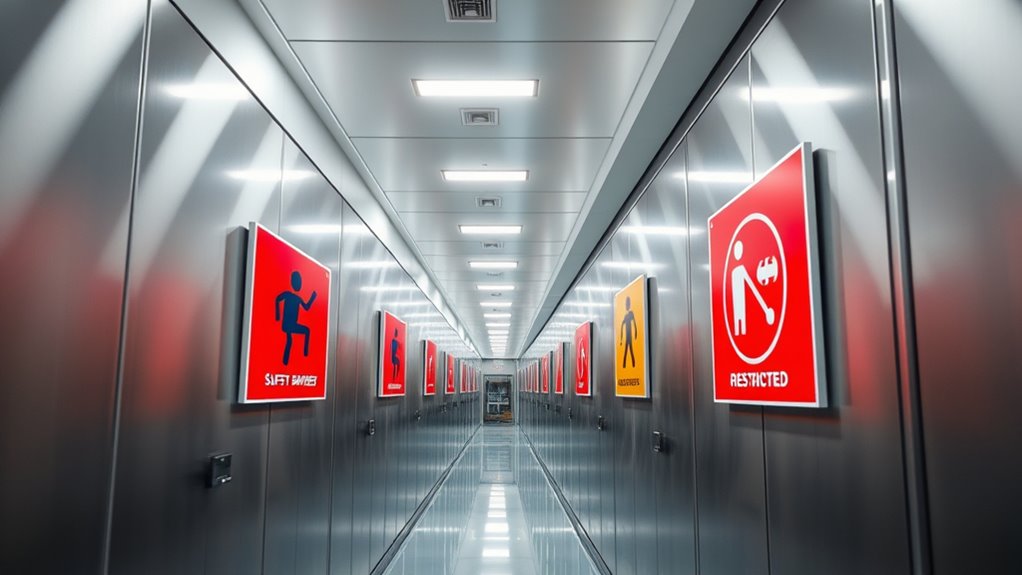

To guarantee safety in robot zones, you should use clear, high-visibility signage with bright colors like yellow or red, combined with symbols and labels such as “Robot Zone” or “Caution.” Place signs at strategic points like entrances and eye level, and consider complementing them with floor markings or barriers for added clarity. Effective signage helps everyone recognize active areas quickly, prevent accidents, and maintain smooth workflows. Keep exploring to discover more ways to optimize your signage system.
Key Takeaways
- Use bright, high-contrast colors like yellow or red to make signage easily noticeable.
- Incorporate clear symbols and labels such as “Robot Zone” or “Caution: Moving Robots.”
- Place signs at strategic locations including entrances, exits, and eye level for maximum visibility.
- Standardize signage using consistent colors and symbols to promote quick recognition across the facility.
- Combine signage with physical barriers or floor markings for enhanced safety and zone delineation.

Clear labeling and signage are indispensable for safely integrating robot zones into your facility. When you designate areas for robots to operate, proper signage helps everyone recognize these spaces immediately, reducing the risk of accidents and promoting smooth workflows. Effective zone identification ensures that employees understand where robots are active, where caution is necessary, and where safety protocols must be followed. This clarity minimizes confusion, especially in busy or complex environments, and reinforces a culture of robot safety. You should prioritize visible, standardized signs that clearly mark robot zones. Bright colors, such as yellow or red, catch attention and signal caution. Using symbols like robotic arms or robot icons alongside text—such as “Robot Zone” or “Caution: Moving Robots”—makes the signage universally understandable. When signage is consistent across the facility, employees quickly learn to recognize and respect these areas, whether they are on the shop floor, in warehouses, or near automated machinery. Consistent zone identification prevents accidental entry into active robot areas, which could lead to injuries or operational disruptions. It’s essential to guarantee that signage is placed at strategic points—entrances, exits, and at eye level—so it’s visible from all angles. This includes placing signs where employees frequently pass through or need to be aware of robot activity. The signage should be durable, weather-resistant if applicable, and easy to read from a distance. Consider illuminated or reflective signs for areas with low lighting, ensuring that zone identification remains clear at all times. Clear labeling acts as a constant visual reminder of robot safety protocols, especially in fast-paced environments where quick decisions are indispensable. Additionally, integrating standardized signage with other safety measures, such as physical barriers or floor markings, enhances overall safety and clarity. Floor markings, such as painted lines or colored tape, can delineate robot zones physically, guiding personnel and vehicles efficiently. Digital signs can provide real-time updates about robot activity, shutdowns, or maintenance schedules, further strengthening safety measures. Incorporating multiple forms of signage creates redundancy, ensuring that no matter where someone is, they’ll be aware of the robot zones and the associated safety considerations. Ultimately, the goal is to create a clear, intuitive, and consistent signage system that promotes robot safety and helps everyone quickly identify robot zones. Proper zone identification not only protects personnel but also enhances operational efficiency by preventing unnecessary interruptions or accidents. When you make signage a priority, you establish a safer environment where humans and robots can coexist seamlessly, with everyone understanding their boundaries and responsibilities.
Frequently Asked Questions
How Do Signage Standards Vary Between Different Industries?
You’ll find signage standards vary across industries due to industry-specific signage regulations and cultural considerations. In manufacturing, clear, safety-focused signs are essential, while healthcare signage emphasizes clarity and privacy. In hospitality, signs may incorporate cultural symbols and language nuances to enhance guest experience. Understanding these differences helps you design effective signs that comply with regulations and respect cultural signage considerations, ensuring safety and communication are maintained across diverse industry settings.
What Materials Are Best for Outdoor Robot Zone Signage?
You should choose durable materials like weather-resistant aluminum or high-grade plastics for outdoor robot zone signage. These materials handle durability considerations such as exposure to rain, sunlight, and temperature fluctuations. While they might cost more upfront, their longevity reduces replacement costs over time. Avoid cheaper options like paper or regular plastic, which degrade quickly outdoors. Investing in durable, weatherproof signage guarantees clear, lasting communication for your robot zones.
How Often Should Signage Be Updated or Replaced?
You should update or replace signage based on your maintenance schedule and signage durability. Given the whims of weather and wear, it’s wise to verify signs at least quarterly—unless you enjoy explaining to robots why they can’t read old, faded signs. Regular inspections prevent confusion and ensure clarity. Remember, if signage looks sad or illegible, it’s time for a refresh—robots deserve clear, updated instructions just like humans do.
Are There Specific Color Codes for Robot Zone Signage?
Yes, there are specific color codes for robot zone signage. You should use consistent color coding to indicate different robot zone symbols clearly. For example, red often signals caution or restricted access, while green indicates safe zones. This helps personnel quickly identify robot zones and understand safety protocols. Make sure to adhere to industry standards or local regulations for color coding to guarantee clarity and safety across your facility.
How Does Signage Impact Robot Safety Compliance?
Think of signage as the traffic signals for robot zones—clear visual recognition guides robots safely, just like stoplights prevent accidents. When you use effective hazard warning signs, you reduce misunderstandings and improve compliance. For example, a well-placed warning sign helped a factory avoid a costly collision. Signage directly influences safety by providing instant, recognizable cues, ensuring everyone understands where robots operate and minimizing risks.
Conclusion
Think of your robot zones as busy crossroads, where clear signs and labels act as traffic signals guiding everyone safely through. Just like well-placed signs prevent chaos on busy streets, proper labeling keeps robots and humans coordinated, avoiding accidents. When you prioritize clear signage, you’re creating a smooth, efficient flow—transforming your workspace into a well-orchestrated symphony rather than a chaotic jam. Remember, good signage is the silent conductor guiding your robot traffic to harmony.