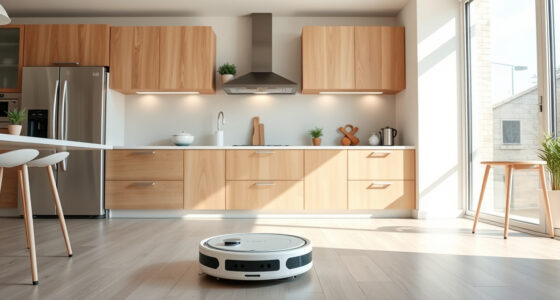
Lower noise levels in cleaning robots make them seem less intrusive and more helpful around you. When these robots operate quietly, they blend seamlessly into your environment, reducing annoyance and fostering positive feelings. Good design, materials, and technology help keep noise minimal, which improves your overall experience. Quiet operation can even make robots feel like part of your space rather than a disturbance. To discover more about how noise influences your perception, keep exploring this topic.
Key Takeaways
- Lower noise levels in cleaning robots improve user comfort and reduce annoyance, fostering positive perceptions.
- Advanced noise reduction technologies, like sound insulation and vibration dampening, enhance acceptance in quiet environments.
- Quiet operation helps robots blend seamlessly into daily routines, minimizing disruptions and negative attention.
- Design elements such as materials and motor placement significantly influence noise emission and public perception.
- Balancing cleaning effectiveness with minimal noise remains a key goal to increase user trust and societal acceptance.

As cleaning robots become more common in homes and public spaces, their noise levels considerably influence how people perceive them. When you see or hear a robot doing its job, the sound it produces can either make the experience feel seamless or disruptive. The design of these robots plays a vital role in how noticeable their noise is. Good robot design isn’t just about aesthetics or functionality; it’s also about minimizing noise to create a more pleasant experience. Engineers focus on noise reduction techniques to guarantee these devices operate quietly, especially in environments where silence is valued, such as offices or bedrooms. By optimizing the shape, materials, and motor placement, designers aim to dampen sound and reduce vibrations that cause noise. This attention to noise reduction not only improves user comfort but also shapes public perception of robots as helpful rather than bothersome.
You might notice that some cleaning robots seem quieter than others, and that’s no accident. Manufacturers who prioritize noise reduction often incorporate sound-absorbing materials inside the robot’s chassis or use specialized motors designed for quieter operation. These small adjustments can make a significant difference, making the robot’s presence less intrusive. This is especially important in shared spaces or environments where people expect a peaceful atmosphere. When robots operate quietly, they’re less likely to draw negative attention or cause annoyance, helping users feel more at ease with their presence. As a result, people tend to see these robots as helpful tools rather than nuisances, fostering a more positive public perception.
Furthermore, advancements in noise reduction technologies are continually improving how these devices operate silently, contributing to better acceptance and integration into daily life. The ongoing challenge for designers is balancing efficiency with noise reduction. A robot that cleans thoroughly but sounds like a jet engine isn’t going to be well-received. That’s why innovations in robot design now emphasize silent operation without sacrificing cleaning power. Techniques such as sound insulation, optimized motor placement, and vibration dampening are standard in newer models. These advancements show that manufacturers understand the importance of user comfort and perception. When the noise level is kept low, the robot seamlessly integrates into daily routines, whether during work hours or late at night. Ultimately, the goal is to create a device that performs its task effectively while remaining unobtrusive, thereby shaping a more positive attitude towards robotic cleaning solutions.
As an affiliate, we earn on qualifying purchases.
Frequently Asked Questions
How Do Cleaning Robots Compare to Traditional Cleaning Methods?
Cleaning robots are more efficient than traditional methods because they operate automatically, saving you time and effort. They often reach tight spots and clean consistently, which improves overall cleanliness. While some users might have reservations about robot efficiency or noise, user acceptance is growing as robots become quieter and more reliable. Overall, cleaning robots can complement or even replace traditional cleaning, making your routine easier and more efficient.
Are There Any Health Risks Associated With Cleaning Robot Noise?
Noise nuisances can pose potential health concerns, especially if you’re exposed to loud noise exposure for prolonged periods. While cleaning robot noise generally remains within safe limits, persistent or excessively loud sounds might cause discomfort, stress, or hearing issues over time. To mitigate risks, it’s wise to observe noise levels, use hearing protection when necessary, and guarantee proper robot maintenance, promoting a peaceful, healthy environment.
How Do Cleaning Robots Adapt to Different Noise Environments?
Cleaning robots adapt to different noise environments through sound modulation and noise adaptation techniques. They automatically adjust their motor speeds and cleaning modes based on ambient noise levels, ensuring they operate quietly in sensitive areas. You might notice them reducing noise in homes or increasing it in industrial settings. This dynamic adjustment helps minimize disturbance, making cleaning robots more efficient and considerate of their surroundings.
What Innovations Are Being Developed to Reduce Noise Levels?
Just like a whispering wind, cutting-edge soundproofing technology is transforming cleaning robots by markedly reducing noise levels. Innovations focus on noise level reduction through advanced materials and acoustic design, enabling these robots to operate quietly. Developers are integrating vibration dampers and sound-absorbing enclosures, making cleaning less disruptive. This progress ensures robots blend seamlessly into busy environments, much like a gentle breeze, improving public perception and comfort during their cleaning tasks.
How Does Public Perception Influence Cleaning Robot Design?
Public perception heavily influences cleaning robot design by shaping features that build public trust and minimize aesthetic impact. You’ll notice designers prioritize quieter operations and sleek, unobtrusive forms, making robots less disruptive and more appealing. By addressing concerns about noise and appearance, manufacturers aim to foster positive attitudes and increased acceptance, ensuring the robots blend seamlessly into everyday environments while maintaining trust and confidence in their use.
Conclusion
As you consider cleaning robots, remember that noise levels can influence how people view these devices. For example, if a robot is too loud during a neighborhood demonstration, residents might see it as disruptive rather than helpful. By reducing noise, manufacturers can improve public perception and encourage wider adoption. When you imagine a quieter robot seamlessly cleaning your home without disturbance, it’s clear that balancing noise and performance is key to gaining trust and acceptance.