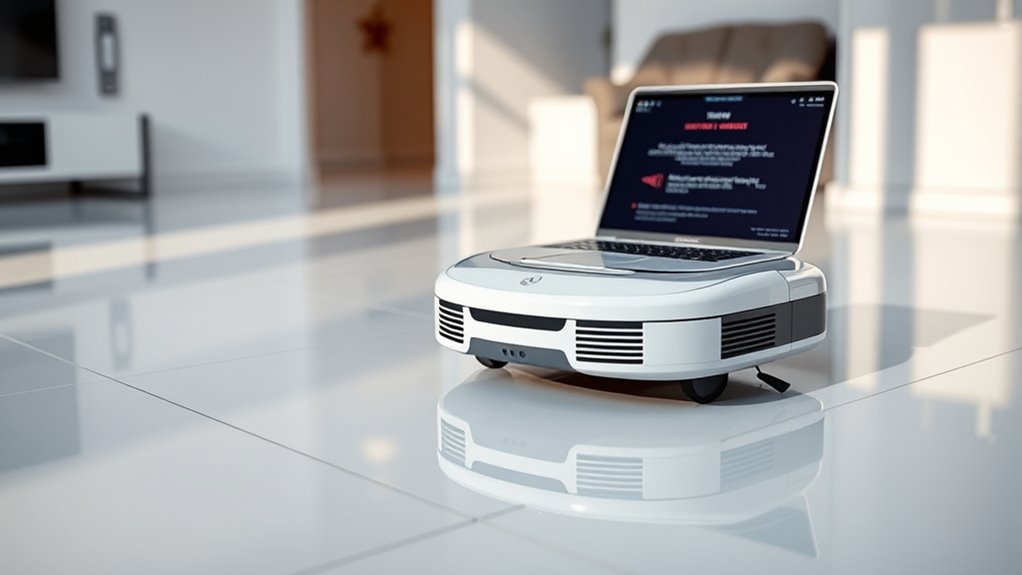
Many cleaning robots secretly pose cybersecurity threats that can compromise your privacy and home security. They transmit sensitive data, and if not properly protected, hackers can exploit vulnerabilities to access your network or install malware. Default passwords, outdated software, and weak network security measures add to the risks. If you keep your devices updated and follow best practices, you can minimize these dangers. Stay with us to uncover the full scope of these hidden cybersecurity concerns.

Get cleaning gear delivered free with Prime
- Fast, free delivery on millions of items
- Prime Video, Amazon Music and more included
- Member-only deals all year
Key Takeaways
- Cleaning robots can expose sensitive home data through insecure transmission and storage, risking privacy breaches.
- Malware targeting connected devices can disrupt operations or serve as entry points for broader network attacks.
- Default passwords and weak network settings make cleaning robots vulnerable to hacking and unauthorized access.
- Failing to apply firmware updates leaves devices exposed to known security flaws and exploits.
- Using unsupported software or neglecting network segmentation increases the risk of data theft and malware spread.
As cleaning robots become more common in homes and workplaces, their connectivity and automation introduce new cybersecurity risks that you need to be aware of. These devices often collect and transmit data about your environment, routines, and sometimes even personal information. If this data falls into the wrong hands, your privacy could be compromised, leading to potential misuse or identity theft. Many people overlook the importance of understanding how their cleaning robot handles data, assuming it’s just a simple device doing its job. However, these robots are connected to Wi-Fi networks, making them attractive targets for cybercriminals seeking to exploit vulnerabilities.
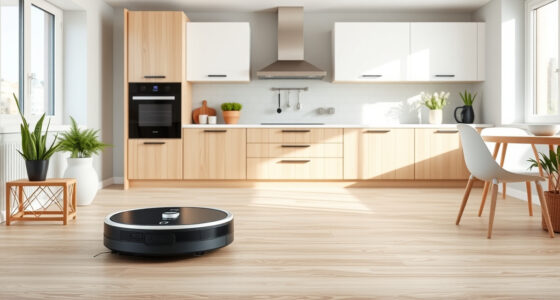
Cleaning robots connect to Wi-Fi, collecting data that could compromise your privacy if not properly secured.
One of the critical concerns is data privacy. Cleaning robots often store information about your home’s layout, schedules, and sometimes even sensitive data like security camera footage or personal conversations if integrated with smart home systems. If there’s a security flaw, hackers can access this data, turning your trusted device into a tool for spying or theft. To safeguard your privacy, it’s essential to stay updated on the device’s software and change default passwords. Manufacturers frequently release security patches to address vulnerabilities, so neglecting these updates leaves your device exposed.
Malware vulnerabilities are another noteworthy risk. Like any internet-connected device, cleaning robots can be targeted by malicious software designed to exploit weaknesses in their software or firmware. Once infected, a robot could be manipulated to behave unpredictably, such as disrupting its cleaning cycle or, worse, using it as a gateway to infiltrate your entire network. Malware can also be used to access personal data stored on the device or intercept data transmitted during operation. To reduce this threat, you should avoid downloading third-party firmware or software that isn’t officially supported by the manufacturer. Additionally, segmenting your home network so that your cleaning robot operates on a separate, secure Wi-Fi network can prevent malware from spreading to other, more sensitive devices.
Finally, many users underestimate the importance of secure network configurations. Default settings often lack strong encryption or unique passwords, making it easier for hackers to gain access. Regularly changing your Wi-Fi passwords and enabling two-factor authentication when available can considerably improve your device’s security. Remember, the convenience of smart cleaning devices comes with the responsibility to protect your data privacy and defend against malware vulnerabilities. Being proactive about security measures is the best way to enjoy the benefits of automation without risking your privacy or digital safety. Additionally, understanding the concept of penetration testing can help you assess the security of your network and identify potential weaknesses before malicious actors do.
Products Worth Considering

Arlo Pro Wireless Security Camera, 2K HDR, 6th Generation, 4-Camera Kit

Ring Alarm 14-Piece Wireless Security System Kit

Roborock H60 Ultra-B Cordless Stick Vacuum Cleaner
As an affiliate, we earn on qualifying purchases.
Frequently Asked Questions
How Can I Detect if My Cleaning Robot Has Been Hacked?
To detect if your cleaning robot has been hacked, start by monitoring its behavior for unusual activity, like unexpected movement or commands. Check its robot firmware for unauthorized updates or changes. Look for signs of network intrusion, such as unfamiliar devices connected or strange data traffic. Regularly review your network security settings, and update your passwords to prevent unauthorized access. Staying vigilant helps protect your robot and your network from potential threats.
Are There Specific Brands With Better Cybersecurity Protections?
When choosing a cleaning robot, you should look for brands with a strong reputation for cybersecurity. These brands often provide regular software updates that patch vulnerabilities and improve security features. You can research reviews and user feedback to see how well a brand manages cybersecurity risks. Prioritize companies known for transparency and proactive security measures, as this indicates they’re committed to protecting your data and devices from hacking threats.
What Steps Should I Take if My Robot’S Data Is Compromised?
If your robot’s data gets compromised, you should immediately update its firmware and reset it to factory settings. Check for any security patches from the manufacturer and verify data encryption is enabled. Change your passwords and review connected devices. Contact customer support for guidance and monitor your network for unusual activity. These steps help protect your information and prevent further breaches, securing your robot and connected systems.
Do Cleaning Robots Pose a Risk to Smart Home Networks?
Cleaning robots can pose a risk to your smart home networks by exposing vulnerabilities that hackers might exploit. They often collect data that impacts your robot privacy, and if not secured properly, they can become entry points for cyber threats. To protect yourself, regularly update firmware, use strong passwords, and segment your network to minimize vulnerabilities and keep your smart home safe from potential breaches.
Can Cybersecurity Vulnerabilities in Robots Lead to Physical Damage?
Cybersecurity vulnerabilities in cleaning robots can lead to physical damage if hackers exploit flaws like firmware exploitation or attempt robot sabotage. When security isn’t tight, malicious actors might manipulate the robot’s functions, causing it to malfunction or damage property. You should guarantee your robot’s firmware is up-to-date and implement strong security measures, reducing the risk of cyber attacks that could harm your home or business physically.
Conclusion
You might think cleaning robots are just convenient tools, but they also carry hidden risks. The theory that they’re completely secure is flawed; cybercriminals can exploit vulnerabilities to access your personal data or control your devices. Staying informed and taking proper cybersecurity measures isn’t just smart—it’s essential. Remember, trusting technology blindly can leave you exposed. By understanding these risks, you empower yourself to protect your digital life and keep your home safe.