
Robot cleaning maps create detailed layouts that guide your robot in covering your home efficiently, reducing missed spots and saving you time. Manual routes give you full control, allowing you to target specific areas and respond quickly to messes. If you want effortless, thorough cleaning, maps are ideal. But for precise, personalized control, manual routes work best. To find out which option suits your needs, keep exploring the differences and benefits.

Get cleaning gear delivered free with Prime
- Fast, free delivery on millions of items
- Prime Video, Amazon Music and more included
- Member-only deals all year
Key Takeaways
- Robot cleaning maps enable systematic, thorough coverage of large or complex spaces, reducing missed areas and improving efficiency.
- Manual routes offer flexible, targeted cleaning, ideal for specific spots or delicate items requiring personalized attention.
- Mapping technology provides automation with minimal supervision, while manual routes rely on user planning and control.
- Virtual boundaries in robot maps prevent entry into restricted areas, enhancing precision and customization.
- Choice depends on household size, layout complexity, and preference for automation versus manual control.

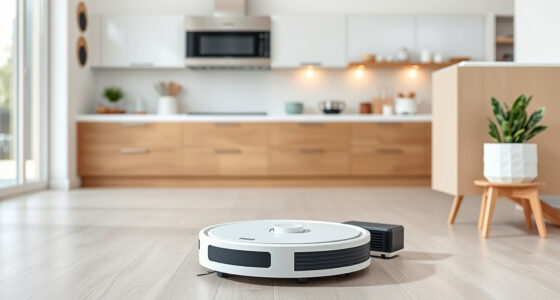
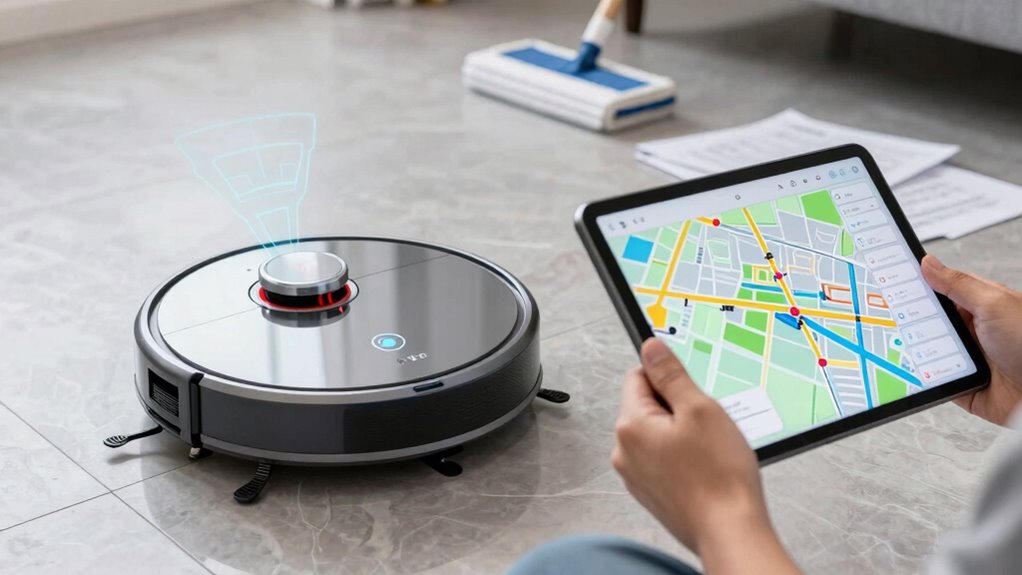
When it comes to keeping your home spotless, the choice between robot cleaning maps and manual cleaning routes can markedly impact efficiency. If you’re considering which method suits your lifestyle best, understanding how each approach influences cleaning efficiency and user customization is essential. Robot cleaning maps offer a high level of automation, allowing the robot to scan and create a detailed layout of your home. This map guides the robot to cover every inch systematically, reducing missed spots and ensuring a more thorough clean. Because the robot follows a logical path based on the map, you typically spend less time supervising or directing the cleaning process. That means you can focus on other tasks, knowing your home is being cleaned efficiently without constant intervention. Additionally, mapping technology allows for better navigation and coverage, especially in complex home layouts. This technology often includes features like virtual boundaries, which help prevent the robot from entering restricted areas, further enhancing cleaning precision. Furthermore, advancements in sensor technology contribute to more adaptive and responsive navigation, making the cleaning process even more efficient. A learning algorithm can also improve the robot’s performance over time by adjusting to your home’s specific layout and cleaning habits. Incorporating software updates can also keep the robot’s capabilities current and optimized for evolving home environments.
On the other hand, manual cleaning routes require your direct involvement. You decide where to clean, how to move through each room, and when to do it. This approach gives you full control, but it can also mean inconsistent coverage and potentially longer cleaning times, especially if you’re not following an optimized route. Manual routes can be less efficient, particularly if you’re not experienced at planning the most effective path, leading to missed areas or repetitive cleaning of the same spots. However, manual cleaning routes do allow for a high degree of user customization—you can prioritize certain areas, adapt your approach based on clutter or mess levels, and respond immediately to specific cleaning needs. This flexibility can be particularly beneficial in homes with unique or delicate items that require careful cleaning.
When comparing the two, robot cleaning maps tend to offer superior cleaning efficiency because they systematically cover the entire space, minimizing overlaps and missed spots. They are especially useful for larger homes or spaces with complex layouts. User customization, while somewhat limited, can still be achieved through app controls, scheduling, or virtual boundaries. Conversely, manual routes provide you with complete control, which appeals if you prefer to target specific areas or want to adjust your cleaning approach on the fly. Though manual cleaning can be less efficient in terms of time and coverage, it excels in customization, allowing you to adapt on demand. Overall, the decision often hinges on your household size, layout complexity, and personal preferences for control versus automation.
Ultimately, your choice depends on what matters most to you: if you want consistent, efficient cleaning with minimal effort, robot cleaning maps are a smart choice. If you prefer direct control and personalized cleaning strategies, manual routes give you that flexibility. Both methods have their strengths, but understanding their differences helps you make an informed decision to keep your home as clean and organized as possible.
robot vacuum with mapping technology
As an affiliate, we earn on qualifying purchases.
As an affiliate, we earn on qualifying purchases.
Frequently Asked Questions
How Do Robot Maps Adapt to Furniture Changes Over Time?
Robot maps adapt to furniture changes over time through furniture adaptability features that detect new obstacles or removed items. The robot continuously updates its map using advanced map updating technology, ensuring it recognizes and navigates around altered furniture layouts. This process helps maintain cleaning efficiency and prevents missed spots, giving you a seamless cleaning experience despite furniture rearrangements. Regular map updates keep your robot aligned with your evolving home environment.
Can Manual Routes Be Optimized for Difficult-To-Reach Areas?
Manual route planning can be optimized for difficult-to-reach areas, making your cleaning efforts as precise as a surgeon’s scalpel. By carefully analyzing your space, you can identify the trickiest spots and design a route that minimizes backtracking. Route optimization involves strategic sequencing, focusing on areas that are hard to access first or last. With thoughtful planning, you’ll conquer even the most challenging corners with ease and efficiency.
What Are the Cost Differences Between Robot Mapping and Manual Cleaning?
You’ll find that robot mapping generally has higher initial equipment expenses due to advanced sensors and software. However, over time, it often lowers labor costs by reducing manual effort. A thorough cost analysis shows that while upfront costs are higher, savings in labor and maintenance can make robotic solutions more economical long-term. Manual routes may cost less initially but could incur higher ongoing labor expenses, especially in large or complex spaces.
How Do Cleaning Effectiveness Compare Between the Two Methods?
Think of your cleaning process as a race—robot maps are like a GPS-guided marathon, ensuring thorough coverage and consistent Cleaning efficiency. Manual routes can be more like a jog in the park—less precise, risking missed spots. Robots reduce maintenance challenges by sticking to planned paths, but their effectiveness depends on map accuracy. Overall, robot cleaning often delivers a more uniform, dependable clean than manual methods.
Are There Privacy Concerns With Robot Mapping Technology?
Yes, there are privacy concerns with robot mapping technology. You might worry about privacy risks since these devices collect detailed data about your home’s layout. Ensuring data security is essential because hackers could access sensitive information. To protect yourself, check if the manufacturer offers robust security measures and transparent data policies. Being aware of these risks helps you make informed choices about using robot cleaning technology safely.
Conclusion
Imagine you’re steering a maze blindfolded, relying on guesswork—this is like manual cleaning routes. Now picture having a map that guides you effortlessly through every twist and turn. Robot cleaning maps work the same way, ensuring thorough coverage with precision. Studies show automated routes reduce cleaning time by up to 30%. Embrace the future; with a smart map, you’ll clean smarter, not harder—making your home sparkle without the stress of manual planning.
Halloween Picks
halloween
As an affiliate, we earn on qualifying purchases.