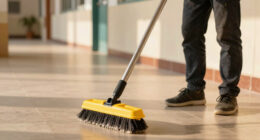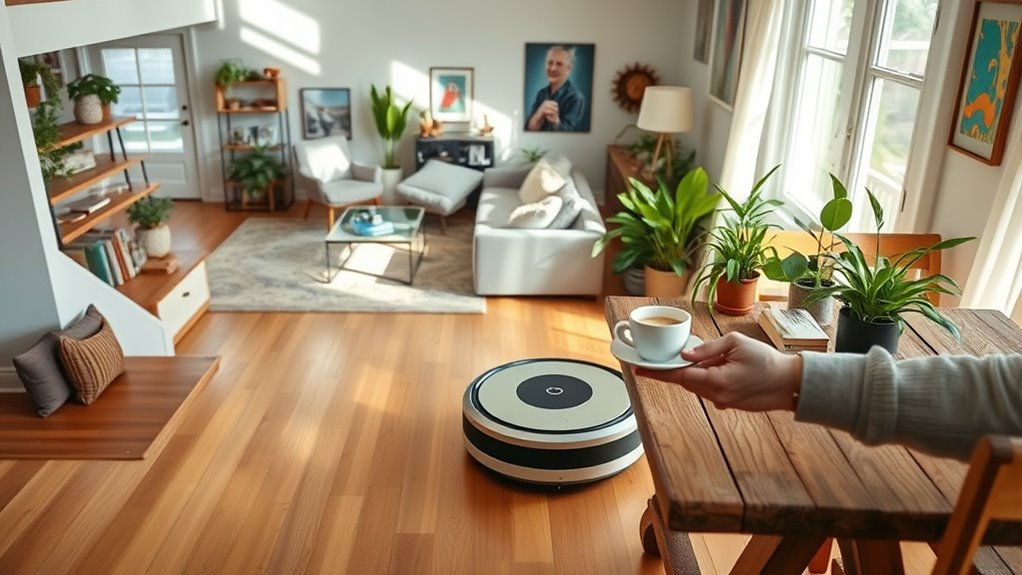

In two-story homes, robot vacuums excel for daily maintenance on main floors, handling dust and pet hair efficiently with minimal effort. For stairs, corners, and hard-to-reach spots, manual cleaning offers better control and thoroughness. Combining both methods guarantees your home stays clean without overloading your schedule. Knowing when to rely on each approach helps you maximize effectiveness and convenience—stay tuned to discover how to create the perfect cleaning routine for your space.
Key Takeaways
- Use robot vacuums for daily maintenance on main floors; manual cleaning is better for stairs and hard-to-reach areas.
- Robot vacuums excel in open, clutter-free spaces, while manual cleaning handles corners, edges, and furniture more thoroughly.
- Manual cleaning is preferable for deep cleaning, scrubbing, and sanitizing spots that robots cannot access.
- Combining robot vacuums and manual methods maximizes efficiency, reducing time and effort in a two-story home.
- Routine use of robots maintains cleanliness daily, while manual cleaning ensures detailed, occasional deep cleaning.
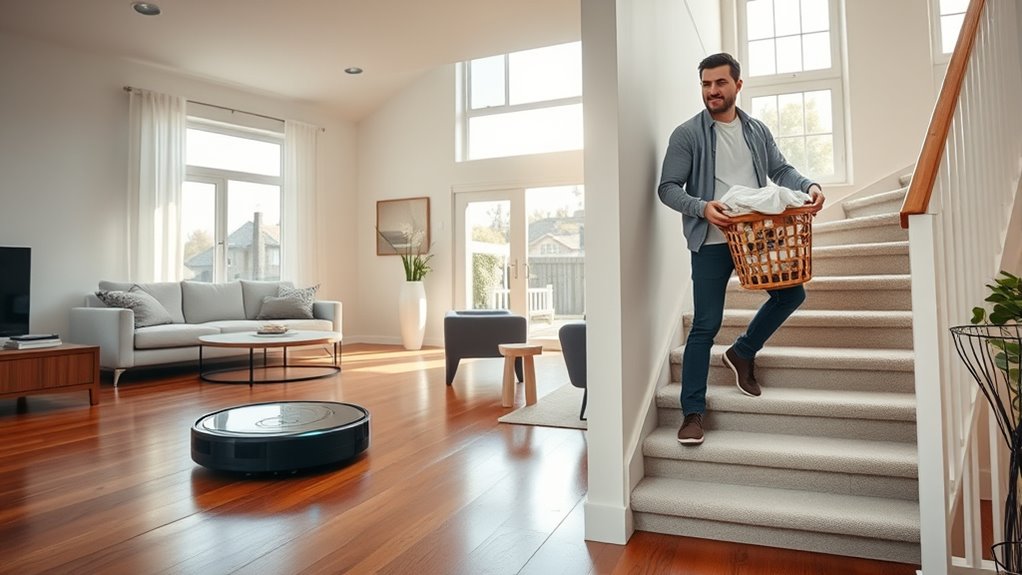
Cleaning a two-story home can be challenging, but whether you choose a robot vacuum or stick with manual cleaning methods, understanding their strengths and limitations is key. When it comes to maintaining cleanliness across multiple levels, both options have their advantages and drawbacks. If you’re considering a robotic vacuum, you’ll find that it excels at daily maintenance, especially on the main living areas. These devices can be programmed to run automatically, saving you time and effort. They are particularly effective for quick cleanups and handling dust, pet hair, and small debris. However, their navigation can sometimes be limited by complex layouts, stairs, or clutter. Most robot vacuums lack the ability to clean stairs or reach certain corners, so you’ll still need to manually address those areas. Additionally, they often require regular emptying and maintenance, which can become inconvenient over time.
On the other hand, manual cleaning methods—such as using traditional vacuums, brooms, and mops—offer greater control and versatility. When you’re wielding a vacuum, you can target specific spots, reach into tight corners, and clean stairs or furniture surfaces with ease. Manual cleaning allows you to thoroughly scrub and sanitize areas that robots might overlook or struggle with. That said, manual cleaning can be time-consuming and physically demanding, especially in larger homes. It also requires more planning and effort on your part, which might not fit into your busy schedule. Plus, without a systematic approach, some areas might be neglected or cleaned less frequently.
In two-story homes, the key is balancing these tools. Use a robot vacuum for daily upkeep on the main floors, particularly in open, clutter-free spaces where it can navigate effectively. This keeps dust and debris in check with minimal effort. For the stairs, corners, and less accessible spots, manual cleaning remains essential. You might find it helpful to schedule regular deep cleans with traditional methods, ensuring every nook and cranny gets attention. Combining both approaches allows you to maximize efficiency: let the robot handle routine tasks, and reserve manual cleaning for detailed, targeted work. Ultimately, your choice depends on your home’s layout, your lifestyle, and your cleaning priorities. Recognizing when each method shines helps you create an effective, manageable cleaning routine that keeps your two-story home spotless without overwhelming you.

Robot Vacuum and Mop Combo, 2 in 1 Robot Vacuum Cleaner with WiFi/App, Smart Robotic Vacuums with Strong Suction, Schedule, Self-Charging, Slim, Quiet, Ideal for Hard Floor, Pet Hair, Low Pile Carpet
🏠[2-In-1 Robot Vacuum and Mopping]: Use iMartine mopping robot vacuum cleaner to quickly remove dust, paper scraps, and…
As an affiliate, we earn on qualifying purchases.
As an affiliate, we earn on qualifying purchases.
Frequently Asked Questions
How Does Cleaning Efficiency Differ Between Robots and Manual Methods?
You’ll find that robots offer consistent cleaning, easily maneuvering around furniture and tight spaces, making them efficient for regular maintenance. Manual cleaning, however, allows you to target stubborn dirt and reach tricky areas more thoroughly, especially on stairs or high surfaces. Overall, robots excel in quick, routine cleans, while manual methods provide deeper, more detailed cleaning when needed. Combining both ensures your home stays spotless with ideal efficiency.
What Are the Safety Considerations for Robot Vacuums on Stairs?
Imagine your robot vacuum is like a trusty sidekick. To keep it safe on stairs, make sure it has built-in sensors that detect edges and drop-offs. Always activate boundary strips if you want to prevent accidents. Regularly check for firmware updates that improve navigation and safety features. Never leave it unattended on stairs, and stay nearby until you’re confident it handles stairs and edges well.
Can Robots Handle Delicate Surfaces Better Than Manual Cleaning?
Yes, robots can handle delicate surfaces better than manual cleaning because they use gentle brushes and soft suction settings. You don’t need to manually scrub or apply pressure, which reduces the risk of damage. Plus, most robots are programmed to avoid high-impact areas and sensitive materials. This careful approach protects your delicate floors like hardwood or silk rugs, giving you peace of mind while maintaining cleanliness effortlessly.
How Does Maintenance Cost Compare Between Robots and Manual Cleaning Tools?
You’ll find that robot vacuums typically cost less to maintain over time, with an average annual expense of around $150, compared to manual tools, which may require replacements or repairs costing up to $250 annually. Robots need minimal upkeep—just occasional filter changes—whereas manual tools often involve replacing parts or buying new equipment. This makes robots a more cost-effective choice for long-term cleaning, especially in busy two-story homes.
Are There Specific Brands or Models Recommended for Two-Story Homes?
For two-story homes, consider robotic vacuums like the iRobot Roomba i7+ or the Roborock S7 MaxV Ultra, which offer smart navigation and multi-floor mapping. These models can handle multiple levels with virtual wall barriers or zoning features, making cleaning efficient. Always check their compatibility with your home’s layout and make certain they have strong battery life and obstacle avoidance to keep your home spotless across both floors.

BISSELL 3-in-1 Stair Tool for Carpet and Upholstery Cleaners, New Genuine OEM Part, 3262
For the best results, pair your BISSELL machine with BISSELL genuine replacement parts. Damage to or malfunction of…
As an affiliate, we earn on qualifying purchases.
As an affiliate, we earn on qualifying purchases.
Conclusion
Whether you choose a robot or go manual, your decision shapes your home’s efficiency, your cleaning routine, and your comfort. Do you prioritize convenience or control? Do you prefer automation or hands-on effort? In the end, it’s about what fits your lifestyle, what meets your needs, and what makes your home feel just right. Because when it comes to two-story homes, the best choice is the one that works best for you—every time.

Kilgone Robot Vacuum and Mop Combo, Tangle-Free Powerful Suction, Robotic Vacuum Cleaner – Alexa & App Scheduling, Long Runtime, Automatic Robot Vacuum Cleaners for Home
[2-in-1 mop and vacuum robot] The G20 features a brushless motor and a 2600 mAh battery for 120…
As an affiliate, we earn on qualifying purchases.
As an affiliate, we earn on qualifying purchases.

Bissell Commercial BGU18000T Heavy Duty Upright Vacuum, with on-Board Tools, Dual Motor, 18” Cleaning Path, 40’Cord
Powerful 900-watt dual motor deep cleans in just one pass.
As an affiliate, we earn on qualifying purchases.
As an affiliate, we earn on qualifying purchases.