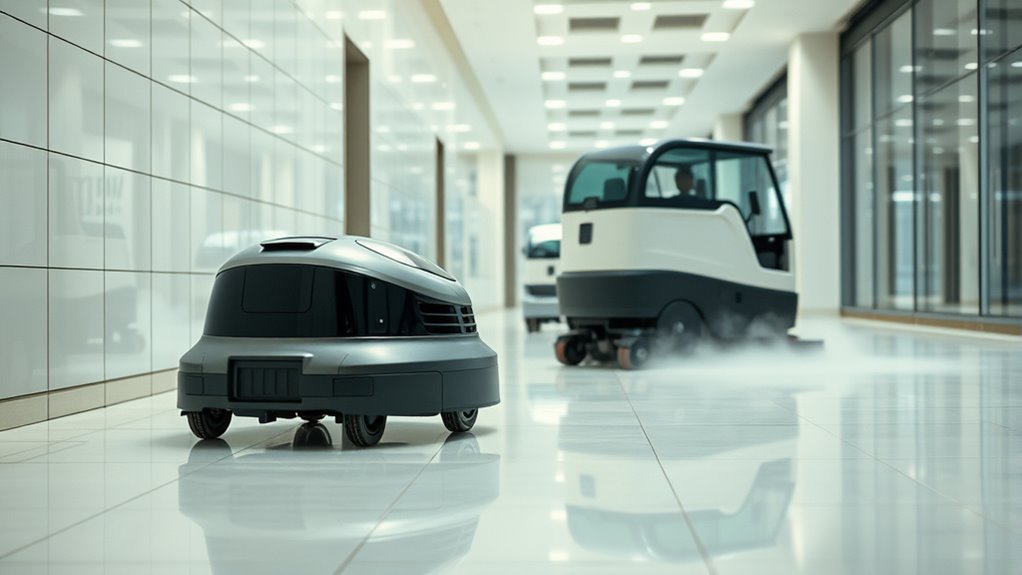

Robotic sweepers are best for simple environments with minimal clutter, where quick debris removal on dry surfaces is needed. They’re ideal for light-duty, regular cleaning of open areas. On the other hand, robotic scrubbers excel in more demanding spaces with tougher stains, wet messes, or complex layouts, thanks to their advanced navigation and wet cleaning capabilities. If you want to understand which suits your needs best, explore further to find out more about their specific use cases.
Key Takeaways
- Robotic sweepers are ideal for open, clutter-free spaces performing regular dust and debris removal.
- Robotic scrubbers excel in environments requiring wet cleaning, stains removal, and heavy-duty scrubbing tasks.
- Sweepers suit simple surfaces and minimal obstacles, while scrubbers handle uneven or complex floor types.
- Sweepers are better for quick, light-duty cleaning, whereas scrubbers are suitable for thorough, intensive cleaning routines.
- The environment’s complexity and cleaning needs determine whether a sweeper or scrubber is more appropriate.
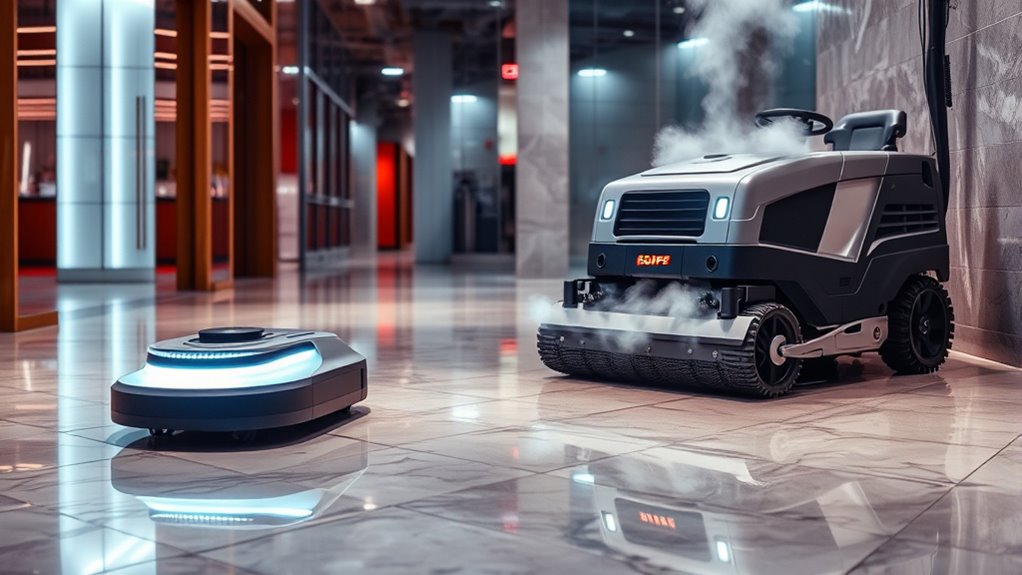
When choosing between robotic sweepers and scrubbers, understanding their differences can help you make the right decision for your cleaning needs. One of the key factors to consider is how each machine navigates your space. Robotic sweepers are designed to handle simple environments with minimal obstacles, but they often face navigation challenges in cluttered or complex areas. Their sensors and mapping technology may struggle with tight corners, uneven surfaces, or unexpected objects, leading to missed spots or the need for manual intervention. Conversely, robotic scrubbers are built for more demanding environments. They typically feature advanced navigation systems, including laser or camera-based sensors, enabling them to maneuver around obstacles more effectively and maintain thorough coverage in large or complex areas.
Another important aspect is maintenance requirements. Robotic sweepers generally have fewer moving parts and simpler designs, making them easier and quicker to maintain. Regularly emptying the dustbin, inspecting brushes, and updating software usually suffice to keep them running smoothly. However, their brushes and filters can wear out over time, requiring replacement to sustain cleaning efficiency. Robotic scrubbers, on the other hand, tend to have more complex mechanisms—such as water tanks, brushes, and squeegees—that demand more frequent and detailed maintenance. You’ll need to refill or replace cleaning solutions, clean or replace brushes, and check for blockages in the water systems. This added maintenance can lead to longer downtime and higher upkeep costs. Additionally, some models incorporate smart technology features that can improve cleaning performance and reduce manual oversight.
When evaluating your cleaning needs, think about the size and complexity of your space. For open areas with minimal furniture or obstacles, a robotic sweeper might be sufficient, especially if your primary goal is dust and debris removal. Its simplicity and lower maintenance needs make it a convenient choice for regular light-duty cleaning. However, if your environment involves sticky spills, stubborn stains, or requires wet cleaning, a robotic scrubber becomes more appropriate. Its ability to scrub floors thoroughly and handle tougher messes makes it suitable for more intensive cleaning tasks.
Frequently Asked Questions
How Do Robotic Sweepers Perform in Outdoor Environments?
Robotic sweepers perform well outdoors, handling various outdoor terrain with ease. They are designed to be weather-resistant, so rain or dust won’t stop them from cleaning. You’ll find them effective on uneven surfaces like concrete, asphalt, or gravel. Their weather resilience guarantees continuous operation, making them ideal for outdoor spaces. Just make sure to choose models built specifically for outdoor use to maximize performance and durability.
Can Robotic Scrubbers Handle Uneven or Textured Floors?
Robotic scrubbers can handle uneven or textured floors, but their effectiveness depends on the floor texture and cleaning challenges. They’re designed with adaptable brushes and scrubbing mechanisms that navigate surface irregularities, making them suitable for many textured surfaces. However, extremely rough or deeply textured floors may pose difficulties, potentially requiring manual cleaning or specialized equipment. Evaluate your floor’s specific texture to verify the scrubber’s capabilities match your cleaning needs.
What Is the Maintenance Requirement for Each Type?
Like a well-oiled machine, your robotic sweepers and scrubbers need regular attention. You’ll follow maintenance schedules, clean sensors, and check batteries. Consumable replacements, such as brushes or pads, are essential to keep them performing ideally. Sweepers generally require less upkeep and simpler maintenance, while scrubbers demand more frequent checks and part replacements. Staying on top of these tasks ensures your machines run smoothly and last longer, even in bustling environments.
Are Robotic Sweepers Suitable for Hazardous or Sensitive Areas?
Robotic sweepers aren’t ideal for hazardous environments or sensitive areas because they may lack the precision or containment needed to handle dangerous substances safely. In such settings, you should opt for specialized cleaning equipment designed to meet safety standards and prevent cross-contamination. Using robotic sweepers here could pose risks to workers and compromise the integrity of sensitive materials, so always choose tools tailored for hazardous or delicate environments.
How Do Initial Costs Compare Between Sweepers and Scrubbers?
You’ll find the cost comparison between robotic sweepers and scrubbers fascinating—scrubbers often demand a heftier initial investment. While sweepers are more budget-friendly upfront, scrubbers may require more financing options due to their advanced technology. Think of it as choosing between a bicycle and a car; both get you there, but your budget and needs decide. So, weigh your options carefully before diving into the investment.
Conclusion
In the battle of robotic sweepers versus scrubbers, your choice hinges on cleanliness needs. Sweepers swiftly sweep away dust, while scrubbers scrub surfaces spotless. Decide based on the dirt, demand, and desired detail. For swift, simple sweeping, select a sweeper’s speed. For thorough, deep cleaning, scrubbers stand strong. So, whether you want quickness or quality, understanding your unique requirements will help you choose the cleaner champion. Clear, confident, and clean—your perfect match awaits!