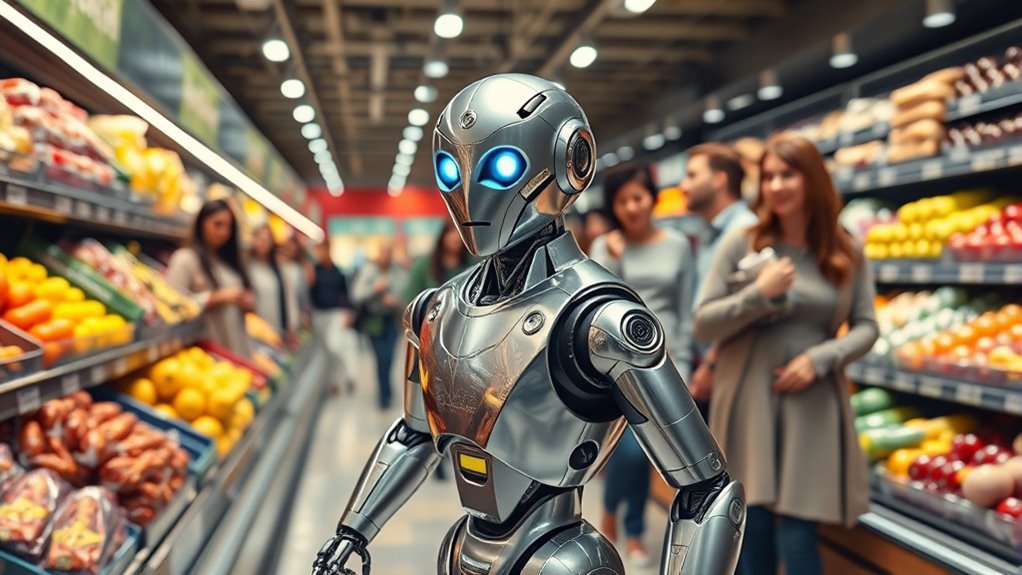

Robots in retail actively engage shoppers by greeting them, offering assistance, recognizing returning customers, and suggesting personalized options. They also manage inventory efficiently with sensors and cameras, ensuring products are available and accurately stocked. By automating tasks like restocking and checkout, robots help store staff focus on customer service and organization. This creates a smoother, more interactive shopping experience for you. To discover how these innovations are shaping the future of retail, keep exploring further.
Key Takeaways
- Robots greet customers, recognize returning shoppers, and assist with product locations and promotions for personalized service.
- They enhance engagement by adapting interactions based on customer preferences and shopping behavior.
- Autonomous robots monitor inventory levels, identify misplaced items, and ensure stock accuracy in real time.
- Robots streamline store operations by reducing manual stock checks, managing logistics, and speeding up returns.
- They create a more interactive, efficient shopping environment, improving customer satisfaction and store organization.

Have you ever wondered how robots are transforming the retail experience? Today, these machines do more than just stock shelves; they actively shape how you interact with stores and influence your overall shopping journey. One of the key ways they do this is by boosting customer engagement. Instead of traditional cashier counters, you might find robots greeting you at the entrance, offering assistance, or guiding you to specific products. These robots are programmed to recognize returning customers and recall preferences, making your shopping experience more personalized and seamless. When you approach a robot, it can answer questions about product locations, provide details about ongoing promotions, or even suggest alternatives based on your shopping history. This interactive element makes shopping more engaging and less frustrating, especially during busy hours when human staff may be overwhelmed. It’s like having a knowledgeable assistant right there with you, making your trip smoother and more enjoyable. Additionally, the integration of artificial intelligence enables these robots to adapt their interactions based on customer behavior, further enhancing the shopping experience.
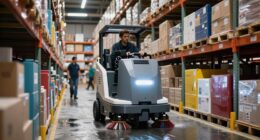
Beyond customer interaction, robots are revolutionizing inventory management in retail stores. Traditionally, keeping track of stock levels involved manual checks, which are time-consuming and prone to errors. Now, robots equipped with advanced sensors and cameras can autonomously scan shelves, monitor inventory levels, and identify misplaced or out-of-stock items. This automation guarantees that store inventories stay accurate and up-to-date, reducing the chances of selling products that aren’t available or missing out on sales due to stockouts. With real-time data collection, store managers can make faster decisions about restocking and promotional displays, ultimately improving sales and customer satisfaction. When you visit a store that employs robots for inventory management, you benefit from better product availability and a more organized shopping environment. You won’t have to wander around looking for items or ask staff to check stock; the store’s technological backbone guarantees everything is in its right place.
Furthermore, these robots can operate behind the scenes to streamline logistics, reducing wait times and improving overall efficiency. They can deliver items from storage to the sales floor or assist in processing returns quickly. This integration of robotic technology means you’re more likely to find what you’re looking for when you need it, without unnecessary delays. As robots become more sophisticated, they’re not only helping stores run more smoothly but also creating a more interactive, engaging, and efficient retail environment for you. So, next time you see a robot assisting in a store, remember that it’s there to enhance your shopping experience—making it more personalized, organized, and enjoyable.

AI Welcome Robot for Restaurant and Retail Store, Customer Reception Service Robot with Voice Dialogue and Digital Signage
This welcoming robot features a cute interactive face and intelligent AI talking system that delivers friendly greeting and…
As an affiliate, we earn on qualifying purchases.
As an affiliate, we earn on qualifying purchases.
Frequently Asked Questions
How Do Robots Handle Customer Privacy Concerns?
Robots handle customer privacy concerns by prioritizing data privacy and following strict ethical considerations. They use secure systems to protect personal data and guarantee compliance with privacy laws. You can trust that these robots are designed to minimize data collection and only gather necessary information. Retailers implement transparent policies, so you’re aware of how your data is used, fostering trust and safeguarding your privacy during your shopping experience.
What Training Is Required for Staff to Manage Retail Robots?
Think of staff training as tuning a musical instrument—you need precision and familiarity. You’ll learn how to handle robot maintenance, troubleshoot issues, and optimize their functions. Your training also covers programming basics and safety protocols, ensuring smooth operation among shoppers. This hands-on approach helps you confidently manage retail robots, making sure they work seamlessly and enhance customer experience, just like a well-conducted orchestra.
Can Robots Assist With Inventory Management and Restocking?
Robots can definitely assist with inventory management and restocking by using autonomous navigation to move efficiently through the store. They help improve inventory accuracy by scanning shelves and tracking stock levels in real-time. As you manage these robots, make certain they’re programmed with updated maps and inventory data. This way, they can quickly identify low-stock items, restock shelves accurately, and reduce human error, streamlining your retail operations effectively.
How Do Robots Adapt to Different Store Layouts?
Imagine a robot in a grocery store that uses advanced sensors and AI to adapt to different layouts. It analyzes each store’s unique navigation pathways and adjusts its movements accordingly. This way, it can optimize store navigation and layout, ensuring efficient restocking and assistance. By continuously learning from store-specific data, the robot improves its performance, seamlessly integrating into diverse retail environments and enhancing overall customer experience.
What Are the Costs Associated With Implementing Retail Robots?
When you consider implementing retail robots, you need to conduct a thorough cost analysis, including initial investments and ongoing maintenance. Technology integration costs can be significant, involving hardware, software, and staff training. Expect to spend on upgrading infrastructure, ensuring compatibility, and ongoing support. While the upfront costs may seem high, the efficiencies gained can offset expenses over time, making it a valuable investment for modern retail operations.

Warehouse Management and Inventory Control System
As an affiliate, we earn on qualifying purchases.
As an affiliate, we earn on qualifying purchases.
Conclusion
As you walk through the retail space, robots become your helpful guides, transforming shopping into a seamless dance. They’re not just machines; they’re your new shopping companions, turning the store into a lively orchestra of technology and human interaction. Embrace this future where robots blend into your shopping experience, making it smoother and more exciting. The retail landscape is evolving, and with robots by your side, it’s like stepping into a high-tech adventure—ready for what’s next.
automated checkout robots
As an affiliate, we earn on qualifying purchases.
As an affiliate, we earn on qualifying purchases.

Aoeeki Retail Anti-Theft Equipment, EAS Security Tags Sensor rf 8.2mhz System Sound Light Alarm Tower with 100pcs Clothing Security Tags Protection of Supermarkets Clothing Stores Toy Stores
✅【OPERATING PRINCIPLE】:The 8.2MHz anti-theft alarm sensor of the Aoeeki Security Tower operates based on the electromagnetic induction principle….
As an affiliate, we earn on qualifying purchases.
As an affiliate, we earn on qualifying purchases.