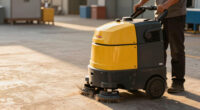
Orbital floor machines offer a gentle, low-noise clean that’s perfect for delicate surfaces like hardwood or vinyl, lifting dirt without causing damage. In contrast, rotary models deliver vigorous agitation, making them ideal for deep cleaning tough stains and heavily soiled floors. While orbitals are quieter and safer for sensitive areas, rotaries provide more power for stubborn dirt. Want to see how your cleaning needs match each type? Keep exploring to find out more.

Get cleaning gear delivered free — and shop member deals
- Fast, free delivery on millions of items
- Access to Prime Big Deal Days deals on October 6–7
- Prime Video, Amazon Music and more included
Key Takeaways
- Orbital machines use gentle, circular motion ideal for delicate surfaces, while rotary models provide vigorous agitation for deep cleaning.
- Orbital machines minimize surface damage and noise, making them suitable for sensitive areas; rotary models are more effective on heavily soiled floors.
- Rotary models generate louder noise and vibration, whereas orbital machines operate quietly and with less surface wear.
- Orbital machines are best for light-duty and delicate cleaning tasks; rotary models excel in industrial, heavy-duty cleaning.
- Choosing between them depends on surface type, cleaning intensity, and noise preferences for optimal results.
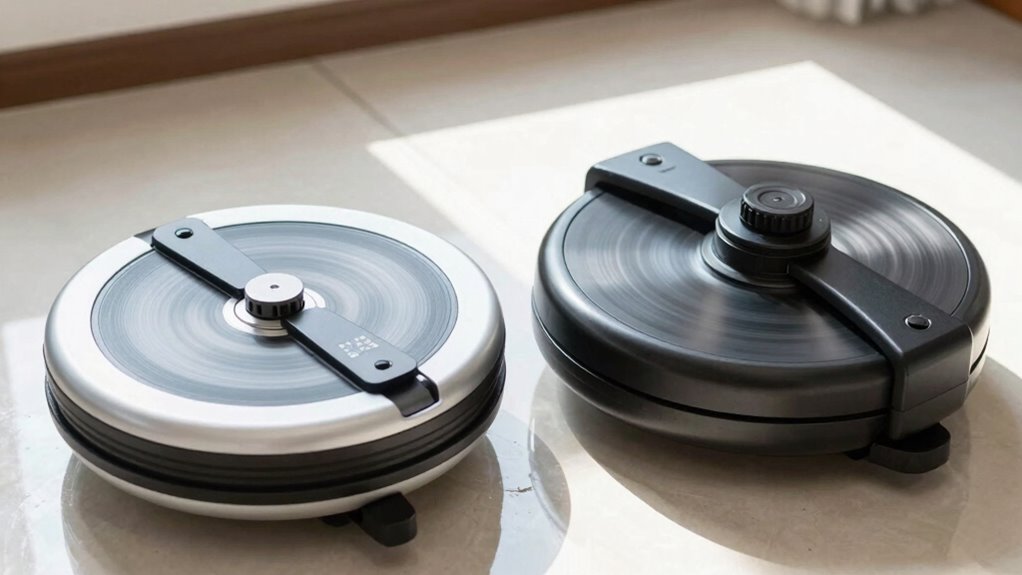
When choosing between orbital floor machines and rotary models, understanding their differences can considerably impact your cleaning efficiency and surface results. One key factor to consider is how each machine handles surface agitation. Orbital machines operate with a small, circular motion that moves the pad in a random orbit, which means they tend to deliver gentler surface agitation. This makes them ideal for delicate surfaces like hardwood, vinyl, or laminate, where aggressive scrubbing could cause damage. They lift dirt and debris without applying excessive pressure, preventing surface wear over time. Rotary machines, on the other hand, spin their pads in a continuous, circular motion, generating more vigorous surface agitation. This aggressive action is better suited for heavily soiled areas, tough stains, or industrial settings where deep cleaning is necessary. The higher level of surface agitation with rotary models effectively dislodges stubborn dirt, but it can also pose a risk of scratching or dulling delicate finishes if not used carefully. Additionally, choosing the right machine can influence your overall cleaning efficiency, especially when considering the balance between surface safety and deep cleaning power. A surface type that is more sensitive requires a gentler approach, which orbital machines provide more effectively.
Another important aspect to evaluate is noise levels. Orbital machines are generally quieter because their small, orbiting motion produces less vibration and noise. This quieter operation makes them preferable in settings where noise reduction is a priority, such as hospitals, schools, or busy commercial spaces. They allow you to work longer hours without disturbing clients or occupants, and they tend to generate less fatigue for the operator. Rotary models tend to be louder due to their powerful, continuous spinning action. The increased noise can be disruptive, especially in environments that require minimal disturbance. If noise levels are a critical concern for you, an orbital machine offers a significant advantage, allowing for more flexible operation during working hours or in noise-sensitive areas. Additionally, noise level can influence operator comfort and overall productivity during prolonged use.
Ultimately, your choice depends on your cleaning needs. If you require a gentle, low-noise machine for light-duty tasks and delicate surfaces, an orbital floor machine is the smarter option. It provides effective cleaning with less surface agitation and quieter operation. Conversely, if you’re tackling heavily soiled floors, stubborn grime, or industrial messes, a rotary model’s vigorous surface agitation will deliver superior results, despite the higher noise levels. Both machines have their strengths, but understanding how they differ in surface agitation and noise levels helps you select the right tool for your specific cleaning challenges. This knowledge helps you maximize efficiency and protect your surfaces during every job.
As an affiliate, we earn on qualifying purchases.
Frequently Asked Questions
Which Machine Is Better for Removing Stubborn Floor Coatings?
For removing stubborn floor coatings, an orbital floor machine is your best choice. Its gentle, random orbital motion excels in surface preparation and coating removal without gouging or damaging the surface. Unlike rotary models that rely on aggressive spinning, orbital machines provide controlled, uniform abrasion. This makes them ideal for delicate surfaces or when you need thorough coating removal, ensuring a smooth, even finish without risking surface damage during the process.
How Do Maintenance Requirements Differ Between Orbital and Rotary Machines?
You’ll find that maintenance frequency varies between orbital and rotary machines; orbital models generally require less frequent upkeep. Lubrication requirements are also simpler for orbitals, as they have fewer moving parts that need regular oiling. Rotary machines, with their more complex mechanisms, demand more consistent lubrication to keep them running smoothly. Overall, orbital machines are easier to maintain, saving you time and effort over their lifespan.
Can Orbital Machines Handle Heavy-Duty Industrial Cleaning Tasks?
You bet orbital machines can handle heavy-duty industrial cleaning tasks! They’re like the superhero of surface preparation, effortlessly tackling stubborn dirt and grime. Thanks to their superior dust control, you stay cleaner and safer during intense cleaning sessions. While rotary machines might struggle with delicate surfaces, orbital models provide powerful, consistent performance even in tough environments, making them your go-to tool for demanding industrial jobs.
Are Orbital Floor Machines More Cost-Effective Over the Long Term?
Yes, orbital floor machines are typically more cost-effective over the long term. They require less maintenance due to fewer moving parts, which lowers your repair costs. Their efficient cleaning action reduces the need for multiple passes, saving water and chemicals. When you do a cost analysis, you’ll find that orbital machines offer better durability and operational savings, contributing to significant long-term savings and making them a smart investment for ongoing cleaning needs.
What Safety Features Are Unique to Each Type of Machine?
You’ll find that orbital floor machines often feature lower vibration levels, making them safer and more comfortable during extended use. They also tend to produce less noise emissions, reducing workplace noise pollution and improving safety for operators. Rotary models, on the other hand, may generate higher vibration and noise, which can lead to fatigue or safety concerns over time. Both types prioritize safety, but these unique features help you choose the right machine for your needs.
Conclusion
So, think of orbital machines as the suave dancers gliding effortlessly across the floor, making your job look easy and stylish. Rotary models? They’re the clumsy flailers, throwing dust and chaos everywhere, leaving your floor looking like a tornado just visited. If you want smooth, professional results without turning your workspace into a slapstick comedy, go orbital. Otherwise, get ready for a wild ride and a dirty dance floor you’ll regret!
Fall Picks
fall essentials
As an affiliate, we earn on qualifying purchases.