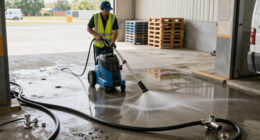
A concrete scarifier surface prep machine removes coatings, roughens concrete, and levels uneven spots, but the right choice depends on the size of the job and the finish you need. I’d put the Tomahawk Power 8-inch gas scarifier first for its Honda engine and two drum kits, with the CS Unitec pneumatic scarifier standing out where compressed air is available and the Makita 9-inch planer offering a more compact electric option. Wider walk-behind machines can cover larger floors faster, while smaller electric and pneumatic tools are easier to maneuver in tight areas. Dust collection, drum type, and available power can matter as much as motor output. Read on for how the options compare and which one fits your surface prep work.

Get cleaning gear delivered free with Prime
- Fast, free delivery on millions of items
- Prime Video, Amazon Music and more included
- Member-only deals all year
Complete the kit


Key Takeaways
- Drum choice changes the job: The Tomahawk Power includes two drum kits, while the TSCAR-8H listing specifies a wire brush drum; match the cutter to coating removal, texture, or cleaning needs.
- Working width affects time and access: The 12-inch gas scarifier and 20-inch grinder cover more ground per pass, while 7- to 9-inch tools suit smaller areas and narrower access.
- Power availability narrows the field: Gas models suit sites without convenient electricity, pneumatic scarifiers require a suitable compressor, and electric models depend on circuit capacity and cord access.
- Dust handling varies across the lineup: The Makita planer includes a dust extraction shroud, while buyers should verify dust collection compatibility for other machines before using them indoors.
- Scarifiers and grinders serve different finishes: The 20-inch floor grinder and VEVOR 7-inch grinder are alternatives for grinding work; scarifiers and scabblers are aimed more at aggressive removal and surface texture.
| Electric 8-Inch Concrete Scarifier Planer and Grinder for Sidewalk Repair and Traffic Line Removal |  | Best Value Walk-Behind | Motor: 2 HP / 18 A electric | Scarifying Width: 8 inches | Scarifying Rate: 350–500 sq ft/hour at 1/8-inch depth per pass | VIEW ON AMAZON | See Our Full Breakdown |
| CS Unitec 320.2412T 8″ Walk-Behind Pneumatic Concrete Scarifier with Tungsten Carbide-Tipped Cutter Drum | 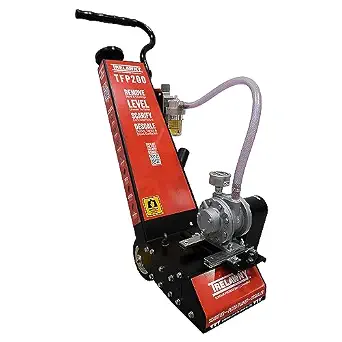 | Best Premium Build | Model: 320.2412T (TFP 200) | Power: 3.5 HP pneumatic air motor | Air Requirements: 165 CFM at 90 PSI | VIEW ON AMAZON | See Our Full Breakdown |
| Adjustable-Speed Concrete Scabbler with 100 mm Triple Alloy Roller |  | Best for Walls and Tight Spaces | Roller Width: 100 mm (3.9 inches) | Roller Heads: 3 | Roller Material: Tungsten alloy | VIEW ON AMAZON | See Our Full Breakdown |
| Makita GA9060RX3 9″ Concrete Surface Planer with Dust Extraction Shroud |  | Best Brand Reliability | Motor: 15.0 AMP | No-Load Speed: 6,600 RPM | Disc Size: 9 inches | VIEW ON AMAZON | See Our Full Breakdown |
| Tomahawk Power 8″ Gas Concrete Scarifier Planer Grinder with 5.5 HP Honda Engine + 2 Drum Kits |  | Best for Remote Job Sites | Engine: Air-cooled 163 cc / 5.5 HP Honda GX160 | Scarifying Width: 8 inches | Scarifying Rate: 350–500 sq ft/hour at 1/8-inch depth per pass | VIEW ON AMAZON | See Our Full Breakdown |
| VEVOR Walk-Behind Concrete Scarifier, 3700 W, 2500 RPM |  | Best for Traffic Line Removal | Power source: Fuel powered | Power: 3700 W | Maximum rotational speed: 2500 rpm | VIEW ON AMAZON | See Our Full Breakdown |
| 800W Electric Concrete Scabbler with Adjustable Speed |  | Best for Controlled, Small-Area Prep | Motor power: 800 W | Disc diameter: 100 mm | Grinding heads: 3 alloy heads | VIEW ON AMAZON | See Our Full Breakdown |
| 13 HP Walk-Behind Concrete Scarifier with 12-Inch Cutting Path |  | Best for High-Output Milling | Engine: 13 HP gasoline | Cutting path: 12 inches | Milling depth: 0–0.4 inches (0.3–10 mm) | VIEW ON AMAZON | See Our Full Breakdown |
| 20-Inch Walk-Behind Concrete Floor Grinder with Dust Collector, 7 kW, 220 V |  | Best for Dust-Controlled Commercial Grinding | Power source: Corded electric | Voltage: 220 V | Total power: 7 kW (9.4 HP) | VIEW ON AMAZON | See Our Full Breakdown |
| VEVOR 7-Inch Electric Concrete Floor Grinder, 1300W |  | Best for Corners and Detail Work | Motor: 1.7 HP pure copper motor | Power: 1300 W | Maximum speed: 1720 RPM | VIEW ON AMAZON | See Our Full Breakdown |
| Banfluxion Pneumatic Concrete Scabbler Scarifier – 7-Head Hand-Push Air Floor Grinder, 11.42in Working Width |  | Best for Heavy Structural Prep | Power Source: Pneumatic (air compressor required) | Number of Heads: 7 | Head Material: Carbide-tipped tungsten steel alloy | VIEW ON AMAZON | See Our Full Breakdown |
| Tomahawk TSCAR-8H Gas Concrete Scarifier with Honda GX160 Engine (Wire Brush Drum Kit) |  | Best for Line and Coating Removal | Engine: Honda GX160, air-cooled, 163 cc, 5.5 HP | Productivity: 350–500 sq. ft./hour at 1/8 in. depth per pass | Line Removal Rate: 800–1,000 linear feet per hour | VIEW ON AMAZON | See Our Full Breakdown |
| concrete scarifier surface prep machine | Weight |
|---|---|
| Electric 8-Inch Concrete Scari | — |
| CS Unitec 320.2412T 8" Walk-Be | 130 lbs |
| Adjustable-Speed Concrete Scab | 3.7 kg |
| Makita GA9060RX3 9" Concrete S | — |
| Tomahawk Power 8" Gas Concrete | 115 lbs |
| VEVOR Walk-Behind Concrete Sca | 132.3 lb |
| 800W Electric Concrete Scabble | 3.7 kg |
| 13 HP Walk-Behind Concrete Sca | — |
| 20-Inch Walk-Behind Concrete F | 180 kg (397 lbs) |
| VEVOR 7-Inch Electric Concrete | — |
| Banfluxion Pneumatic Concrete | — |
| Tomahawk TSCAR-8H Gas Concrete | 115 lb |
More Details on Our Top Picks
Electric 8-Inch Concrete Scarifier Planer and Grinder for Sidewalk Repair and Traffic Line Removal
For contractors who want walk-behind scarifying performance without the fuel logistics, this option stands out as the simplest path to serious production. The 2 HP / 18 A electric motor matches the 350–500 sq ft/hour output of the gas-powered Tomahawk TSCAR-8H, which means you give up almost nothing in speed — you only trade away the freedom to work where outlets don’t exist. Compared with the CS Unitec pneumatic model, this machine skips the air compressor requirement entirely, which is the single biggest barrier to entry for most buyers. The front-mounted lifting handle and standard vacuum port make daily loading and dust control straightforward. The honest tradeoff: electric motors at this amperage demand a dedicated circuit, and sustained work on thick coatings will strain the motor harder than the Honda-powered alternative.
Pros:- Production rates that rival gas-powered scarifiers at 350–500 sq ft/hour
- No compressor or fuel needed — just plug in and work
- Fast traffic line removal at 800–1,000 linear feet per hour
- Front-mounted lifting handle simplifies truck loading
Cons:- High 18 A draw requires a dedicated circuit and limits extension cord length
- Electric motor works harder than gas on thick coatings
Best for: Municipal and sidewalk-repair contractors working near available power who mostly handle trip hazards and traffic line removal
Not ideal for: Remote job sites with no reliable 18 A power supply — the Tomahawk gas model is the better fit there
- Motor:2 HP / 18 A electric
- Scarifying Width:8 inches
- Scarifying Rate:350–500 sq ft/hour at 1/8-inch depth per pass
- Line Removal Rate:800–1,000 linear feet/hour
- Lifting Handle:Front-mounted
- Vacuum Port:Fits most dust bags
Our verdict“The smartest pick for powered-access job sites that need gas-level productivity with none of the fuel or fume headaches.”
CS Unitec 320.2412T 8″ Walk-Behind Pneumatic Concrete Scarifier with Tungsten Carbide-Tipped Cutter Drum
This is the most professional-grade machine in the lineup, and its English construction shows in details the budget options skip. The pre-mounted tungsten carbide cutter drum arrives ready to work, whereas cheaper units often leave you sourcing cutters separately. Its fine-adjustment depth handwheel with depth lock delivers repeatable precision that matters when you’re removing a coating without gouging the slab beneath — something the single-pass Tomahawk can’t match in finesse. The tradeoffs are real, though: it demands a 165 CFM at 90 PSI air supply, meaning a tow-behind compressor that costs more than the scarifier itself. At 130 lbs with a 6.9 m/s² vibration level, it’s also the heaviest and least arm-friendly walk-behind here. Compared with the handheld 100 mm scabbler, it trades portability for walk-behind production of up to 500 sq ft per hour.
Pros:- Arrives ready to work with a pre-mounted tungsten carbide-tipped drum rated for ~10,500 sq ft of cutting life
- Precision depth control with fine-adjustment handwheel and depth lock
- Works on concrete, asphalt, stone, and metal with proper cutters
- Kill switch and offset 2-inch vacuum port for dust extraction
Cons:- Requires a 165 CFM at 90 PSI air compressor — a major added investment
- 130 lb weight complicates transport between sites
- High vibration level (6.9 m/s²) over long sessions
Best for: Industrial maintenance crews and specialty contractors who already own a large air compressor and need repeatable depth-controlled surface prep
Not ideal for: Anyone without a 165 CFM compressor — the air requirement makes this impractical for occasional users and small shops
- Model:320.2412T (TFP 200)
- Power:3.5 HP pneumatic air motor
- Air Requirements:165 CFM at 90 PSI
- Max Cutting Depth:1/8 inch
- Production Rate:up to 500 sq ft/hour
- Included Drum:320.1020ST tungsten carbide-tipped cutters
- Weight:130 lbs
- Dimensions:14″ W x 35″ L x 35″ H
Our verdict“A precision-built machine for crews with serious air capacity who value depth control and cutter life over portability.”
Adjustable-Speed Concrete Scabbler with 100 mm Triple Alloy Roller
Not every surface prep job is a flat floor, and that’s where this handheld scabbler earns its slot. At 3.7 kg with a shock-damping grip, it’s the only tool in this roundup you can realistically hold overhead against a wall or squeeze into a stairwell corner — the CS Unitec walk-behind is strictly a floor machine by comparison. The adjustable speed and 1–3 mm chiseling depth give you tunable aggression for roughening concrete ahead of tile, plaster, or coatings, and the triple tungsten-alloy roller holds up on hard screeds. Be clear about what it isn’t: with a 100 mm roller and a 3 mm depth ceiling, it’s a texturing and bonding-prep tool, not a material remover. If you’re grinding down trip hazards or stripping thick coatings, the 8-inch electric scarifier covers vastly more ground per hour.
Pros:- Lightweight 3.7 kg build makes wall and overhead work practical
- Adjustable speed tailors aggression to concrete, stone, and screed
- Shock-damping system reduces hand fatigue
- Tungsten alloy rollers resist wear on hard materials
Cons:- 1–3 mm chiseling depth caps it at surface texturing, not removal
- 100 mm roller means large floors take far longer than walk-behind machines
Best for: Tile setters, plasterers, and repair contractors who need to roughen floors, walls, and overhead concrete for bonding coatings or finishes
Not ideal for: Anyone removing thick coatings or leveling trip hazards — the 1–3 mm depth and narrow roller make that work painfully slow
- Roller Width:100 mm (3.9 inches)
- Roller Heads:3
- Roller Material:Tungsten alloy
- Chiseling Depth:1–3 mm
- Speed:Adjustable
- Weight:3.7 kg
- Suitable Materials:Concrete, cement, stone, screed
Our verdict“A niche but genuinely useful pick when the work is vertical, overhead, or confined — skip it for heavy floor removal.”
Makita GA9060RX3 9″ Concrete Surface Planer with Dust Extraction Shroud
Among the walk-behind scarifiers here, the GA9060RX3 takes a different approach: instead of a cutter drum, it spins a 9-inch planer disc at 6,600 RPM driven by a 15 AMP motor with soft start. The payoff is refined ergonomics and reliability — anti-restart protection prevents violent kickback after a power interruption, and the power light flags switch failure or worn brushes before they become a jobsite surprise. Its dust extraction shroud is arguably the best-integrated dust control in this batch, beating the generic vacuum ports on the electric and Tomahawk gas scarifiers. The tradeoff is breadth: this is a specialized surfacing tool, not a multi-drum scarifier, so it won’t match the 350–500 sq ft/hour removal rates of the dedicated 8-inch machines when the job is stripping thick coatings or leveling trip hazards.
Pros:- Integrated dust extraction shroud captures silica dust at the source
- Soft start and anti-restart protection extend gear life and improve safety
- Power light warns of switch failure, cord damage, or worn brushes
- 15 AMP motor sustains 6,600 RPM under load
Cons:- Single-purpose tool — limited to concrete surfacing applications
- Disc-based design removes material slower than cutter-drum scarifiers
Best for: Finishing-focused contractors who prioritize dust control, smooth operation, and long tool life over maximum removal rate
Not ideal for: Heavy coating removal or deep scarifying — drum-based machines like the Tomahawk cover that ground much faster
- Motor:15.0 AMP
- No-Load Speed:6,600 RPM
- Disc Size:9 inches
- Dust Control:Dust extraction shroud
- Safety Features:Soft start, anti-restart protection, power light indicator
Our verdict“The pick for buyers who value proven build quality, safety electronics, and clean operation over raw scarifying throughput.”
Tomahawk Power 8″ Gas Concrete Scarifier Planer Grinder with 5.5 HP Honda Engine + 2 Drum Kits
When the work is a mile from the nearest outlet, this is the machine that still runs. The Honda GX160 engine is the standout differentiator — 5.5 HP of proven, air-cooled reliability that out-muscles the 2 HP electric 8-inch scarifier while sidestepping the CS Unitec’s compressor dependency entirely. It matches that electric rival at 350–500 sq ft/hour with 800–1,000 linear feet/hour line removal, and the inclusion of two drum kits means you’re equipped for both aggressive scarifying and finish work on day one. The reduced-vibration design helps on long shifts, though a gas engine still shakes more than the Makita planer. Real constraints: at 115 lbs it needs two people or a ramp to load, and exhaust fumes rule out enclosed or indoor spaces — a hard limit the electric and pneumatic options don’t have.
Pros:- Honda GX160 engine delivers dependable 5.5 HP with easy servicing and parts availability
- Two included drum kits cover multiple surface prep tasks out of the box
- No power source needed — works anywhere fuel can be carried
- Reduced-vibration design eases operator fatigue on long runs
Cons:- 115 lb weight makes transport and maneuvering a two-person job
- Gas engine produces emissions, restricting indoor and enclosed use
Best for: Road crews and parking-lot contractors doing traffic line removal on remote, outdoor sites with no power access
Not ideal for: Indoor or enclosed projects — gas exhaust makes it a non-starter compared with electric alternatives
- Engine:Air-cooled 163 cc / 5.5 HP Honda GX160
- Scarifying Width:8 inches
- Scarifying Rate:350–500 sq ft/hour at 1/8-inch depth per pass
- Line Removal Rate:800–1,000 linear feet/hour
- Included Accessories:2 drum kits (TSCAR6TCC x2)
- Weight:115 lbs
- Dimensions:21 x 17 x 26 inches
Our verdict“The go-anywhere choice for outdoor line removal and scarifying where power access doesn’t exist and Honda reliability matters.”
VEVOR Walk-Behind Concrete Scarifier, 3700 W, 2500 RPM
For crews preparing pavement or concrete where traffic lines and surface buildup need cutting, this VEVOR pairs a 3700 W fuel-powered engine with a drum carrying 76 tungsten carbide blades. Its stated traffic line removal rate of 800–1000 inches per hour gives it a more specific edge over the 800W Electric Concrete Scabbler, which is lighter and speed-adjustable but intended for smaller, controlled jobs. The rotary depth control reaches 1/8 inch, so this is suited to shallow scarifying rather than deep milling. A vacuum port can support dust extraction, though the product data does not specify a collector. At 132.3 lb, it is a substantial machine to move, and fuel-powered operation adds refueling and exhaust considerations.
Pros:- 76 tungsten carbide blades are suited to repeated surface cutting
- Stated traffic line removal rate of 800–1000 inches per hour
- Adjustable cutting depth up to 1/8 inch
- Vacuum port allows connection to dust collection equipment
Cons:- 132.3 lb weight makes loading and transport difficult
- Fuel-powered operation requires refueling and produces exhaust
- Shallow maximum cutting depth limits deeper milling work
Best for: Pavement maintenance crews removing traffic lines and roughening medium-sized concrete areas
Not ideal for: Solo users or indoor crews who need a lightweight, emissions-free machine for tight spaces
- Power source:Fuel powered
- Power:3700 W
- Maximum rotational speed:2500 rpm
- Cutting depth:Up to 1/8 in (3.18 mm)
- Coverage rate:350–500 ft²/h (33–46 m²/h)
- Traffic line removal rate:800–1000 in/h (20–25 m/h)
- Cutters:Tungsten carbide; 76 blades per drum
- Weight:132.3 lb
Our verdict“Choose this VEVOR for fuel-powered pavement and traffic-line work where its cutting drum matters more than easy transport.”
800W Electric Concrete Scabbler with Adjustable Speed
This compact scabbler suits jobs where controlled roughening matters more than covering a large floor quickly. Its 100 mm head uses three alloy heads, and adjustable speed gives the operator a way to tune material removal for concrete, plaster, or mortar. The dual-spring damping system is designed to reduce vibration, while its 3.7 kg weight is far easier to handle in confined areas than the VEVOR Walk-Behind Concrete Scarifier. That size is also its limit: it does not offer the broad drum or stated production rates of walk-behind machines such as the 13 HP Walk-Behind Concrete Scarifier. The product information gives no speed range or replacement-head details, so buyers cannot judge its full operating range or plan wear-part sourcing from the listed specs.
Pros:- Adjustable speed supports more controlled material removal
- Dual-spring damping is designed to reduce vibration
- 3.7 kg body is manageable in tight work areas
- Specified for concrete, plaster, and mortar preparation
Cons:- 100 mm head covers much less area than walk-behind scarifiers
- No speed range is provided
- Replacement-head details are not specified
Best for: Tile and render installers who need a light tool for roughening small concrete, plaster, or mortar sections
Not ideal for: Contractors preparing broad floors or removing long runs of pavement markings who need higher production
- Motor power:800 W
- Disc diameter:100 mm
- Grinding heads:3 alloy heads
- Speed control:Adjustable
- Damping system:Dual-spring
- Weight:3.7 kg
- Intended uses:Surface roughening, laitance and mortar removal, anti-slip surface preparation
Our verdict“Pick this scabbler for lightweight, controlled prep in small areas, and choose a walk-behind machine for larger floors.”
13 HP Walk-Behind Concrete Scarifier with 12-Inch Cutting Path
Among the walk-behind options here, this model is aimed at crews that need wide, deeper cuts across concrete or asphalt. Its 12-inch path and adjustable 0–0.4-inch milling depth offer a broader working envelope than the VEVOR Walk-Behind Concrete Scarifier, which is limited to 1/8 inch. A 13 HP gasoline engine and 120 alloy blades support coating, paint, adhesive, and uneven-surface removal, with a stated production rate of up to 430–750 square feet per hour. Those capabilities make it a stronger fit for sustained surface preparation than the 800W handheld scabbler, but the gas engine requires fuel and the product details do not state the machine’s weight or dimensions. Buyers should account for transport and storage needs accordingly.
Pros:- 12-inch cutting path covers more width per pass than compact tools
- Depth adjusts from 0 to 0.4 inches for varied removal tasks
- 120 alloy blades are included on the cutter drum
- Specified for both concrete and asphalt applications
Cons:- Gasoline engine requires fuel and produces exhaust
- Product data does not list weight or dimensions for transport planning
- Deeper milling capacity may be excessive for light surface roughening
Best for: Concrete and asphalt contractors milling coatings or uneven areas across broad outdoor surfaces
Not ideal for: Indoor teams or buyers needing a compact machine with straightforward transport and no gasoline engine
- Engine:13 HP gasoline
- Cutting path:12 inches
- Milling depth:0–0.4 inches (0.3–10 mm)
- Cutter drum:Steel drum with 6 cutter shafts
- Cutter blades:120 alloy blades
- Production rate:Up to 430–750 sq. ft. per hour
- Applications:Concrete and asphalt surface preparation, coating and line removal
Our verdict“Choose this 13 HP scarifier when wide-path, deeper milling across concrete or asphalt is the priority.”
20-Inch Walk-Behind Concrete Floor Grinder with Dust Collector, 7 kW, 220 V
This commercial grinder stands apart through its 20-inch path and built-in HEPA dust filtration, a useful pairing for coating removal and broad floor grinding where dust capture is part of the setup. Its corded 220 V power avoids gasoline, unlike the 13 HP Walk-Behind Concrete Scarifier, but it also ties operation to a suitable electrical supply. The listed grinding depth is only 0–0.5 mm, making this a grinding and surface-finishing choice rather than the deeper cutter-drum milling that the 13 HP model offers. Standard grinding shoes and diamond trapezoids give buyers familiar tooling options. The tradeoff is substantial: its 180 kg chassis is difficult to move, and its 220 V requirement narrows where it can be used.
Pros:- Built-in dust collector uses HEPA filtration
- 20-inch grinding path supports broad floor coverage
- Compatible with standard grinding shoes and diamond trapezoids
- Corded electric operation avoids gasoline refueling
Cons:- 180 kg weight makes transport and repositioning difficult
- Requires a 220 V power source
- Listed grinding depth of 0.5 mm is shallow for milling tasks
Best for: Commercial flooring crews with 220 V access who need broad grinding and integrated dust collection
Not ideal for: Small contractors needing a portable scarifier or deeper milling for thick coatings and uneven concrete
- Power source:Corded electric
- Voltage:220 V
- Total power:7 kW (9.4 HP)
- Grinding path:500 mm (approximately 20 in)
- Grinding depth:0–0.5 mm (0–0.02 in)
- Dust filtration:HEPA filter
- Blade compatibility:Standard grinding shoes and diamond trapezoids
- Weight:180 kg (397 lbs)
Our verdict“Choose this grinder for large commercial floors where HEPA dust collection and a wide grinding path outweigh portability.”
VEVOR 7-Inch Electric Concrete Floor Grinder, 1300W
For edges, corners, and localized concrete prep, this VEVOR’s 7-inch disc and adjustable handle are easier to place than a walk-behind machine. Its replaceable diamond blades suit grinding tasks where precise contact matters, while the handle adjusts from 34 to 46 inches to accommodate different working heights. Compared with the 20-Inch Walk-Behind Concrete Floor Grinder, it gives up broad coverage and built-in HEPA extraction in exchange for a smaller footprint and easier control around confined areas. The 1300 W motor and 1720 RPM maximum speed are specified, but its stated coverage figure does not indicate a time period, so it is hard to use for job scheduling. This is a detail tool, not a substitute for a scarifier on extensive coating removal.
Pros:- 7-inch disc is suited to controlled corner and edge work
- Replaceable diamond blades can be changed as they wear
- Handle adjusts from 34 to 46 inches
- Electric 1300 W motor avoids gasoline operation
Cons:- Small disc makes broad floor preparation slower than walk-behind machines
- No integrated dust collector is listed
- Stated coverage lacks a time period, limiting production planning
Best for: Concrete finishers and remodelers grinding corners, edges, and small localized areas
Not ideal for: Crews removing coatings across large floors or requiring integrated dust collection
- Motor:1.7 HP pure copper motor
- Power:1300 W
- Maximum speed:1720 RPM
- Grinding disc diameter:7 in (180 mm)
- Handle height:34–46 in
- Blade type:Replaceable diamond blades
- Stated grinding coverage:3230–5382 sq ft
Our verdict“Choose this VEVOR for detail grinding in confined areas, and use a wider machine for full-floor preparation.”
Banfluxion Pneumatic Concrete Scabbler Scarifier – 7-Head Hand-Push Air Floor Grinder, 11.42in Working Width
Most machines in this roundup shave the surface with drums or grinders, but the Banfluxion CB-220565 takes a different approach: pneumatic chiseling from seven carbide-tipped heads that fracture off laitance and weak layers without gouging sound concrete. That distinction matters on bridge decks and parking structures where you need texture for overlay bonding, not material removal. Its 40–60 m²/hour coverage puts it ahead of smaller units like the 800W Electric Scabbler in throughput, though it demands a compressor pushing 0.63 MPa and 3 m³/min — a hidden cost and logistics burden no electric rival imposes. Compared with the gas-powered Tomahawk TSCAR-8H, it trades fuel independence for cleaner operation in ventilated-adjacent spaces, but the 97 dB noise and 4.96 m²/s² vibration make full protection gear non-negotiable.
Pros:- Chiseling action removes laitance while preserving structural integrity of base concrete
- Replaceable carbide-tipped tungsten steel heads resist wear across varying concrete strengths
- 40–60 m²/hour coverage rate suits large-area surface prep
- Adjustable casters and detachable handle ease straight-line work, transport, and storage
Cons:- Requires a separate air compressor meeting specific 0.63 MPa / 3 m³/min requirements
- 97 dB noise and 4.96 m²/s² vibration demand hearing and anti-vibration protection
Best for: Contractors preparing C40–C50 concrete on bridge decks, highways, and industrial floors who already own a suitable air compressor
Not ideal for: Anyone without access to a 3 m³/min compressor — the mandatory air supply makes it impractical for occasional or remote-site use
- Power Source:Pneumatic (air compressor required)
- Number of Heads:7
- Head Material:Carbide-tipped tungsten steel alloy
- Working Width:29 cm (11.42 in)
- Working Capacity:40–60 m²/hour
- Air Consumption:1600 L/min at 0.63 MPa
- Required Compressor Displacement:3 m³/min
- Noise Level:97 dB
Our verdict“This is the pick for structural-grade surface prep at scale, provided you already have the compressor infrastructure to feed it.”
Tomahawk TSCAR-8H Gas Concrete Scarifier with Honda GX160 Engine (Wire Brush Drum Kit)
Where the Banfluxion scabbler roughens concrete for bonding, the Tomahawk TSCAR-8H is built to strip what sits on top of it. Its Honda GX160 engine chews through 800–1,000 linear feet of traffic markings per hour, which is the number that matters if your work is line removal on roads and warehouse floors rather than wholesale surface prep. The wire brush drum kit included here is gentler on the substrate than carbide cutters — a plus when repainting is the goal — but it also means this configuration is less aggressive than the sibling Tomahawk Power 8″ Scarifier that ships with two drum kits for heavier milling. At 115 pounds it’s a genuine two-person lift, unlike the handheld Makita GA9060RX3, and the vacuum port helps but doesn’t replace a full dust extraction system on enclosed jobs.
Pros:- Proven Honda GX160 5.5 HP engine with strong torque for continuous outdoor work
- 800–1,000 linear feet per hour traffic line removal rate
- Wire brush drum cleans coatings without deeply gouging the concrete surface
- Vacuum port accepts most dust bags for cleaner operation
Cons:- 115-pound weight complicates loading, unloading, and solo transport
- Wire brush drum only — no carbide cutter drum included for aggressive milling
Best for: Pavement maintenance crews focused on removing traffic lines, markings, and coatings from roads and parking lots
Not ideal for: Indoor or enclosed-floor contractors — gas exhaust plus a 115-pound frame make it clumsy and unsafe without serious ventilation
- Engine:Honda GX160, air-cooled, 163 cc, 5.5 HP
- Productivity:350–500 sq. ft./hour at 1/8 in. depth per pass
- Line Removal Rate:800–1,000 linear feet per hour
- Weight:115 lb
- Dust Collection:Vacuum port fits most dust bags
- Included Kit:Wire brush drum kit
Our verdict“A gas-powered workhorse aimed squarely at line and coating removal, best for outdoor crews who value engine reliability over portability.”

How We Picked
I ranked these machines by how well their stated design and features fit concrete surface preparation: material removal, working width, power source, cutter or drum configuration, maneuverability, and dust handling. I gave more weight to options with a clear use case and useful details, such as the Tomahawk Power’s two drum kits or the Makita’s dust extraction shroud. A larger cutting path can improve coverage on open slabs, but it does not automatically make a machine the right choice for small repairs or a smooth finish.
The order reflects those tradeoffs rather than motor size alone. Gas walk-behind models rise for outdoor work and broader coverage; electric hand tools rank higher for compact jobs and simpler access to power; pneumatic models make sense only when a suitable air supply is already part of the setup. I treat grinders, scarifiers, and scabblers as related but distinct tools, so buyers should confirm the intended finish and compatible tooling before choosing.
Factors to Consider When Choosing Concrete Scarifier Surface Prep Machine
Before choosing a machine, I’d define the surface condition you need to create, then work backward to the tool, power source, and setup that can produce it. A machine that removes material quickly may leave a texture that needs another finishing step.
Match the Tool to the Finish
Scarifiers and scabblers are designed for more aggressive surface removal and texturing, while floor grinders are used when the job calls for grinding the surface toward a more even finish. Removing paint or adhesive, flattening a high spot, and preparing concrete for a coating are different tasks, even when all involve surface preparation. A common mistake is choosing by the word “concrete” in a listing without checking the cutter type and expected surface profile. Ask what profile the next material requires, especially before applying a coating or overlay. If you need both aggressive removal and a refined finish, plan for separate tools or passes rather than expecting one machine to do both.
Choose Width for the Space, Not Just Speed
A wider cutting path can reduce passes on a large open slab, but it also needs room to turn, transport, and store. Narrow machines can reach sidewalks, thresholds, and repair areas where a broad walk-behind unit may be awkward. Measure gates, doorways, ramps, and the tightest turn on the route to the work area before selecting a machine. Buyers often focus on the stated working width and overlook whether the tool can actually reach the concrete. For mixed work, a manageable width may save setup time even if it means more passes.
Check Power and Site Logistics
Electric equipment depends on access to a suitable circuit and cable routing, gas machines need fuel and outdoor ventilation, and pneumatic tools need a compressor that can meet the tool’s air requirements. Compare the machine’s electrical or air specifications with the equipment you already own instead of assuming a standard outlet or compressor will suffice. Extension cord length, voltage, amperage, and compressor delivery capacity can affect whether work proceeds smoothly. On indoor jobs, fuel exhaust rules may rule out gas power regardless of its coverage advantage. Include transport and loading in the decision, since a powerful walk-behind machine is of little use if it cannot reach the site.
Treat Dust Control as Part of the Setup
Concrete surface work can create substantial dust, and a shroud alone does not tell you how effective a complete collection setup will be. Check whether the machine includes a shroud, what collector connection it uses, and what type of vacuum or dust extractor the work requires. Confirm local requirements for silica exposure and follow applicable workplace controls, including appropriate respiratory protection. A frequent planning error is buying the machine first and discovering later that the collector, hose, or power circuit is incompatible. Budget space and time for dust management alongside the machine itself.
Compare Tooling, Wear, and Upkeep
Cutter drums, carbide tips, wire brushes, and grinding accessories suit different materials and wear at different rates. Before purchase, verify which tooling comes with the machine, what replacement parts are available, and how much effort it takes to inspect or change the drum. Abrasive coatings and hard concrete can wear tooling quickly, so a low initial setup burden may not predict the ongoing maintenance required. Ask whether the tool can be adjusted to control depth or speed when the slab varies across the work area. Good access to replacement parts matters most when the machine will be used regularly or on contracted jobs.
Decide When More Capacity Is Worth It
Paying for a wider or more powerful machine makes sense when a large area, frequent use, or tough material removal would otherwise consume substantial labor time. For occasional patch repairs, a compact electric tool may be easier to store and deploy, even if it covers less ground per pass. Beginners should prioritize manageable handling, clear depth adjustment, and a realistic first project rather than choosing the largest machine available. If the job is unusual or a coating specifies a particular profile, renting or hiring a specialist can reduce the risk of buying the wrong tool. Estimate the total setup, transport, tooling, and cleanup demands before deciding that extra capacity will pay off.
Frequently Asked Questions
Should I choose a scarifier or a floor grinder for coating removal?
I’d start with the coating and the concrete beneath it. Scarifiers and scabblers suit aggressive removal and leave a textured profile, while a floor grinder may be a better fit when the task calls for grinding down residue or evening the surface. Thick or stubborn material can call for scarification, but the resulting profile may need additional work before a new finish. Check the coating manufacturer’s surface preparation requirements and the machine’s compatible tooling before deciding.
Can I use a gas scarifier inside a garage or warehouse?
Gas equipment produces exhaust, so indoor use raises ventilation and exposure concerns and may be restricted by site rules. A wide gas machine can be attractive for an outdoor slab, but that coverage advantage does not make it suitable for an enclosed workspace. Check workplace requirements and the machine’s operating instructions before bringing it indoors. For enclosed jobs, consider an electric option with a compatible dust collection setup, while confirming that the circuit can support it.
What should I verify before buying a pneumatic concrete scabbler?
Confirm the compressor’s delivered air capacity and pressure against the scabbler’s stated requirements; tank size alone does not show whether it can keep up during continuous work. Also check the hose connection, hose length, and whether the air supply can reach the work area without restricting movement. A pneumatic tool can make sense when a suitable compressor is already available, but buying a scabbler without checking that system can add substantial setup needs. Ask about replacement heads and maintenance requirements as well.
Is a wider machine always faster for a concrete slab?
A wider machine can reduce the number of passes on an open, accessible floor, but turning space and slab shape affect real progress. Narrow areas, edges, columns, and doorways may require a second tool even when the main machine has a broad working path. Transport and setup also take time, so a larger unit may slow a small repair job. Measure the access route and work area, then compare coverage with maneuverability rather than width alone.
How do I know whether the machine will leave the surface ready for a coating?
Ask the coating supplier for the required concrete profile and compare it with the machine’s tool type and stated surface preparation use. A machine may remove material effectively while leaving a profile that is too rough, too smooth, or uneven for the coating system. The supplied drum or accessory can change the result, so confirm the exact tooling configuration rather than relying on the product category. For a test area, inspect the surface and check adhesion or profile requirements before treating the entire slab.
Conclusion
For a strong all-around choice, I’d start with the Tomahawk Power 8-inch gas scarifier because its Honda engine and two drum kits give buyers more tooling flexibility. The VEVOR 3700 W walk-behind is a value-oriented electric pick for buyers who want a walk-behind format and have suitable power available, while the 13 HP, 12-inch scarifier better suits larger outdoor jobs where coverage matters. Beginners handling smaller areas may prefer the Makita 9-inch planer with its dust extraction shroud, provided its handheld format matches the task. For compressed-air sites, compare the CS Unitec and Banfluxion; for grinding work rather than aggressive scarifying, look at the 20-inch grinder or compact VEVOR grinder. Choose by required surface profile, access, and site power before deciding which machine belongs on your shortlist.
Halloween Picks
halloween
As an affiliate, we earn on qualifying purchases.