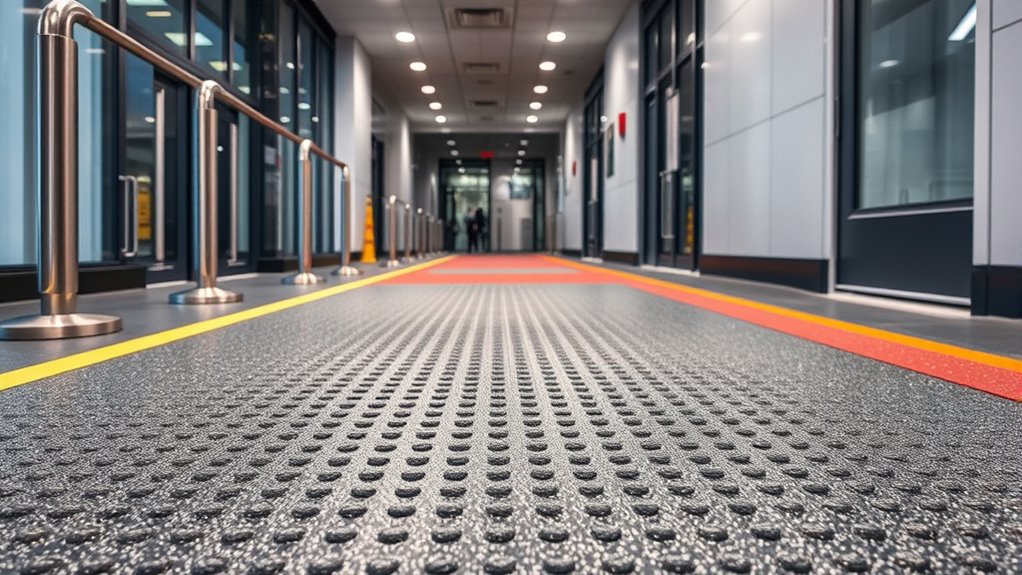

To meet slip-resistant floor requirements, choose flooring materials with proven slip resistance, such as textured tiles or sealed concrete, and verify their certifications. Guarantee proper installation to maintain safety standards, and adhere to testing benchmarks like the coefficient of friction (COF). Regularly clean and inspect the floors, apply anti-slip coatings if needed, and use signage in high-risk areas. Continuing with these steps will help you keep floors safe and compliant.

Get cleaning gear delivered free with Prime
- Fast, free delivery on millions of items
- Prime Video, Amazon Music and more included
- Member-only deals all year
Key Takeaways
- Select flooring materials with proven slip-resistant properties and verify certifications aligning with recognized standards.
- Conduct regular COF testing using appropriate devices like tribometers to ensure ongoing compliance.
- Properly install and maintain flooring to preserve slip resistance, including routine cleaning and timely repairs.
- Apply anti-slip coatings or install slip-resistant mats in high-risk or moisture-prone areas.
- Train staff and use signage to raise awareness and enforce safety protocols related to slip hazards.

Ensuring your floors meet slip-resistant requirements is essential for safety and compliance. Whether you’re managing a commercial space, a public venue, or even a residential property, prioritizing floor safety helps prevent accidents and protects your reputation. To achieve this, you need to understand and adhere to relevant testing standards, which provide clear benchmarks for slip resistance. These standards ensure that your flooring materials offer adequate traction under various conditions, reducing the risk of slips, trips, and falls. Familiarizing yourself with recognized testing standards, such as those established by organizations like ANSI, ASTM, or the ANSI/ASSP standards, guides you in selecting and maintaining floors that are genuinely slip-resistant.
Testing standards specify how slip resistance should be measured, often involving standardized tests like the tribometer or slip meter. These devices simulate foot traffic and measure the coefficient of friction (COF) between the shoe sole and the floor surface. A higher COF indicates better slip resistance. You should regularly test your floors, especially in high-traffic or moisture-prone areas, to verify they meet or exceed the required standards. If your floors fall short, applying anti-slip coatings or installing slip-resistant mats can improve safety quickly and effectively. These measures not only enhance floor safety but also demonstrate your commitment to compliance and proactive risk management.
Regularly test floors with tribometers to ensure compliance and enhance safety.
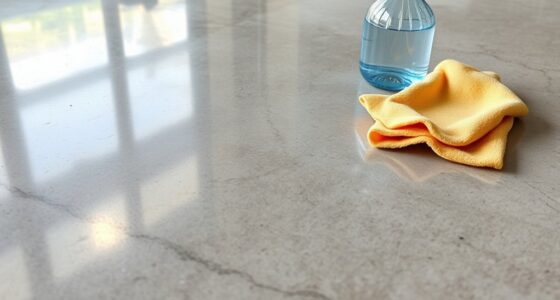
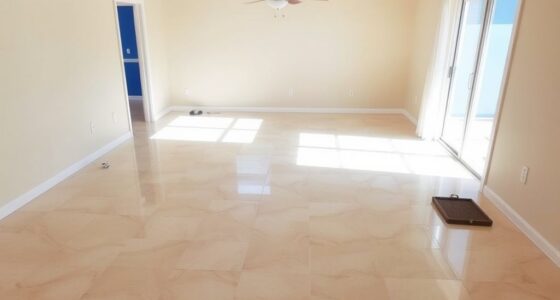
When selecting flooring materials, opt for options that inherently meet slip-resistant criteria. For example, textured tiles, sealed concrete, or vinyl flooring with anti-slip additives typically comply with testing standards. Always verify product specifications and certifications before installation. Proper installation is equally important; even the most slip-resistant material can become unsafe if improperly installed or maintained. Ensure that flooring surfaces are kept clean and free of debris, which can create hidden hazards. Additionally, maintain consistent cleaning routines to prevent the buildup of slippery substances like grease, oil, or water, especially in commercial kitchens, bathrooms, or outdoor walkways. Regular maintenance and floor safety testing are vital to sustain slip resistance over time.
Training staff and informing visitors about floor safety procedures further reduces risks. Use clear signage in areas where slip dangers are higher, and encourage safe behaviors, such as wearing appropriate footwear. Regular inspections and maintenance help you catch issues early, ensuring your floors continue to meet slip-resistant requirements over time. Ultimately, by understanding testing standards and actively managing floor safety, you create a safer environment for everyone, minimize liability, and stay compliant with regulations. Prioritizing slip resistance isn’t just about meeting standards; it’s about protecting lives and fostering confidence in your space.
As an affiliate, we earn on qualifying purchases.
Frequently Asked Questions
Are There Specific Industries With Stricter Slip-Resistant Standards?
Yes, certain industries have stricter slip-resistant standards to guarantee safety. For example, healthcare, food service, and manufacturing often require compliance with industry standards that demand higher slip resistance due to frequent spills or heavy foot traffic. You need to stay updated on these compliance requirements, as they can vary by region and industry. Meeting these standards helps protect employees and customers, reducing the risk of slips and falls.
How Often Should Slip-Resistant Flooring Be Inspected or Maintained?
Like a vigilant gardener tending to their blooms, you should examine your slip-resistant flooring regularly—at least once a month—especially after heavy cleaning or spills. Conduct routine floor cleaning to remove debris that can cause slips, and use hazard signage during maintenance to prevent accidents. Frequent inspections ensure the slip-resistant features stay effective, helping you catch wear or damage early and maintain a safe environment for everyone.
Can Slip-Resistant Coatings Be Applied Over Existing Floors?
Yes, you can apply slip-resistant coatings over existing floors. To guarantee coating durability, properly clean and prepare the surface first. Use suitable application methods, like brushing or rolling, to achieve an even layer. Keep in mind that the success depends on the existing floor’s condition and the coating’s compatibility. Proper preparation and application will help your slip-resistant coating last longer and provide effective safety benefits.
What Are the Best Flooring Options for Outdoor Slippery Areas?
When tackling outdoor slippery areas, you’re better off staying on your toes with textured finishes or anti-slip mats. These options provide solid grip and help prevent falls. Textured finishes add roughness to surfaces like concrete or wood, while anti-slip mats can be placed in high-traffic zones. Together, they keep safety in check, making sure you don’t get caught off guard when the ground gets slick.
Do Slip-Resistant Requirements Vary by State or Local Regulations?
Yes, slip-resistant requirements can vary by state and local regulations. You need to check state-specific regulations and local enforcement agencies to guarantee compliance. Some areas may have stricter standards, especially for commercial or public spaces, while others might be more lenient. It’s your responsibility to stay informed about these differences and adhere to the applicable codes to ensure safety and avoid penalties.
Conclusion
By paying close attention to slip-resistant floor standards, you’re fundamentally laying down a gentle safety net beneath your feet. Think of it as creating a welcoming dance floor where every step feels secure and confident. When you choose the right coatings and maintain your surfaces, you’re ensuring that everyone can move freely without worry. Embracing these precautions transforms your space into a smooth, inviting area—where safety and comfort softly harmonize beneath each stride.
Halloween Picks
halloween
As an affiliate, we earn on qualifying purchases.