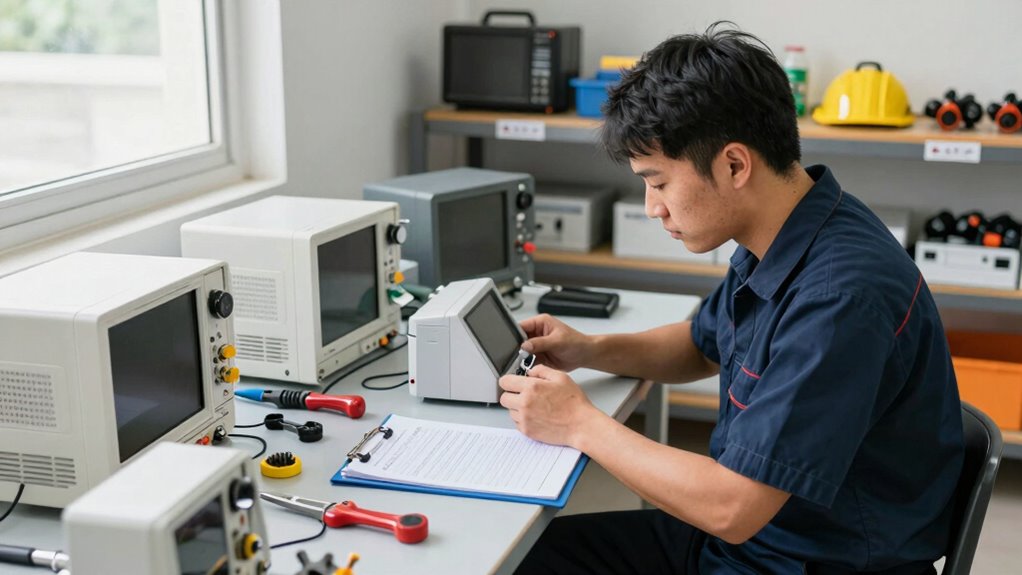

To set a daily equipment inspection routine, create a simple, standardized process with clear steps for checking each piece and safety features. Schedule specific times, like start or end of shifts, and assign responsible team members to perform and log inspections. Use safety checklists to guide thorough evaluations and track issues over time. Regularly review logs to identify patterns and improve procedures. Keep refining your process to boost safety and efficiency—continue for detailed strategies.
Key Takeaways
- Develop a standardized inspection checklist for all equipment to ensure consistency.
- Schedule specific times each day for inspections, such as start and end of shifts.
- Assign trained personnel responsible for completing inspections and recording findings.
- Use maintenance logs and safety checklists to document issues and monitor patterns over time.
- Regularly review inspection data to improve routines and incorporate preventive maintenance practices.
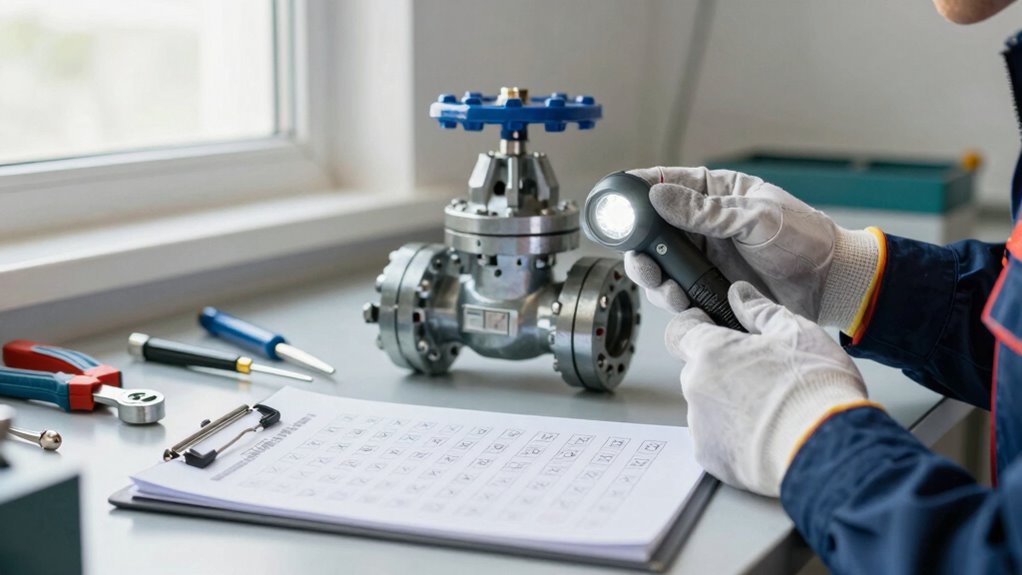
Have you ever wondered why daily equipment inspections are crucial for maintaining safety and efficiency? The answer lies in consistent monitoring that prevents breakdowns, reduces hazards, and keeps operations running smoothly. To do this effectively, establishing a routine that’s both thorough and manageable is key. Start by creating a standardized process that everyone on your team can follow easily. This process should include detailed steps for checking each piece of equipment and guarantee nothing is overlooked.
Using maintenance logs is a fundamental part of this routine. These logs serve as a record of each inspection, documenting what was checked, any issues found, and actions taken. They help you track patterns over time, identify recurring problems, and plan maintenance proactively. When you keep meticulous records, you’re not only ensuring accountability but also making future inspections more efficient. Maintenance logs should be updated daily and reviewed regularly to spot trends and prioritize repairs. Incorporating safety checklists into your routine to verify all critical safety features are inspected can further enhance safety and compliance. Safety checklists act as a guide, prompting you to verify things like brakes, lights, gauges, and safety devices. They minimize the risk of human error and make sure every essential aspect of the equipment is evaluated consistently.
Maintenance logs track inspection details, identify recurring issues, and help plan proactive repairs for safer, more efficient operations.
To set up your daily inspection routine, designate specific times for inspections—perhaps at the start or end of each shift—so it becomes a habitual part of your team’s daily activities. Train your team thoroughly on how to use safety checklists and how to properly fill out maintenance logs. Clear instructions and ongoing training help guarantee inspections are thorough and consistent. As part of your routine, assign responsible individuals to perform inspections and keep records, fostering accountability. Make sure your team understands that these inspections aren’t just paperwork but crucial steps to prevent accidents and costly repairs. Incorporating preventive maintenance into your routine can further extend the lifespan of your equipment and reduce unexpected failures. Regularly updating your knowledge on equipment safety best practices can also enhance the effectiveness of your inspections. Utilizing digital tools and platforms can streamline the process, making it easier to manage inspection data and ensure timely follow-up on issues. Regularly review your maintenance logs and safety checklists to identify any recurring issues or areas that need improvement. This ongoing review helps you refine your routine and address potential problems before they escalate. Remember, the goal isn’t just to check off items but to actively maintain equipment safety and operational efficiency. When you commit to a disciplined daily inspection routine, you’re investing in long-term safety, reducing downtime, and ensuring your team’s well-being.

Equipment Safety Inspection Report 50-pk. – Book Format with 31 Sets, 2-Ply, Carbonless, 5.5" x 8.5", J. J. Keller & Associates, Inc.
Vehicle inspection report book helps document and report needed repairs to help maintain safe workplace utility vehicles.
As an affiliate, we earn on qualifying purchases.
As an affiliate, we earn on qualifying purchases.
Frequently Asked Questions
What Tools Are Essential for Daily Inspections?
You need a safety checklist and your maintenance schedules to perform daily inspections effectively. Use a safety checklist to verify all safety features are functional and identify potential hazards. Refer to maintenance schedules to guarantee equipment is properly lubricated, cleaned, and checked for wear and tear. Having these tools ready helps you stay systematic, catch issues early, and maintain safe, reliable equipment every day.
How Do I Train Staff for Inspections?
You can’t just tell your staff once and expect perfect inspections; you need to make it an unstoppable routine. To train them effectively, emphasize staff accountability and clearly define inspection scheduling. Use hands-on demonstrations, real-life scenarios, and regular feedback to embed habits. Reinforce the importance of each team member’s role in safety, making inspections second nature. Consistent training transforms inspections from a chore into a crucial, ingrained responsibility.
What Records Should Be Kept of Inspections?
You should keep detailed inspection documentation that includes date, time, inspector’s name, and specific findings. Record keeping best practices suggest using standardized forms or digital logs for consistency. Note any issues found, actions taken, and follow-up dates. Regularly review these records to identify recurring problems and guarantee compliance. Proper documentation helps track equipment status over time, supports maintenance planning, and provides evidence during audits or incident investigations.
How Often Should Inspections Be Reviewed?
You should review inspection frequency and your review schedule weekly to guarantee equipment safety. Studies show that regular reviews reduce equipment failures by up to 30%. By actively checking your inspection records and adjusting the review schedule accordingly, you stay ahead of potential issues. Consistent reviews help maintain ideal equipment performance, prevent costly breakdowns, and ensure compliance. Make reviewing a key part of your routine to keep everything running smoothly.
What Common Equipment Issues Should I Look For?
You should look for issues like equipment calibration problems, which can affect performance, and any signs of wear, corrosion, or leaks. Check safety compliance by ensuring guards are in place and controls function correctly. Regularly inspecting for loose parts, damaged wires, or unusual noises helps prevent accidents. Address these common issues promptly to keep your equipment running efficiently and maintain a safe working environment.
Equipment Safety Inspection Report 50-pk. – Book Format with 31 Sets, 2-Ply, Carbonless, 5.5" x 8.5", J. J. Keller & Associates, Inc.
Vehicle inspection report book helps document and report needed repairs to help maintain safe workplace utility vehicles.
As an affiliate, we earn on qualifying purchases.
As an affiliate, we earn on qualifying purchases.
Conclusion
By establishing a steadfast, systematic, and scheduled inspection routine, you safeguard your equipment, streamline safety, and sustain success. Consistent checks cultivate confidence, prevent problems, and promote peace of mind. Remember, routine reviews reduce risks, reinforce reliability, and reinforce your reputation. So, stay committed, stay vigilant, and let your diligence drive durability and dependability every day. With your dedication, your equipment will operate at its best, offering ongoing opportunities for outstanding outcomes.

LKTHSEEK Equipment Maintenance Log Book 8.5 x 11 Inch 110 Pages Maintenance Record Notebook Tracking Repairs and Service Spiral Bound For Equipment Inspection and Maintenance
All In One Equipment Maintenance Log Book With Detailed Fields:This equipment maintenance log book is designed for complete…
As an affiliate, we earn on qualifying purchases.
As an affiliate, we earn on qualifying purchases.

Heavy Equipment Daily Inspection Checklist Log Book: Pre-Operation Safety Records, Machinery Condition Tracking, Maintenance Logs & Jobsite Compliance Documentation
As an affiliate, we earn on qualifying purchases.
As an affiliate, we earn on qualifying purchases.