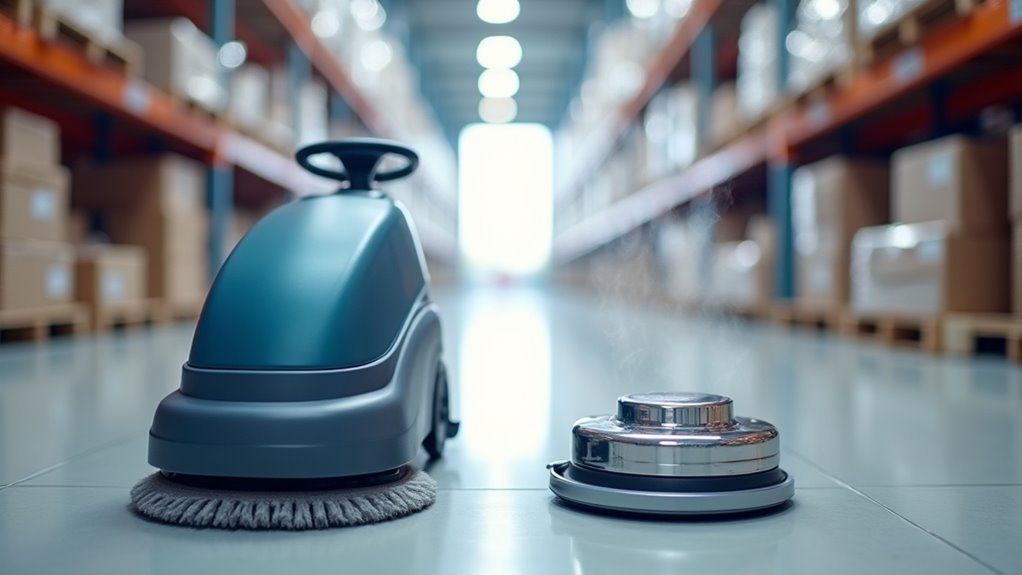

When choosing between cylindrical and disc rollers for warehouse aisles, cylindrical rollers tend to clean better because they handle larger debris, last longer, and distribute workload more evenly. They are more durable, require less frequent replacements, and improve overall efficiency. Although they might cost more upfront, their longer lifespan can save you money over time. To discover which option suits your specific needs and gains, keep exploring the details behind their performance and costs.
Key Takeaways
- Cylindrical rollers excel at handling large debris and heavy-duty cleaning in warehouse aisles.
- Disc rollers are better for detailed cleaning but less effective on large debris.
- Cylindrical rollers offer longer wear life, reducing replacement frequency and downtime.
- Disc rollers are easier and quicker to replace, lowering initial maintenance effort.
- Cylindrical rollers provide longer operational battery life, increasing overall efficiency in warehouse cleaning.
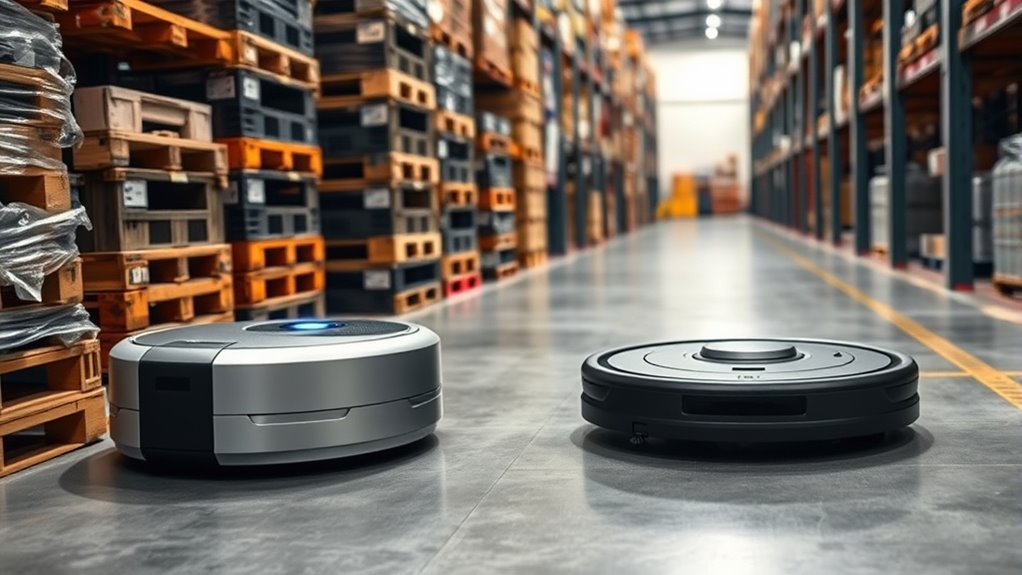
When choosing between cylindrical and disc-shaped rollers for warehouse aisles, understanding their differences is vital for optimizing efficiency and safety. Both types of rollers serve as essential components in cleaning machines, but they vary markedly in performance, durability, and maintenance. Your decision impacts not just how well the aisles get cleaned but also the long-term costs and operational reliability.
Choosing between cylindrical and disc rollers impacts cleaning efficiency, durability, maintenance, and overall operational costs.
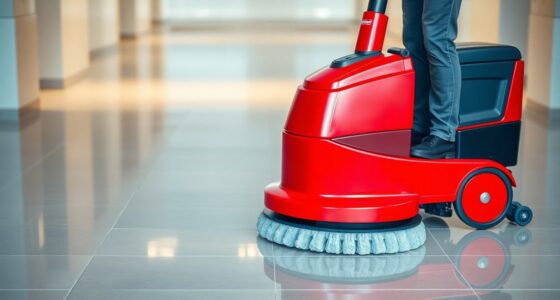
Cylindrical rollers are known for their straightforward design and ability to handle larger debris with ease. They typically feature a longer-lasting wear surface, which means you don’t have to replace them as often. This can be a big advantage if you’re aiming to minimize downtime. However, their size and shape can influence the cleaning process. Cylindrical rollers tend to have a higher initial investment, partly because they often come with more complex mechanisms that support their longevity. When it comes to battery life, cylindrical rollers generally require less frequent charging cycles because their design distributes the workload more evenly, reducing strain on the machine’s motor. This means your cleaning equipment can operate longer between charges, boosting productivity. On the flip side, maintenance costs for cylindrical rollers can be higher upfront due to more intricate parts that might need more specialized servicing. Over time, though, their durability can offset these costs by reducing replacement frequency.
Disc-shaped rollers, on the other hand, are more compact and often cheaper to replace. They’re ideal for tight spaces or detailed cleaning, where precision matters more than heavy-duty debris handling. Their design allows for quick swaps, which can lower downtime during maintenance. But because disc rollers tend to wear out faster—especially when used on rough surfaces—you might find yourself replacing them more often, which adds to ongoing maintenance costs. Battery life can also be affected, as the machine may need to work harder to compensate for less efficient debris collection, leading to increased power consumption and more frequent charging. This can cut into your operational time if the batteries aren’t strong enough or if the discs wear down quickly, requiring frequent replacements that add to your costs.
In the end, your choice should align with your cleaning needs and budget constraints. Cylindrical rollers offer longer durability and less frequent maintenance, making them suitable for large, busy warehouses. Disc rollers excel in precision and quick replacements, fitting smaller or more intricate spaces where detailed cleaning is required. Both options influence battery life and maintenance costs differently, so weigh these factors carefully before making your decision. Your goal is to select a roller that maximizes efficiency, minimizes costs, and guarantees safety across your warehouse aisles.
Frequently Asked Questions
How Do Cylindrical and Disc Cleaners Impact Aisle Safety?
You’ll find that cylindrical and disc cleaners both improve aisle safety by reducing slip hazards and enhancing visibility. Cylindrical models often reach tight corners, removing debris that could cause slips, while disc cleaners efficiently cover large areas, ensuring floors are clear. By keeping aisles clean, you minimize slip risks and improve visibility, making your workspace safer. Regular use of either type supports a safer environment and reduces accidents.
Are There Environmental Benefits to Using One Over the Other?
You’ll find that disc cleaners often have better energy efficiency, reducing power consumption during operation. They typically use fewer chemicals because their design allows for more effective cleaning with less solution, making them environmentally friendly. Cylindrical cleaners may use more energy and chemicals, but they can reach tight spaces more easily. Overall, choosing a disc cleaner can help lower your environmental impact through energy savings and reduced chemical usage.
Which Cleaner Type Offers Better Noise Reduction?
You’ll find that cylindrical cleaners generally offer better noise reduction thanks to their design, which provides superior sound insulation. Their quieter operation minimizes noise levels, making them ideal for environments where maintaining a peaceful atmosphere is essential. Disc cleaners tend to produce more noise due to their structure and movement, so if noise levels matter most to you, cylindrical models are the better choice for a quieter cleaning experience.
How Do Maintenance Requirements Differ Between Cylindrical and Disc Cleaners?
You’ll find cylindrical cleaners generally have simpler brush designs, making maintenance easier and quicker, with fewer parts to replace. Disc cleaners often feature more complex brushes, which may require more frequent checks and adjustments. Water usage varies, but cylindrical models typically use less water due to their efficient brush design. Overall, cylindrical cleaners tend to demand less ongoing maintenance, saving you time and effort in the long run.
Can These Cleaners Be Customized for Specific Warehouse Layouts?
Imagine tailoring a cleaning tool to fit like a glove around your warehouse’s unique layout. You can customize these cleaners with options like adjustable brushes and adaptable suction heads, making layout adaptations seamless. Whether your aisles are narrow or wide, curved or straight, these customization options guarantee your cleaner works efficiently, adapting perfectly to any space. This flexibility maximizes cleaning performance and minimizes downtime, giving you a cleaner, safer warehouse environment.
Conclusion
So, whether you choose cylindrical or disc cleaners, remember that your warehouse’s cleanliness depends on your decision. Pick the wrong one, and you might be battling dirt like an army of ants, never truly winning the fight. The right choice can turn your aisles into sparkling highways of efficiency. Trust your gut, consider your needs, and you’ll keep your warehouse shining brighter than a diamond in a coal mine. Your spotless aisles await!