
To fix squeegee streaks quickly, start by inspecting and cleaning your blades to remove debris and make certain they’re in good condition. Use consistent, overlapping strokes at a 45-degree angle with the right amount of pressure, and avoid rushing. Dry the floor in a warm, well-ventilated environment to speed up evaporation. Fine-tuning your technique and equipment can give you streak-free results every time—keep going to discover more tips for perfect aisles.
Key Takeaways
- Inspect and clean squeegee blades regularly to ensure smooth, streak-free water removal.
- Maintain a consistent cleaning pattern with proper angle and pressure during squeegeeing.
- Remove debris and pre-sweep aisles to prevent dirt buildup and streaks.
- Use the correct dilution of cleaning solution and allow it to loosen dirt before squeegeeing.
- Speed up drying by increasing airflow with fans or ventilation to minimize streak formation.

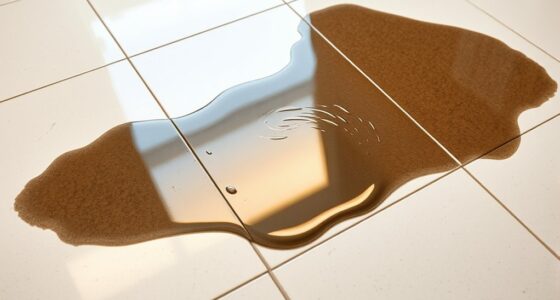
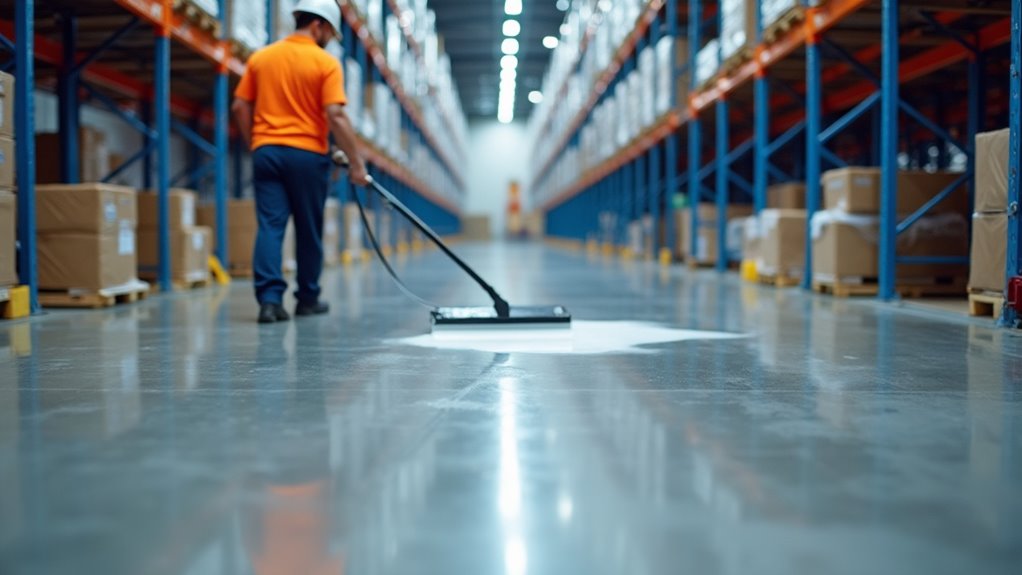
Squeegee streaks in warehouse aisles can create safety hazards and hinder efficient operations. When these streaks appear, they not only make your floors look unprofessional but also increase the risk of slips and falls. To keep your warehouse running smoothly, it’s essential to address streaks promptly. The key lies in proper squeegee maintenance and applying effective aisle cleaning techniques that prevent streaks from forming in the first place.
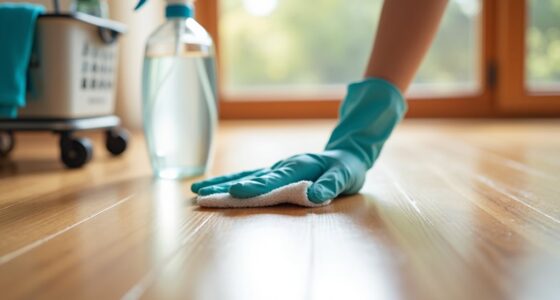
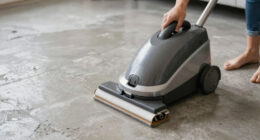
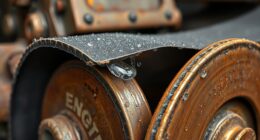
Start by inspecting your squeegee regularly. Worn or damaged blades are a common culprit behind streaks, so replacing or repairing them should be a priority. A well-maintained squeegee ensures even application of cleaning solution and proper water removal, resulting in a streak-free finish. When cleaning, make sure your squeegee blade is clean and free of debris. Dirt or residue on the blade can cause uneven pressure, leading to streaks. Keep a cloth or sponge handy to wipe down the blade after each use, especially if you notice buildup.
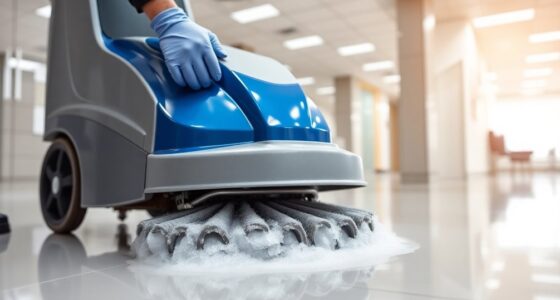
Next, focus on your aisle cleaning techniques. Use a consistent pattern—either overlapping strokes or a systematic back-and-forth motion—to avoid missed spots or excess water in certain areas. Don’t rush; quick, methodical passes help ensure that water and cleaning solution are evenly pushed away, reducing streak formation. Additionally, adjusting the angle of your squeegee can make a difference. The blade should be at a 45-degree angle to the floor, providing enough pressure to lift water without leaving streaks or smears. Applying too much pressure can cause the blade to dig into the floor, leaving streaks, while too little pressure might not remove water properly.
Another tip is to make sure your floors are properly prepared before squeegeeing. Remove loose debris and dust with a broom or vacuum, as these particles can interfere with the cleaning process, leading to streaks and uneven surfaces. Using the right cleaning solutions also makes a difference. Dilute floor cleaning chemicals according to manufacturer instructions to prevent residue buildup that can cause streaks when dried. After applying the cleaning solution, wait a few moments for it to loosen dirt before squeegeeing to achieve a streak-free finish. It is also helpful to monitor the cleaning solution to ensure it is not too concentrated, which can contribute to streaks and residue.
Finally, consider the environment of your warehouse. Humidity and temperature can influence drying times and streak formation. Squeegee in dry conditions whenever possible, and use fans or ventilation to speed up drying, minimizing streaks caused by rapid evaporation. By focusing on squeegee maintenance and refining your aisle cleaning techniques, you can eliminate streaks efficiently and maintain a safer, cleaner warehouse environment. Regular attention to these details ensures your floors stay spotless, safe, and professional-looking every day.

Unger Professional Cut-to-Size Replacement Rubber Squeegee Blade – 18" Professional Quality Squeegee Blade Replacement, Fits Most Window Washing Squeegees for Streak Free Cleaning
PROFESSIONAL QUALITY: This squeegee blade replacement is made of natural-molded, double-sided rubber for superior cleaning and lost-lasting, professional…
As an affiliate, we earn on qualifying purchases.
As an affiliate, we earn on qualifying purchases.
Frequently Asked Questions
Can Squeegee Streaks Cause Safety Hazards in Aisles?
Yes, squeegee streaks can cause safety hazards in aisles. They create slip hazards, especially when floors are wet or slick, risking falls and injuries. Additionally, streaks can obscure debris or uneven surfaces, increasing accident risk. They may also lead to equipment damage if the streaks are caused by improper cleaning tools or methods, which can compromise the safety and efficiency of your warehouse operations.
Are There Specific Cleaning Products Better for Preventing Streaks?
Think of cleaning products as the paintbrushes of your warehouse—some leave streaks, others glide smoothly. You should choose cleaning agents with specially designed product formulations that reduce streaking. Look for solutions labeled “streak-free” or “ammonia-free,” as these tend to perform better. Using the right product guarantees your floors shine without streaks, making aisles safer and cleaner for everyone, with less effort and mess.
How Often Should Equipment Be Maintained to Avoid Streaks?
You should follow a regular maintenance schedule for your equipment, ideally every few weeks or after a set number of uses, to prevent streaks. Proper maintenance not only keeps your equipment functioning at its best but also extends its lifespan. By staying consistent with cleaning, lubricating, and inspecting your tools, you guarantee streak-free aisles and avoid costly repairs, keeping your warehouse operations smooth and efficient.
Do Different Floor Types Require Different Cleaning Techniques?
Different floor types do require different cleaning techniques because of floor surface variations. You should adjust your cleaning method based on the material, such as using softer brushes on delicate surfaces or tailored cleaning solutions. This guarantees effective cleaning without damage. By customizing your approach, you prevent streaks and maintain the floor’s integrity. Always evaluate the floor type first, then select the appropriate cleaning method for ideal results.
Can Operator Training Reduce Streak Formation During Cleaning?
Of course, operator training can cut down streaks—who knew? By perfecting operator technique through targeted training programs, you guarantee each swipe is deliberate and effective. It’s simple: well-trained operators are less likely to create streaks, making your warehouse look spotless and professional. So, invest in proper training, and watch those streaks vanish faster than you can say “clean aisle.” Your floors will thank you—and so will your sanity.

CLEANHOME Rubber Floor Squeegee for Concrete Floor, Tile Floor, Metal Aluminium Heavy Duty Garage Shower Floor Squeegee Broom for Removing Water, Commercial Scrubber Mop with Extendable Long Handle
Heavy-Duty Floor Squeegee: Elevate your cleaning routine with our high-performance floor squeegee. Crafted with a robust rubber blade…
As an affiliate, we earn on qualifying purchases.
As an affiliate, we earn on qualifying purchases.
Conclusion
Now that you know this quick 3-minute fix, why let streaks slow down your warehouse efficiency? By taking a simple step to keep your aisles spotless, you’ll improve safety, reduce slips, and boost overall productivity. Isn’t it worth a few minutes to make a big difference? Don’t wait for streaks to become a problem—act now and keep your warehouse running smoothly and professionally every day.

CAROD 33.4" Large Floor Squeegee for Concrete, Commercial Heavy Duty Silicone Blade Squeegee for Floor with 63" Stainless Handle, Anti-Splash Curved Baffle for Garage, Factory, and Tough Cleaning Jobs
【Large-Size Design】This floor squeegee is made of heavy-duty stainless steel—sturdy, rust-resistant, and durable. It comes with a 33.4"…
As an affiliate, we earn on qualifying purchases.
As an affiliate, we earn on qualifying purchases.
CLEANHOME Rubber Floor Squeegee for Concrete Floor, Tile Floor, Metal Aluminium Heavy Duty Garage Shower Floor Squeegee Broom for Removing Water, Commercial Scrubber Mop with Extendable Long Handle
Heavy-Duty Floor Squeegee: Elevate your cleaning routine with our high-performance floor squeegee. Crafted with a robust rubber blade…
As an affiliate, we earn on qualifying purchases.
As an affiliate, we earn on qualifying purchases.