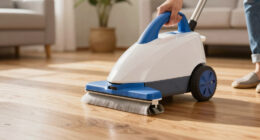

To sweep salons faster, design clear, dedicated lanes for staff and clients, reducing congestion and confusion. Minimize overlaps by separating entry and exit points, which helps prevent dirt buildup and streamlines cleaning routines. Position exit areas strategically for easy access and quick turnover. By applying these traffic flow principles, you’ll keep surfaces cleaner and cut down on time spent sweeping. Keep exploring to discover more tips that can make your cleaning process even more efficient.
Key Takeaways
- Design dedicated traffic lanes for staff and clients to reduce overlaps and streamline cleaning routes.
- Separate entry and exit points to prevent traffic congestion and facilitate quick cleaning access.
- Group similar stations to create predictable pathways, minimizing dirt spread and cleaning complexity.
- Use signage and floor markings to reinforce clear lanes, guiding movement and simplifying sweeping tasks.
- Regularly assess and adjust layout to minimize overlap areas and optimize traffic flow for faster cleaning.

Have you ever wondered how to cut down salon cleaning time without sacrificing quality? One of the most effective ways is by optimizing your salon layout to improve traffic flow. When your space is designed with efficiency in mind, cleaning becomes faster and less disruptive. Think about how your clients and staff move through your salon. If pathways are cluttered or poorly planned, it creates bottlenecks that slow down the cleaning process. By designing clear, logical routes—such as dedicated lanes for clients entering and exiting—you reduce congestion and make sweeping quicker. A well-planned layout minimizes obstacles and ensures that every corner is accessible without unnecessary maneuvering, saving you valuable time during cleanup.
Optimizing salon layout with clear traffic routes speeds up cleaning and maintains high standards of hygiene.
To achieve a smooth traffic flow, consider grouping similar stations together and creating designated lanes for movement. For example, position washing stations, styling areas, and checkout points in a way that naturally guides clients from one zone to the next without crossing paths. This setup prevents overlapping traffic, which can make cleaning more complicated, especially in tight spaces. When clients and staff follow predictable routes, your cleaning staff can focus on specific sections without constantly adjusting or repositioning their equipment. Additionally, clear signage and floor markings can reinforce these lanes, helping everyone stay in their designated areas and reducing accidental overlaps that slow down the process.
Another key to sweeping faster lies in managing overlap and exit points. Overlap occurs when different traffic streams cross or share space, creating areas that are harder to clean thoroughly. By designing your salon with separate entry and exit points, you prevent congestion and overlapping foot traffic. This separation allows your cleaning team to work more efficiently because they can focus on one area at a time without interference. Positioning exit points at strategic locations also helps in streamlining the flow of traffic, reducing cluttered spots where dirt can accumulate and where cleaning might take longer. When clients leave through a designated exit, it minimizes confusion and ensures that the cleaning staff can quickly access and sanitize those areas.
In addition, incorporating evidence-based layout principles can further enhance cleaning efficiency by aligning your space with proven traffic management strategies. When your space is organized with these principles in mind, cleaning becomes a quick, straightforward task rather than a tedious chore. This not only saves you time but also helps maintain a high standard of cleanliness, ensuring your clients always walk into a pristine environment. By paying attention to the details of traffic patterns and layout design, you create an environment that’s both functional and easy to maintain, making your entire operation more productive and less stressful.

EyeVac Pro Touchless Vacuum Automatic Dustpan – Ultra Fast & Powerful – Great for Sweeping Salon Pet Hair Food Dirt Kitchen, Corded Canister Vacuum, Bagless, Automatic Sensors, 1400 Watt (Black)
FAST & POWERFUL: 1400W vacuum removes dust, pet hair, and debris instantly. Works on all hard floors including…
As an affiliate, we earn on qualifying purchases.
As an affiliate, we earn on qualifying purchases.
Frequently Asked Questions
How Do I Choose the Best Lane Layout for My Salon?
You should choose a lane layout that promotes smooth flow and minimizes congestion. Consider color coordination to visually guide clients and staff efficiently. Prioritize staff training to guarantee everyone knows their positions and responsibilities within the layout. Test different configurations, gather feedback, and adjust as needed. A well-planned lane system helps your salon run faster, with less overlap and clearer exit points, creating a better experience for everyone.
What Tools Are Most Effective for Managing Overlapping Appointments?
You should use appointment scheduling tools that offer real-time updates and conflict resolution features. These tools help you identify overlapping appointments quickly, allowing you to prevent or adjust as needed. Automated alerts notify you of potential conflicts before they happen, saving time and reducing stress. By leveraging these tools, you ensure smooth operations, better client experiences, and minimal overlaps, keeping your salon running efficiently and professionally.
How Can I Optimize Exit Points for Faster Client Flow?
Imagine your salon as a busy river, flowing smoothly when exit points are clear. To optimize exit points, you should streamline queue management by designating specific exits, reducing congestion. Use signage clarity, with bold signs guiding clients seamlessly out of their chairs. This prevents bottlenecks, speeds up client flow, and keeps the water moving. Clear, well-placed signs and organized exits turn chaos into calm, ensuring everyone leaves satisfied.
What Are Common Mistakes to Avoid When Designing Salon Lanes?
When designing salon lanes, avoid common mistakes like incorrect spacing, which can cause congestion and slow client flow. You should also make sure signage is clear and visible; poor signage leads to confusion and delays. Keep lanes wide enough for smooth movement, and place signs strategically to direct clients efficiently. By preventing these errors, you’ll create a seamless experience that speeds up service and enhances client satisfaction.
How Does Customer Feedback Influence Lane and Exit Point Design?
Did you know that 78% of customers say their experience depends on how well their feedback is addressed? Customer feedback greatly influences lane and exit point design because it highlights areas needing improvement, boosting customer satisfaction. By actively listening and integrating feedback, you create a smoother flow, reducing wait times and confusion. This proactive approach guarantees your salon layout meets customer needs, leading to happier clients and more efficient operations.

SWRT 2 Inch x 110FT Black & Yellow Hazard Tape Warning Safety Stripe Tape for Floor Marking, Strong Adhesive Wear Resistance Warterproof Caution Tape Roll Ideal for Walls, Floors, Pipes and Equipment
【Strong Adhesion】Our Caution tape has a strong adhesive that ensures a strong bond with a variety of surfaces….
As an affiliate, we earn on qualifying purchases.
As an affiliate, we earn on qualifying purchases.
Conclusion
By optimizing lanes, overlap, and exit points, you transform your salon’s cleaning process into a well-choreographed dance. Think of it like a busy highway—when each lane flows smoothly and exits are clear, traffic moves faster and safer. I once saw a salon cut cleaning time by half simply by redesigning their layout. Small tweaks can lead to big gains, helping you sweep salons faster while maintaining first-rate cleanliness and customer satisfaction.

Aluminum Horizontal Metal Sign Multiple Sizes Please Drive Slowly Traffic Yellow Speed Limit with Border Weatherproof Street Signage 10x7Inches
PREMIUM QUALITY: Our 10x7inches industrial metal signs are made of durable .040IN high quality aluminum that will last…
As an affiliate, we earn on qualifying purchases.
As an affiliate, we earn on qualifying purchases.

Winado Hair Salon Storage Cart with Wheels & 3 Hair Dryer Holders & 4 Drawers & Lock & 2 Keys, Hairdressing Tools Station Mobile Makeup Case, SPA Utility Trolley (Black)
【3 Hair Dryer Holes】Our beauty salon cart has 3 holes for different grooming tools, such as large curling…
As an affiliate, we earn on qualifying purchases.
As an affiliate, we earn on qualifying purchases.