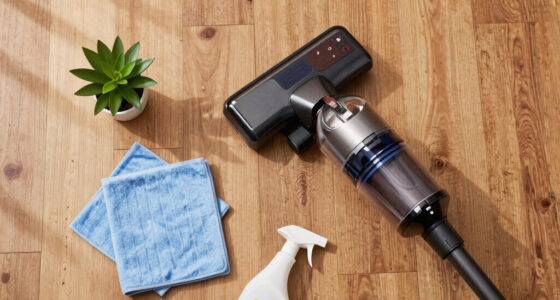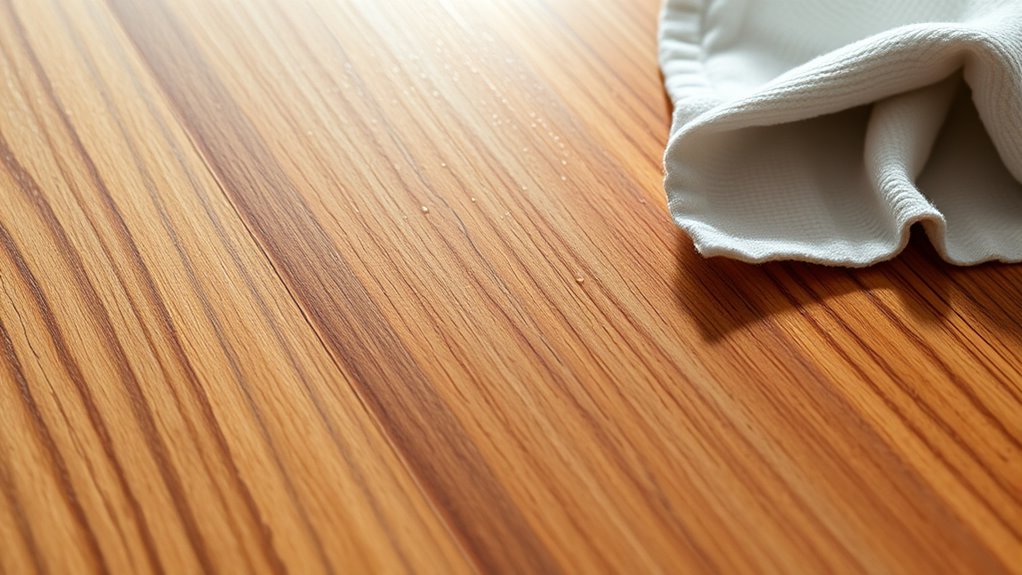

To deep-clean engineered wood without causing damage, start by removing loose debris with a soft broom or vacuum. Mix warm water with a pH-neutral cleaner or mild dish soap, and dampen a microfiber cloth or mop, wringing out excess water. Gently wipe along the grain, focusing on stains with a soft cloth or sponge. Finish with a wood-specific polish to restore shine and protect the surface. Continue exploring these steps for a safe, effective cleaning method.

Get cleaning gear delivered free with Prime
- Fast, free delivery on millions of items
- Prime Video, Amazon Music and more included
- Member-only deals all year
Key Takeaways
- Start by removing loose debris with a soft broom or vacuum to prevent scratching during cleaning.
- Mix warm water with pH-neutral cleaner or mild dish soap; dampen a microfiber cloth or mop without oversaturating.
- Apply the cleaning solution directly to stains; gently scrub with a soft cloth, avoiding harsh chemicals or abrasive tools.
- Use a high-quality, wood-specific polish or natural oil on a soft cloth; buff in circular motions to restore shine.
- Allow the floor to dry completely before use; routine maintenance and prompt stain removal help preserve the engineered wood.
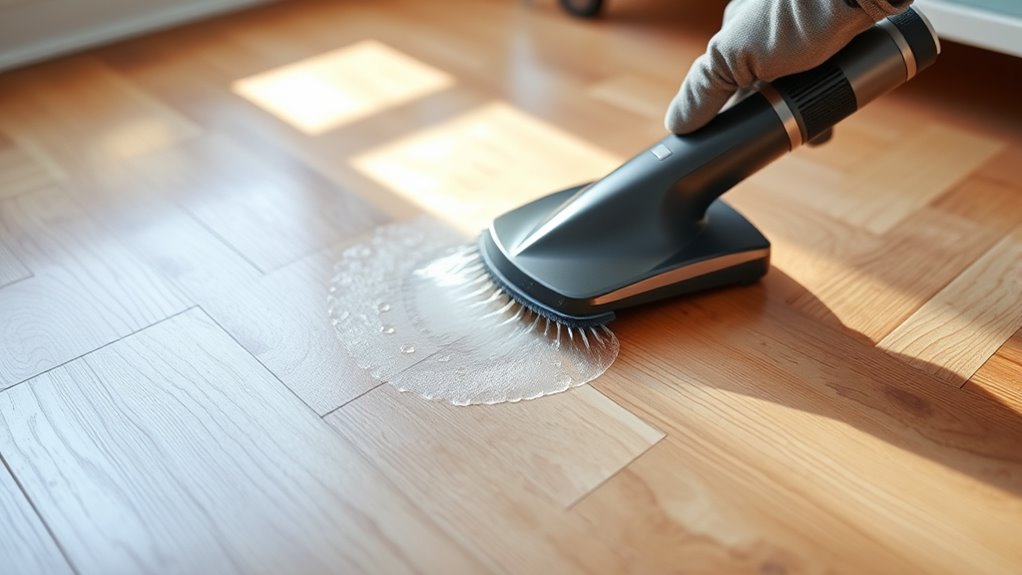
Engineered wood offers durability and versatility, but over time, dirt and stains can dull its appearance. To restore its shine and beauty, you’ll want to follow a careful cleaning process that emphasizes proper polishing techniques and stain removal methods. The key is to clean thoroughly without causing damage, especially since engineered wood can be sensitive to excess moisture and abrasive cleaners. Start by removing loose debris with a soft-bristled broom or vacuum, ensuring you pick up dirt and dust that can scratch the surface during cleaning. This initial step sets the foundation for a deeper, more effective clean.
Next, prepare a gentle cleaning solution. Use a mix of warm water and a few drops of pH-neutral wood floor cleaner or a mild dish soap. Dampen a microfiber cloth or mop, making sure it’s just slightly moist—not soaked. Excess water can seep into the seams and cause warping or swelling, so always wring out your cloth thoroughly. Wipe the surface following the grain of the wood, applying light pressure to lift dirt and stains without scratching the finish. For stubborn spots or stains, you might need to perform targeted stain removal. Apply a small amount of the cleaning solution directly to the stain, then gently scrub using a soft cloth or a non-abrasive sponge. Avoid harsh chemicals or steel wool, which can damage the finish.
Once you’ve cleaned off surface dirt and stains, it’s time to restore the shine. Polishing techniques are essential here, but they need to be gentle. Use a high-quality, wood-specific polish or a natural oil-based product designed for engineered wood. Apply a small amount to a clean, soft cloth and buff the surface in circular motions, working your way across the entire area. This step enhances the natural luster without leaving streaks or residues. Regular polishing not only maintains the appearance but also creates a protective barrier against future dirt and stains. Additionally, proper maintenance plays a vital role in prolonging the life of your engineered wood floors and preventing damage over time.
Finally, ensure the floor dries completely before walking on it again. Proper drying prevents streaks and water spots, helping your engineered wood look its best. Remember, routine maintenance combined with careful stain removal and polishing techniques will keep your engineered wood floors looking beautiful for years. Just be patient, use the right cleaning products, and handle stains promptly to prevent them from setting. With a little effort and the right approach, you can enjoy your flooring’s durability and style without worrying about damage.
engineered wood floor microfiber mop
As an affiliate, we earn on qualifying purchases.
As an affiliate, we earn on qualifying purchases.
Frequently Asked Questions
Can Deep Cleaning Damage the Engineered Wood’s Finish?
Deep cleaning, if done correctly, won’t damage your engineered wood’s finish or compromise its durability. You actively restore the surface’s look and protect its finish by using gentle cleaners and avoiding excess moisture. Regular deep cleaning helps maintain finish durability and keeps the surface looking fresh. Just be careful to follow proper steps, so you don’t inadvertently cause harm. Proper technique guarantees surface restoration without risking damage.
How Often Should I Deep Clean My Engineered Wood Flooring?
You should deep clean your engineered wood flooring every 6 to 12 months, like giving it a spa day. Regular deep cleaning helps with floor polishing and stain removal, keeping your floors looking fresh and vibrant. Avoid overdoing it, as too much cleaning can wear down the finish. Use gentle products, and always follow the manufacturer’s instructions to prevent damage while maintaining the wood’s beauty.
Are There Specific Cleaning Products Recommended or Avoided?
You should use recommended cleaners designed for engineered wood to guarantee safety and effectiveness. Avoid harsh chemicals, abrasive cleaners, or products with ammonia, as they can damage the finish. Always check cleaning product safety labels and follow the manufacturer’s instructions. Using the right cleaning products helps maintain your flooring’s appearance and longevity, preventing damage and keeping it looking its best. Stick to gentle, recommended cleaners for best results.
Is Steam Cleaning Safe for Engineered Wood Floors?
Steam cleaning isn’t recommended for engineered wood floors because the heat and moisture can damage the wood finish and weaken the layers. You might think it’s effective, but it risks warping or delaminating your floor. Instead, use a damp microfiber mop and gentle cleaner designed for wood floor finishes. This method cleans thoroughly without exposing your engineered wood to excessive moisture or heat, keeping it looking great longer.
How Do I Prevent Water Damage During Deep Cleaning?
Did you know that water damage causes over 30% of flooring issues? To prevent it during deep cleaning, always keep your cleaning solution pH balanced, ideally between 6 and 8, to avoid damage. Limit cleaning frequency to prevent over-saturation, and use a barely damp cloth or mop. Avoid excessive water and wring out your mop thoroughly. These steps help protect your engineered wood from moisture-related harm.
Conclusion
So, after all that fuss, you’ve just learned how to deep-clean your engineered wood without causing damage—because who knew that caring for your floor could be so simple? Irony? It’s that easy maintenance is often overlooked until disaster strikes. Now, armed with these steps, you’ll keep your floors looking flawless, proving that sometimes, the simplest solutions are the smartest. Guess what? Your beautiful floor just got a whole lot more resilient—without breaking a sweat.
Fall Picks
fall essentials
As an affiliate, we earn on qualifying purchases.