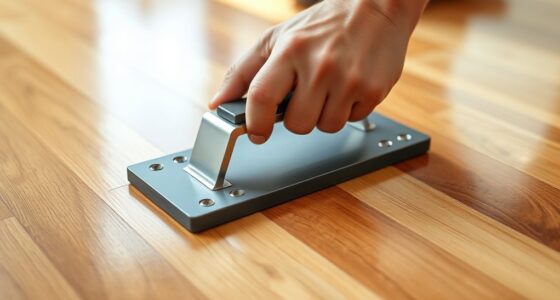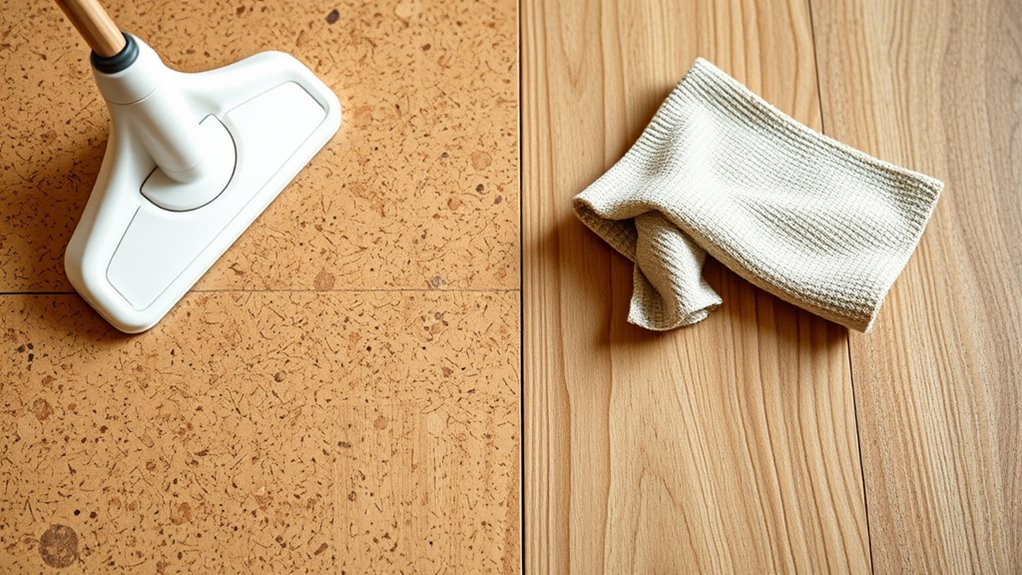

For cork floors, dry mopping daily with a microfiber cloth or broom is your best bet for regular maintenance, preventing scratches and dirt buildup. Use a damp mop only when needed for more thorough cleaning, making sure it’s just lightly moist to avoid damaging the surface. Excess moisture can cause swelling or warping, so it’s important to follow proper techniques. Want to learn more tips for keeping your cork floors looking their best? Keep exploring.
Key Takeaways
- Dry mopping is ideal for daily maintenance, removing dust and debris without introducing moisture.
- Damp mopping is suitable for deeper cleaning and sticky spots, but must be done with a thoroughly wrung-out mop.
- Excess moisture from damp mopping can cause cork swelling or warping; always use minimal water.
- Use microfiber cloths or soft mops to prevent surface scratches during both dry and damp cleaning.
- Follow manufacturer guidelines and use cleaning products designed for cork to ensure safe, effective cleaning.

Caring for cork floors involves choosing the right cleaning method to keep them looking their best. One of the most important decisions you’ll make is whether to use a dry or damp mop, which depends on the cleaning frequency and the specific maintenance tips you follow. Knowing when and how to clean your cork flooring will help preserve its beauty and durability over time.
Choosing the right cleaning method helps preserve your cork floors’ beauty and durability over time.
Generally, you should aim to sweep or dry mop your cork floors regularly—at least once a day if you have high traffic areas. This quick maintenance tip prevents dirt and debris from scratching the surface and keeps your floors looking fresh. For more thorough cleaning, using a damp mop is recommended, but it’s essential to avoid excess moisture. Too much water can seep into the cork and damage the material, causing swelling or warping. Consequently, when you choose to damp mop, make sure to wring out your mop thoroughly so it’s just lightly moist, not soaked.
The cleaning frequency plays a big role in maintaining the integrity of your cork floors. If you notice a lot of dust or dirt buildup, increase your cleaning routine to every few days. For everyday maintenance, a dry mop or microfiber cloth is sufficient to pick up surface dust without risking water damage. For deeper cleaning, such as removing sticky spots or spills, a damp mop with a gentle cleaning solution specifically made for cork or hardwood floors can do the trick. Always follow the manufacturer’s advice on what cleaning products are safe to use, as harsh chemicals can dull or harm the surface.
In addition to regular sweeping and damp mopping, some maintenance tips can help extend the life of your cork floors. Use furniture pads to prevent scratches, clean up spills immediately to avoid staining or swelling, and avoid using abrasive scrubbers. When mopping, move in the direction of the grain, and don’t use excessive pressure. Also, consider using a protective coat or polish designed for cork floors periodically, as this adds a layer of defense against scratches and wear. Being aware of proper cleaning techniques can significantly impact the longevity of your flooring.
Ultimately, striking the right balance between dry and damp mopping hinges on understanding your floor’s needs and your cleaning routine. Keep an eye on how your floor responds to different cleaning methods, and adjust accordingly. By sticking to a consistent cleaning schedule and following these maintenance tips, you’ll help guarantee your cork floors stay beautiful, resilient, and long-lasting.

Microfiber Mops for Hardwood Floor Cleaning – BPAWA Flat Floor Mop with 4 Washable Pads for Laminate Wood Tile Vinyl Home Kitchen Bathroom – 59" Adjustable Handle
Microfiber Mops for Floor Cleaning: Flat floor mop with adjustable long handle, flexible lightweight but sturdy, great for…
As an affiliate, we earn on qualifying purchases.
As an affiliate, we earn on qualifying purchases.
Frequently Asked Questions
How Often Should I Reseal My Cork Floors?
You should reseal your cork floors every 1 to 3 years, depending on your maintenance schedule and foot traffic. Regular sealing helps protect against damage and keeps the surface looking fresh. Keep an eye on wear patterns; if the finish starts to look dull or scratches become more noticeable, it’s time for a reseal. Consistent maintenance guarantees your cork floors stay durable and beautiful for years.
Are Cork Floors Suitable for High-Traffic Areas?
Think of cork flooring durability as a sturdy ship steering busy waters—you can count on it in high-traffic areas. Cork floors are quite suitable for these spaces, thanks to their resilience and natural shock absorption. Proper cork floor maintenance, like gentle cleaning and resealing when needed, keeps them looking great. With the right care, your cork floors can withstand heavy use and stay beautiful, even in bustling environments.
Can I Use Vinegar to Clean Cork Floors?
You can use vinegar for cleaning cork floors, but do so sparingly. Vinegar cleaning acts as a natural disinfectant, but its acidity can damage cork if used too often or in strong concentrations. To avoid harm, dilute vinegar with water and opt for damp, not wet, mops. This method keeps your cork floors clean and sanitized while preserving their natural finish and durability.
What Are Common Signs of Cork Floor Damage?
Watch for warping, water stains, and surface scratches—these are common signs of cork floor damage. You might notice floor expansion, which causes gaps or buckling, or moisture damage, leading to discoloration or soft spots. Keep an eye out for peeling or peeling edges, as these indicate deterioration. Addressing these signs early helps prevent further damage, preserving your cork’s charm and ensuring long-lasting durability.
How Do I Prevent Discoloration on Cork Flooring?
To prevent discoloration on cork flooring, you should follow proper cleaning techniques and maintenance tips. Regularly sweep or vacuum to remove dirt and debris that can stain the surface. Use a damp mop with a gentle cleaner, avoiding excess water that can cause damage. Additionally, protect your cork floor from direct sunlight by using curtains or UV protectant, and promptly clean spills to maintain its vibrant appearance.

CLEANHOME Mops for Floor Cleaning with 3 Different Washable Pads and Extendable 55” Long Handle, Multifunction Dust Mop for Hardwood,Marble,Tile Floor Mopping,Orange
Economical and durable mop: This microfiber dust mop with 3 pieces reusable refill mop pads, the chenille microfiber…
As an affiliate, we earn on qualifying purchases.
As an affiliate, we earn on qualifying purchases.
Conclusion
Think of your cork floor like a delicate garden — a gentle touch keeps it thriving. I once used a damp mop on mine, and it instantly restored its shine, much like watering a wilting plant. When you choose the right method—dry for routine cleaning and damp for deeper care—you’re nurturing your floor’s beauty and longevity. With just a little care, your cork floors will stay vibrant and inviting for years to come.

Wood & Cork Floor Cleaner 750ml
A solvent-free cleaning agent for the daily cleaning of wood and cork floors.
As an affiliate, we earn on qualifying purchases.
As an affiliate, we earn on qualifying purchases.

Scotch Felt Pads 162 PCS Beige, Felt Furniture Pads for Protecting Hardwood Floors, Round, Assorted Sizes Value Pack, Self-Stick design, Protecting from nicks, dents and scratches (SP845-NA)
GREAT FOR FURNITURE AND DÉCOR: Scotch felt pads for furniture on hardwood floors are great for chair legs,…
As an affiliate, we earn on qualifying purchases.
As an affiliate, we earn on qualifying purchases.