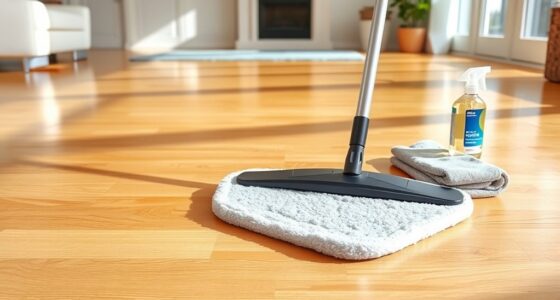
Many homeowners make the mistake of using too much water or overly saturated mops when cleaning their linoleum floors, which can cause warping or dullness over time. Using harsh chemicals or wax-based cleaners also damage the surface, while neglecting regular resealing can lead to scratches and stains. To keep your floors looking their best, switch to a well-wrung damp mop and proper cleaning products. Keep going to discover more simple solutions for preserving your flooring’s shine.
Key Takeaways
- Avoid using excessive water or oversaturated mops to prevent floor swelling and warping.
- Use pH-neutral, linoleum-specific cleaners and rinse tools regularly to prevent residue buildup.
- Don’t skip resealing; reapply sealant as recommended to maintain protection and shine.
- Use soft cleaning tools like sponges or cloths, avoiding abrasive brushes or steel wool.
- Promptly clean spills and perform routine maintenance to prevent stains and surface damage.
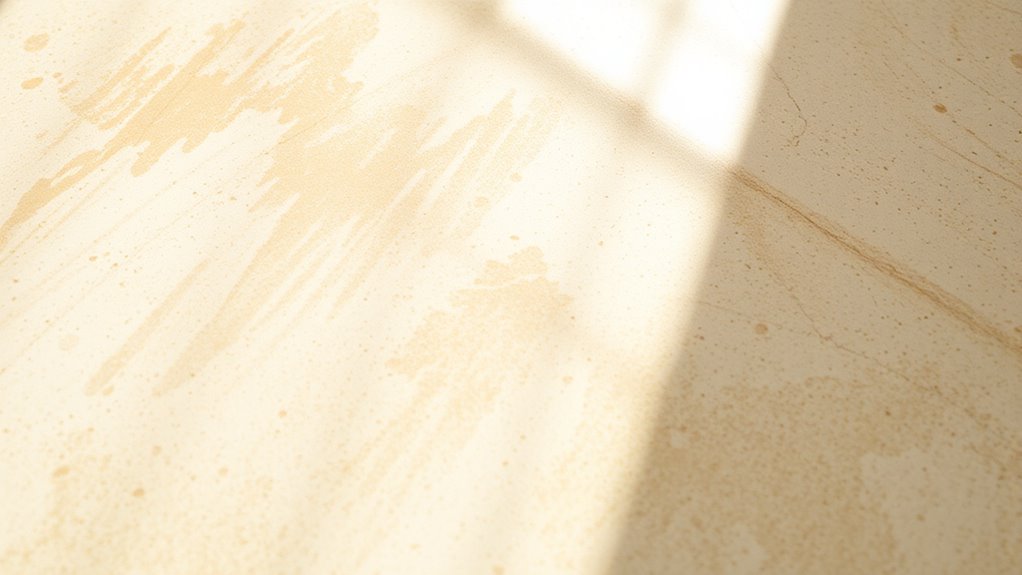
Linoleum floors are durable and attractive, but cleaning them improperly can cause damage and dull their appearance. One common mistake many people make is falling into mopping pitfalls that seem harmless but can actually harm the floor. You might be tempted to use too much water or harsh cleaning tools, thinking it will make your floor spotless. However, excess water can seep into seams and cause the linoleum to swell or warp over time. Using a mop that’s too saturated with water or neglecting to wring it out properly is a surefire way to introduce unnecessary moisture. Instead, opt for a damp mop—never soaking wet—and ensure you wring out your mop thoroughly before cleaning. This prevents excess water from pooling and minimizes the risk of damage.
Another mopping mistake is using the wrong cleaning solutions. Many cleaners contain harsh chemicals or wax-based products that can leave a sticky residue or dull the floor’s finish. Instead, choose a gentle, pH-neutral cleaner specifically formulated for linoleum floors. Regularly rinsing your mop in clean water helps prevent dirt and cleaning product buildup, which can make your floor look dull over time. Remember, quick and consistent cleaning maintains the integrity and appearance of your linoleum.
Sealing errors are another frequent mistake that can diminish the longevity of your floor. Some homeowners assume that once a linoleum floor is sealed, they don’t need to reseal it. This is inaccurate. Over time, the sealant can wear thin or become scratched, exposing the surface to dirt, stains, and moisture. Failing to reseal properly can lead to staining and increased wear. To avoid this, follow the manufacturer’s instructions for resealing, typically every few years. Use a high-quality sealant designed for linoleum, and ensure the surface is thoroughly cleaned and dry before applying. Proper sealing not only protects your floor but also keeps it looking shiny and new longer. Additionally, understanding the importance of a proper cleaning routine can greatly extend the life of your flooring investment.
Additionally, many people overlook the importance of regular maintenance. Avoid using abrasive scrub brushes or steel wool, which can scratch and dull the surface. Instead, use soft cloths or sponges for routine cleaning. Also, promptly clean up spills to prevent staining and damage. By steering clear of these mopping pitfalls and sealing errors, you’ll preserve your linoleum flooring’s beauty and durability for years to come. Proper cleaning isn’t complicated, but it does require attention to detail and the right products. When you adopt gentle cleaning techniques, avoid excess moisture, and keep up with resealing, you’ll enjoy a vibrant, long-lasting floor that looks great every day.
Frequently Asked Questions
How Often Should I Deep Clean My Linoleum Floors?
You should deep clean your linoleum floors every 1 to 3 months, depending on foot traffic and routine maintenance. Regular mopping keeps dirt and grime at bay, but a thorough deep clean removes embedded stains and restores shine. If you notice stubborn spots or dullness, it’s time for a deep clean. Consistent routine maintenance helps your floors stay beautiful and prolongs their lifespan.
Can I Use Vinegar on Linoleum Floors?
Using vinegar on linoleum floors is like adding a splash of wisdom to your cleaning routine. Vinegar cleaning can be effective for linoleum maintenance, but you should dilute it with water to prevent damage. Avoid full-strength vinegar, as it might erode the surface over time. When used properly, vinegar can gently cut through grime, keeping your linoleum floors shining without harsh chemicals.
What Is the Best Mop Type for Linoleum?
You should use a microfiber mop for linoleum floors because it’s gentle yet effective at cleaning. Microfiber mops are versatile among different mop types and work well with various cleaning tools. They trap dirt and dust without scratching the surface. Avoid harsh scrubbers or sponge mops that can damage linoleum. Regularly dampen the microfiber mop with a mild cleaning solution, and you’ll keep your floors looking fresh and spotless.
Are There Eco-Friendly Cleaning Options for Linoleum?
Yes, you can choose eco-friendly products for cleaning your linoleum floors. Look for natural cleaning solutions like vinegar and water or castile soap, which are safe and effective. These options help you avoid harsh chemicals and reduce environmental impact. Regular use of eco-friendly products maintains your floor’s shine and durability while supporting a healthier home. Always verify your cleaning products are labeled safe for linoleum and natural cleaning.
How Do I Remove Stubborn Stains From Linoleum?
To remove stubborn stains from linoleum, start by gently scrubbing the area with a mixture of baking soda and water, which helps lift the stain without damaging the surface. For tougher stains, apply a mixture of vinegar and water, letting it sit for a few minutes before scrubbing. To prevent future stains, clean spills promptly and avoid harsh chemicals. Regular stain removal and prevention keep your linoleum looking fresh and vibrant.
Conclusion
Cleaning your linoleum floors the right way can extend their life and keep them looking vibrant. Did you know that improper cleaning methods can reduce their lifespan by up to 20%? By avoiding common mistakes like using harsh chemicals or excessive water, you’re protecting your floors and saving money in the long run. Now, armed with these simple fixes, you can enjoy spotless, beautiful linoleum that lasts for years. Your floors will thank you!