
To pass audits for food facility floors, guarantee you follow a strict cleaning schedule using approved, effective cleaning agents and avoid excess water to prevent slips. Regular inspections help identify hazards, and proper signage warns about wet floors. Keep detailed records of all cleaning activities and promptly address any spills or debris. Proper staff training on cleaning techniques and slip prevention is key. To learn more about maintaining compliance and safety, continue exploring best practices for floor hygiene.
Key Takeaways
- Develop and follow a consistent cleaning schedule using approved cleaning agents tailored to your flooring surfaces.
- Document all cleaning activities and inspections meticulously to demonstrate compliance during audits.
- Use proper signage and slip-resistant mats in high-traffic or wet areas to prevent slips and show proactive hazard management.
- Train staff regularly on effective cleaning techniques, hazard reporting, and slip prevention strategies.
- Conduct routine inspections to identify and address potential hazards promptly, maintaining a safe, clean environment.
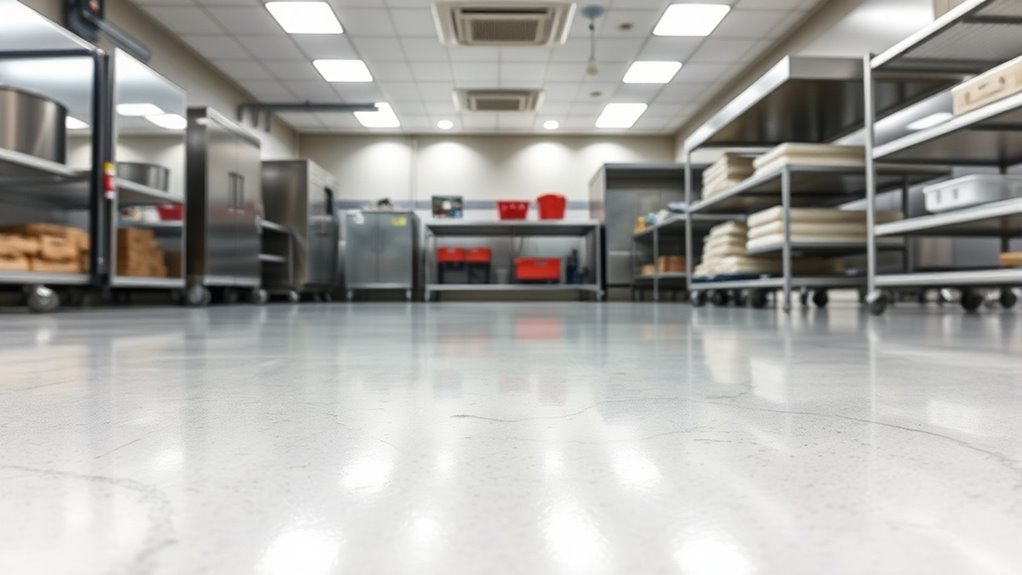
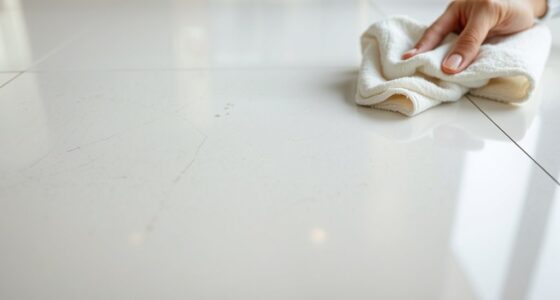
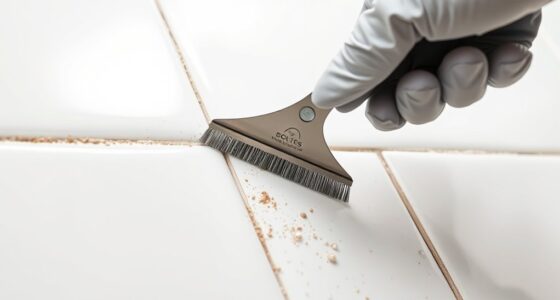
Passing a food facility floor audit can seem intimidating, but with the right preparation and attention to detail, you can guarantee your operation meets all safety standards. One of the most critical aspects of this is ensuring your floor cleaning practices are up to par. Regular, thorough cleaning removes spills, debris, and residues that could compromise safety or attract pests. Use approved cleaning agents and follow the manufacturer’s instructions to guarantee effective results. Establish a consistent cleaning schedule that covers all areas, including hard-to-reach spots, and document each cleaning for record-keeping. This not only demonstrates your commitment to cleanliness but also provides evidence during audits. Proper documentation can serve as proof of compliance and help identify areas for improvement.
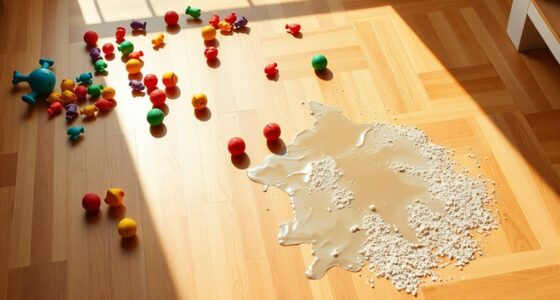
Effective floor cleaning goes hand-in-hand with slip prevention. Slips are a common hazard in food facilities and can lead to serious injuries and regulatory issues. To prevent slips, you need to understand the surfaces in your facility and choose appropriate cleaning methods and products. Avoid overly wet floors and ensure your cleaning techniques minimize excess water and cleaning solution residues. Implement routine inspections to identify and promptly address areas where slips could occur. Use proper signage to warn employees and visitors of wet floors during cleaning or spills, and encourage staff to report hazards immediately. Installing slip-resistant mats in high-traffic or frequently wet areas can also considerably reduce the risk of slips and falls. Additionally, educating staff on the importance of floor hygiene and slip prevention techniques helps foster a safer environment.
In addition to routine cleaning, maintaining a clean environment involves training your staff properly. Make sure everyone understands the importance of floor hygiene and slip prevention, and train them on how to clean effectively without creating hazards. Encourage a culture of safety that emphasizes immediate cleanup of spills and proper storage of cleaning supplies to prevent accidental slips. Keeping floors dry and clean is an ongoing process, but it’s vital for passing inspections and ensuring a safe working environment.
Frequently Asked Questions
What Are the Most Common Violations Found During Floor Audits?
During floor audits, you often find violations like slippery surfaces and improper drainage. Slippery floors pose safety hazards and often result from spills or inadequate cleaning. Improper drainage leads to water accumulation, increasing slip risks and hindering hygiene. You should regularly inspect floors, promptly clean spills, and verify drainage systems are functioning properly. Addressing these issues helps you meet compliance standards, reduce hazards, and pass audits smoothly.
How Often Should Floor Inspections Be Conducted for Compliance?
You should conduct floor inspections regularly, ideally at least daily, to guarantee ongoing compliance. Establish a floor inspection frequency that aligns with your facility’s operations and risk level, and incorporate it into your compliance scheduling. Consistent inspections help identify issues early, prevent violations, and demonstrate your commitment to food safety standards. Regular checks also prepare you better for audits, ensuring your floors meet all regulatory requirements.
Are There Specific Cleaning Agents Recommended for Food Facility Floors?
While selecting cleaning agents for your food facility floors, opt for those specifically formulated for food service environments. These cleaning agents effectively support your floor maintenance efforts by removing residues and preventing contamination. Look for products that are food-safe, non-toxic, and easy to rinse. Consistent use of appropriate cleaning agents guarantees your floors remain pristine, helping you meet health standards and passing audits with confidence.
How Can Facilities Prevent Cross-Contamination on Floors?
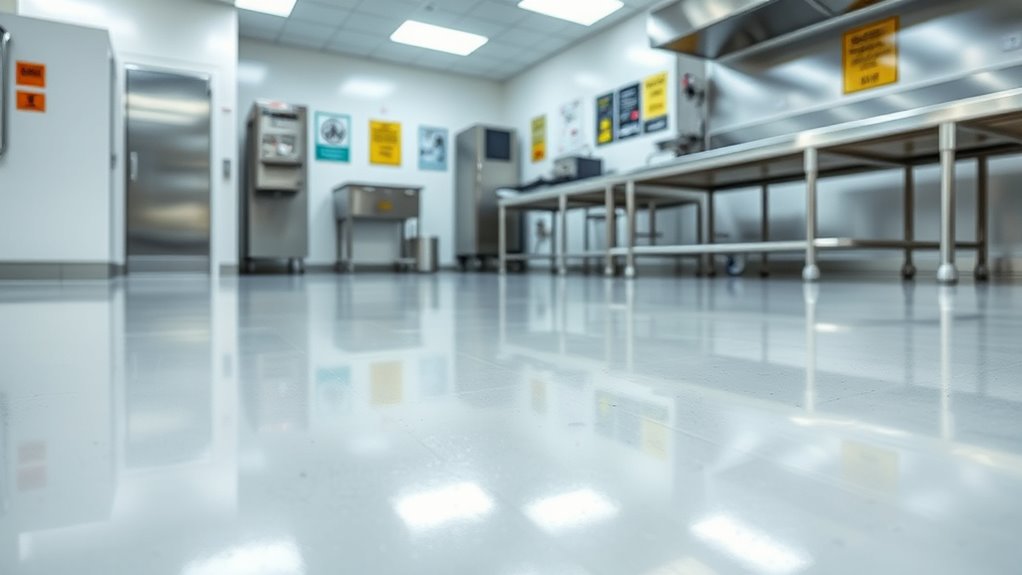
To prevent cross-contamination on floors, you should use a durable, food-grade floor coating that resists bacteria growth and makes cleaning easier. Guarantee the coating provides slip resistance to avoid accidents. Regularly clean and sanitize the floors with appropriate cleaning agents, focusing on high-traffic areas. Implement strict cleaning schedules, train staff on proper procedures, and promptly address spills or debris to maintain a safe, hygienic environment.
What Training Is Necessary for Staff to Maintain Audit-Ready Floors?
Think of your staff as guardians of the floor’s integrity. You need to train them in proper employee hygiene and flooring maintenance to keep the space audit-ready. Regularly teach handwashing, PPE use, and cleaning procedures. Conduct refresher courses, monitor compliance, and emphasize the importance of spotless, well-maintained floors. This ongoing training guarantees everyone understands their role in preventing contamination, making your facility resilient and prepared for any audit.
Conclusion
By maintaining spotless floors, you’re planting seeds of cleanliness that bloom into audit success. Think of your floors as the foundation of a sturdy house—if it’s solid and well-kept, everything above stands tall. Regular cleaning and vigilant inspection are your tools to keep your facility shining brighter than a lighthouse in the night. With these habits, you’ll navigate audits smoothly, turning potential stormy seas into calm waters, ensuring your food facility remains a beacon of safety and compliance.