To reduce slips during wet cleaning tasks, wear slip-resistant footwear with well-maintained soles, and make certain your shoes fit properly. Place clear, visible warning signs around wet areas and keep them until surfaces dry. Clean spills immediately and prevent water from spreading by arranging cleaning tools carefully. Stay alert to wet spots, use absorbent mats in high-traffic zones, and follow proper hazard awareness practices. Continuing further can help you master all safety strategies to keep everyone safe.

Get cleaning gear delivered free with Prime
- Fast, free delivery on millions of items
- Prime Video, Amazon Music and more included
- Member-only deals all year
Key Takeaways
- Ensure staff wear slip-resistant footwear with well-maintained soles during cleaning tasks.
- Place visible warning signs around wet areas until surfaces are dry.
- Clean spills immediately and use absorbent mats in high-traffic zones.
- Conduct regular safety training on spill response and hazard awareness.
- Plan cleaning procedures to prevent water from spreading beyond designated areas.

Slips during wet cleaning tasks can lead to serious injuries, but you can considerably reduce the risk by taking proper precautions. One of the most effective steps is to ensure you wear slip resistant footwear. These shoes are specifically designed to provide better grip on wet and slippery surfaces, markedly decreasing your chance of slipping. When choosing slip resistant footwear, look for soles made from slip-resistant rubber or similar materials that offer maximum traction. Make sure your shoes fit well and are in good condition, with no worn-out soles or damages that could compromise their grip. Wearing the right footwear not only boosts your safety but also helps you feel more confident and steady while working in wet environments.
Wearing slip resistant shoes enhances safety and confidence during wet cleaning tasks.
Another essential safety measure is to use warning signage. Placing clear, visible signs around wet areas communicates to everyone that caution is necessary. Warning signage alerts employees and visitors alike to be extra careful, reducing the likelihood of accidental slips and falls. Position signs near mopped floors, areas with ongoing cleaning, or places prone to water accumulation. The signs should be easily readable from a distance and remain in place until the surface is fully dry. Combining warning signage with your cleaning routines creates a proactive approach to safety, guaranteeing that everyone stays aware of potential hazards.
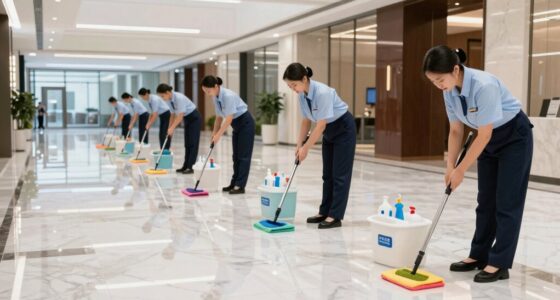
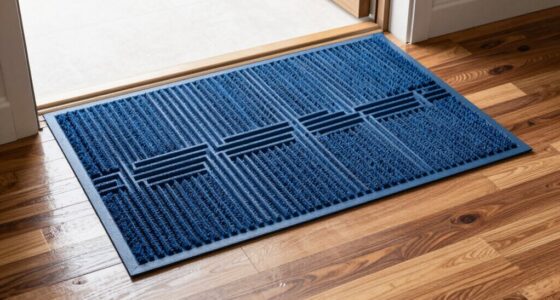
In addition to footwear and signage, it’s vital to manage the cleaning process efficiently. Immediately clean up spills or excess water as soon as they happen, and use absorbent materials or mats to soak up moisture in high-traffic areas. Regularly inspect the cleaning area to identify and address any wet spots before they become a hazard. If you’re using mops, buckets, or hoses, arrange them carefully to prevent water from spreading beyond the intended cleaning zone. Properly storing cleaning equipment when not in use also minimizes accidental slips caused by tripping over hoses or cleaning tools left on the floor. Understanding wet surface hazards and how to mitigate them is crucial for maintaining safety. Proper planning and hazard awareness help prevent accidents and promote a safer environment. Additionally, establishing clear procedures for spill response ensures that hazards are addressed promptly to prevent slips. Incorporating safety training into your routine can further improve compliance and awareness among staff members.
slip resistant footwear for wet floors
As an affiliate, we earn on qualifying purchases.
As an affiliate, we earn on qualifying purchases.
Frequently Asked Questions
What Footwear Provides the Best Slip Resistance?
You should choose slip resistant shoes or anti slip footwear for the best slip resistance. Look for shoes with rubber soles and tread patterns designed to grip wet surfaces effectively. Avoid smooth-soled shoes, as they increase the risk of slipping. Proper anti slip footwear provides better traction, especially during wet cleaning tasks, helping you stay safe. Regularly inspect your shoes for wear and replace them when the tread wears down.
How Often Should Floor Surfaces Be Inspected for Hazards?
You should inspect floor surfaces regularly, ideally daily during routine floor maintenance. Frequent checks help you identify hazards like spills, uneven surfaces, or worn-out flooring that can cause slips. By maintaining hazard awareness, you guarantee safety and prevent accidents. Consistent inspections allow you to address issues promptly, keeping floors safe and reducing the risk of slips during wet cleaning tasks. Remember, proactive hazard detection is key to a safer environment.
Are There Specific Cleaning Agents That Increase Slip Risk?
Think of cleaning agents like spices; some add flavor, others can overpower. Certain cleaning chemicals, especially those with greasy or slippery residues, increase slip risk if not used properly. To guarantee cleaning chemical safety and effective slip risk management, always follow manufacturer instructions and use appropriate dilution. Avoid harsh or overly greasy cleaners on high-traffic areas, as they leave residues that make floors slick and dangerous, increasing the chance of slips.
How Do Weather Conditions Affect Slip Hazards Indoors?
Weather conditions, especially humidity impact, can increase indoor moisture levels, making floors more slippery. When outdoor weather is humid or rainy, moisture can seep inside or be tracked in, creating wet spots. You should regularly monitor indoor humidity, use dehumidifiers if needed, and promptly clean or dry wet areas. Proper ventilation helps reduce indoor moisture, decreasing slip hazards during wet cleaning tasks and maintaining a safer environment.
What Training Is Recommended for Staff on Slip Prevention?
Think of slip prevention training as your staff’s safety toolbox. You should provide slip training that covers hazard awareness, proper footwear, and safe cleaning protocols. Regularly update and reinforce this training to keep it fresh in their minds. This proactive approach helps staff recognize potential hazards, respond appropriately, and reduce slip risks. Well-trained employees become the first line of defense, transforming your workspace into a safer environment.
Conclusion
By following proper safety measures and staying vigilant, you can considerably reduce slips during wet cleaning tasks. Remember, nearly 80% of slip-and-fall accidents occur on wet surfaces, leading to injuries and downtime. Imagine yourself confidently maneuvering damp floors, knowing you’ve minimized risks for yourself and others. Staying alert, wearing slip-resistant shoes, and promptly cleaning spills turn potential hazards into safe environments. Your proactive approach keeps everyone safer—because prevention is always better than dealing with the aftermath.
Halloween Picks
halloween
As an affiliate, we earn on qualifying purchases.