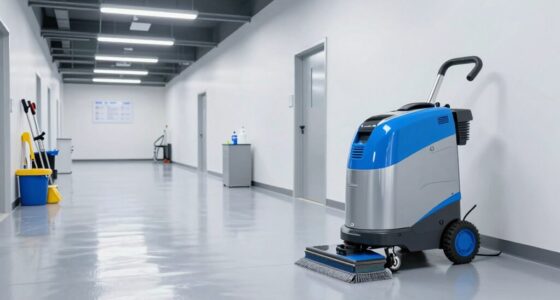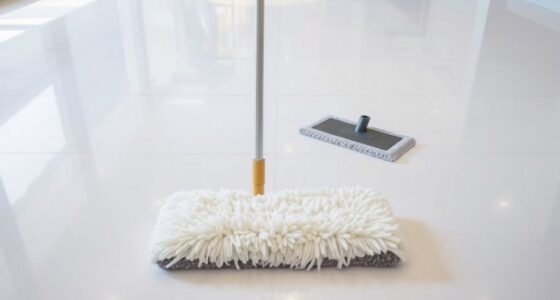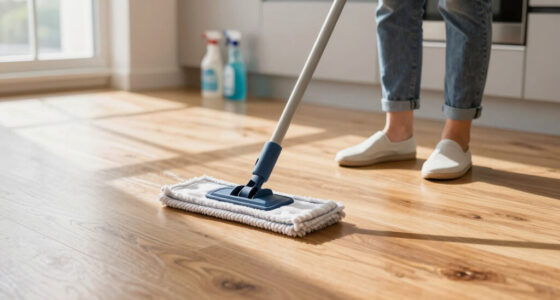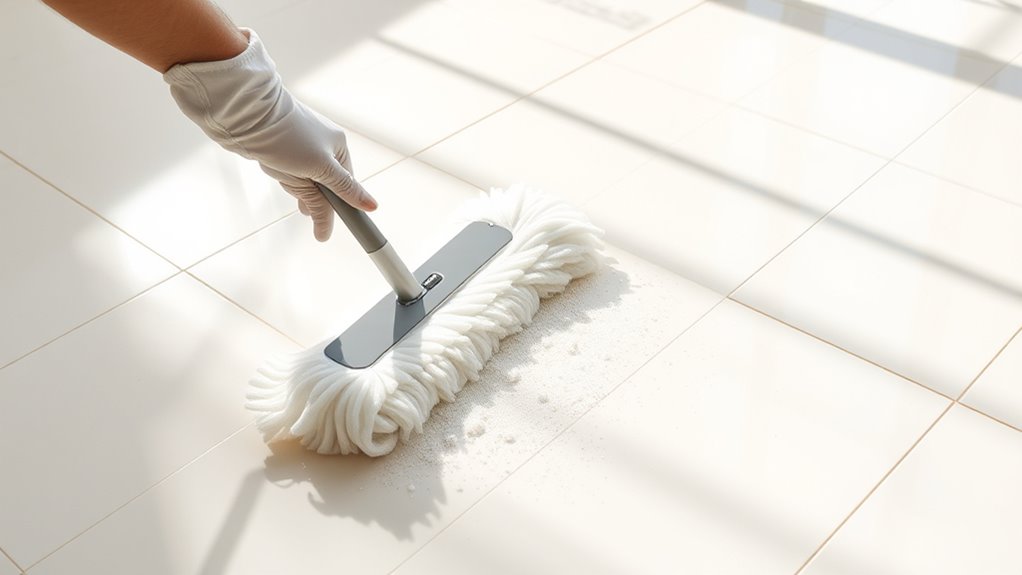
To keep tile floors allergy-safe and dust-free, regularly vacuum with a well-maintained vacuum equipped with a HEPA filter, ensuring the brush roll functions properly. Follow up with routine mopping using microfiber mops and gentle, chemical-free solutions, starting in one corner and overlapping your strokes. Maintain your tools and filters to prevent dust redistribution. Consistency in these steps creates a cleaner environment, and continuing these practices will help you master an effective dust control routine.

Get cleaning gear delivered free with Prime
- Fast, free delivery on millions of items
- Prime Video, Amazon Music and more included
- Member-only deals all year
Key Takeaways
- Regularly vacuum with a HEPA filter to remove dust, pet dander, and allergens from tile floors.
- Use microfiber mops dampened with gentle, chemical-free solutions for effective dust trapping.
- Maintain vacuum filters and tools routinely to prevent dust redistribution and ensure optimal performance.
- Clean high-traffic areas more frequently to prevent dust buildup and improve air quality.
- Establish a consistent cleaning schedule combining vacuuming and mopping for allergy-safe dust control.
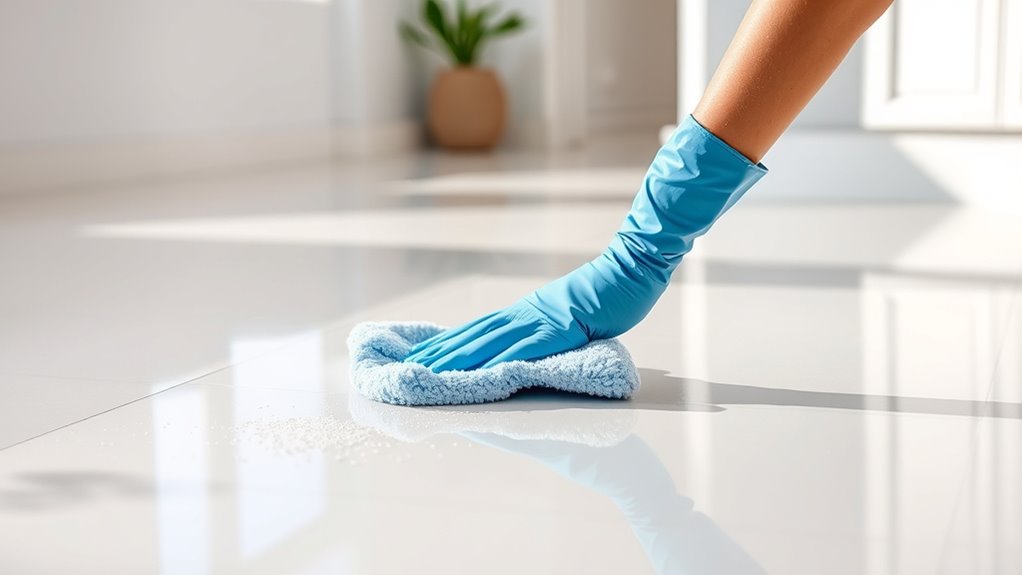
Are you tired of constantly battling dust on your tile floors? Keeping your space allergy-safe requires more than just sweeping once in a while. It’s essential to develop a routine that effectively reduces dust, allergens, and debris. Regular vacuum maintenance is the foundation of this routine. You want to ensure your vacuum is functioning at its best, with clean filters and a properly working brush roll. Check your vacuum’s filters frequently, replacing or cleaning them according to the manufacturer’s instructions. A well-maintained vacuum pulls up dust and allergens more efficiently, preventing them from settling into your tile grout or floating back into the air. Using a vacuum with a HEPA filter can make a significant difference because it traps tiny particles, including pet dander and dust mites, which are common allergy triggers. After vacuuming, you should follow up with effective mop techniques to eliminate residual dust and grime. Choose a microfiber mop, as its fine fibers are excellent at trapping dust particles. When mopping, avoid just dragging the wet mop across the floor randomly; instead, use a systematic approach. Start in one corner and work your way across the room in overlapping strokes, ensuring you cover every inch of the tile surface. Use a cleaning solution suitable for your tile type—preferably one that is gentle and free from harsh chemicals that can linger in the grout or cause respiratory irritation. Lightly dampen the mop, avoiding excessive water, which can seep into the grout and promote mold growth. Regularly rinse and wring out the mop to prevent spreading dirt around. It’s also beneficial to change your cleaning solution or rinse water often, especially if you notice it becoming cloudy. For high-traffic areas, consider mopping more frequently to keep dust from accumulating. Incorporating these mop techniques into your routine ensures a thorough clean that reduces airborne allergens. Combining this with diligent vacuum maintenance creates a cleaner environment that’s safer for allergy sufferers. Remember, consistency is key; the more regularly you maintain your cleaning tools and techniques, the less dust will settle and become airborne. Additionally, using a vacuum with a HEPA filter enhances the air quality by capturing even the smallest particles. Also, don’t forget to clean your vacuum filters and mop heads routinely, as dirty tools will only spread dust rather than eliminate it. Ultimately, a combination of proper vacuum maintenance and disciplined mop techniques will make a noticeable difference in your home’s air quality and overall cleanliness. It might take some effort initially, but once you establish a routine, dust control on your tile floors will become easier and more effective, leading to a healthier, allergy-friendly environment for you and your family.
Frequently Asked Questions
Are Steam Mops Safe for All Types of Tile Floors?
Yes, steam mops are generally safe for most tile floors when used correctly, promoting effective steam cleaning and dust control. However, you should always check your tile’s manufacturer guidelines to make certain steam cleaning won’t damage the surface. For tile safety, avoid excessive heat or prolonged steam exposure, especially on delicate tiles like natural stone. This way, you maintain cleanliness while protecting your floors from potential harm.
How Often Should I Change My Vacuum Filters for Allergy Control?
You should change your vacuum filters every 3 to 6 months for ideal allergy control. Regular vacuum maintenance ensures the filter’s lifespan is maximized, preventing dust and allergens from recirculating into the air. If you have pets or allergies, consider changing filters more frequently. Keeping your filters fresh helps maintain suction power and keeps indoor air cleaner, making your allergy-safe routine more effective.
Can Natural Cleaning Products Effectively Control Dust on Tiles?
Think of natural cleaning products as gentle rain washing away dust on your tiles. Yes, they can effectively control dust when crafted with natural ingredients like vinegar, baking soda, or essential oils. DIY solutions let you customize your mix, ensuring a safe, allergy-friendly routine. Regularly mopping with these natural solutions helps keep dust at bay, creating a healthier, fresher space without harsh chemicals.
What’s the Best Way to Prevent Dust Buildup in Grout Lines?
To prevent dust buildup in grout lines, you should regularly seal your grout with a high-quality grout sealer. This creates a barrier that repels dust and dirt, making cleaning easier. Additionally, consider applying dust-resistant coatings on the tile surface, which help minimize dust settling. Maintaining a consistent cleaning routine with gentle, natural products also keeps grout lines cleaner longer, reducing dust accumulation and supporting allergy-safe conditions.
Do Air Purifiers Help Reduce Dust on Tile Floors?
Yes, air purifiers can help reduce dust on tile floors by capturing airborne dust particles, improving overall air quality. Their effectiveness depends on the filter type and room size. Combine air purifiers with dust reduction techniques like regular sweeping, mopping, and using a damp cloth on surfaces. This holistic approach keeps your tile floors cleaner, minimizes dust buildup, and creates a healthier allergy-safe environment.
Conclusion
By keeping your tile floors dust-free, you’re creating a fortress of freshness in your home. Regular sweeping and mopping act like a gentle breeze that banishes allergens and keeps your space shining like a beacon of cleanliness. Think of your routine as a shield, protecting your lungs and making every step feel lighter. With consistent care, your floors become a sanctuary—an allergy-safe haven where dust dares not to settle and health flourishes.
Halloween Picks
halloween
As an affiliate, we earn on qualifying purchases.