
In a multi-building cleaning program, you should track cleanliness standards, staff attendance, and productivity to guarantee quality and efficiency. Keep an eye on supplies and equipment to prevent shortages and keep maintenance on schedule. Monitor scheduling to avoid overlaps and gaps, and use data tools to analyze trends and identify improvement areas. Staying on top of these aspects will help you manage your program effectively—continue exploring to learn more about optimizing your cleaning operations.

Get cleaning gear delivered free with Prime
- Fast, free delivery on millions of items
- Prime Video, Amazon Music and more included
- Member-only deals all year
Key Takeaways
- Cleaning quality and compliance with established standards across all buildings
- Staff attendance, productivity, and performance metrics for effective management
- Inventory levels and usage of supplies and equipment to prevent shortages
- Scheduling adherence and procedural updates to ensure comprehensive coverage
- Data trends and monitoring results to identify areas for continuous improvement
Have you ever wondered how cleaning teams effectively manage multiple buildings without missing a spot? The secret lies in meticulous tracking and consistent monitoring. When overseeing a multi-building cleaning program, it’s essential to know exactly what to track to ensure everything runs smoothly and to uphold high standards. First and foremost, you need to focus on quality assurance. This involves setting clear standards for cleanliness and regularly checking if those standards are met. By tracking the completion of tasks, cleaning frequency, and the quality of work, you can identify areas that need improvement and prevent issues from slipping through the cracks. Quality assurance isn’t just about individual tasks; it’s about maintaining a consistent level of cleanliness across all buildings, which directly impacts your reputation and client satisfaction.
Alongside quality assurance, staff performance is a critical element to monitor. You want to know how your team members are doing, whether they’re following proper procedures, and if they’re completing their duties efficiently. Tracking staff performance involves recording attendance, punctuality, and productivity levels. It also includes evaluating the quality of their work, which can be done through regular inspections or feedback forms. When you keep tabs on staff performance, you’re better positioned to provide targeted training, recognize top performers, and address any issues swiftly before they affect the overall cleanliness. This proactive approach ensures that your team remains motivated and consistently meets expectations. Additionally, implementing performance metrics can help quantify staff contributions and identify training needs more objectively. Regularly reviewing these metrics helps maintain a high standard of service and accountability. Incorporating data analysis into your review process can further enhance your ability to identify trends and make informed decisions. A comprehensive approach to performance tracking also fosters a culture of continuous improvement within your cleaning teams.
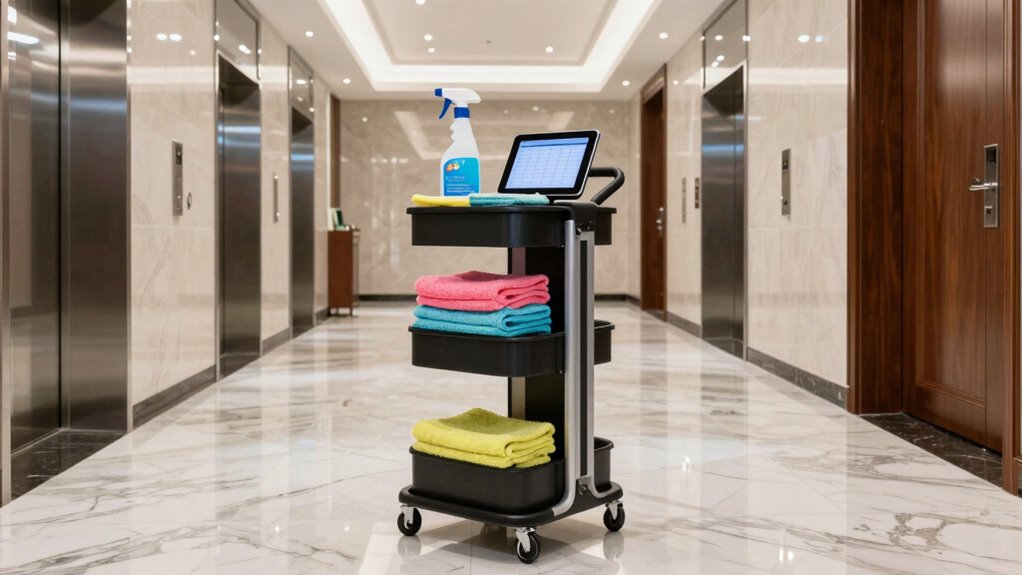
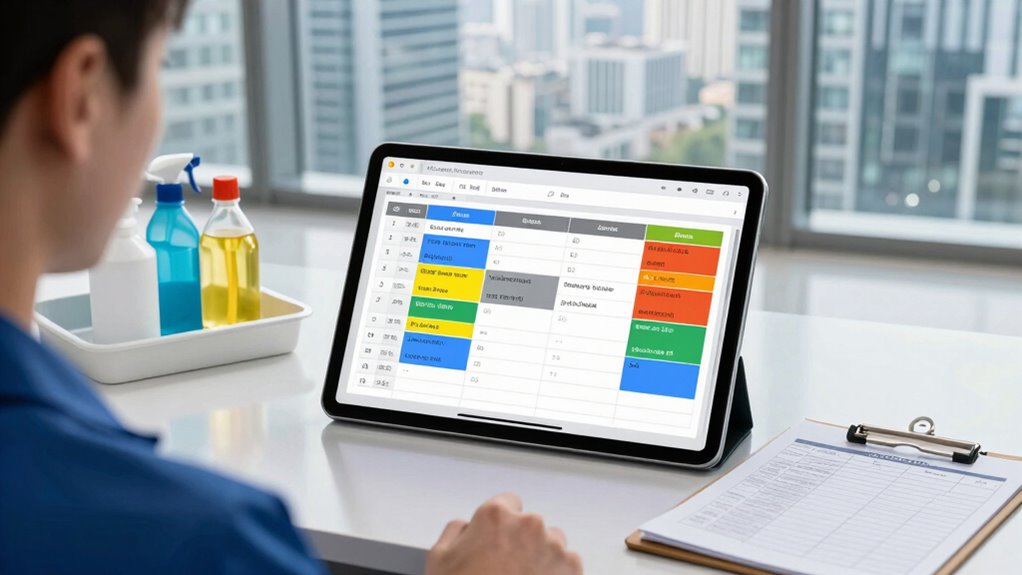
In addition to quality assurance and staff performance, you should also track supply usage and inventory levels. Knowing what cleaning supplies are used most frequently helps you optimize procurement processes, avoid shortages, and reduce waste. Monitoring equipment maintenance schedules is equally important, as it prevents breakdowns that could delay cleaning routines across multiple buildings. Keeping detailed records of cleaning schedules and routines for each property allows you to coordinate tasks efficiently, avoiding overlaps or gaps. Staying aware of cleaning procedures and standards is essential for maintaining consistent quality across all sites. Regularly reviewing and updating these procedures keeps your team aligned with best practices and evolving industry standards. Employing tracking tools can further streamline this process, enabling real-time updates and better data management. By integrating these tools, you can improve overall efficiency and ensure that no detail goes unnoticed.
multi-building cleaning checklist
As an affiliate, we earn on qualifying purchases.
As an affiliate, we earn on qualifying purchases.
Frequently Asked Questions
How Often Should Cleaning Data Be Reviewed?
You should review cleaning data regularly—at least monthly—to guarantee cleaning schedules stay effective and staff accountability remains high. Frequent reviews help identify patterns, address issues promptly, and improve overall cleanliness. Adjust your cleaning schedules based on these insights, and share performance feedback with staff to motivate consistent quality. Regular monitoring keeps your multi-building cleaning program efficient, helps prevent problems, and maintains a high standard of cleanliness across all sites.
What Technology Tools Are Best for Tracking?
Imagine a system that keeps you instantly informed—cleaning sensors feed real-time data straight to digital dashboards, revealing cleanliness levels across buildings. The best tools for tracking are these sensors paired with intuitive dashboards, giving you immediate insights. With this technology, you stay ahead of issues, ensuring every space gets the attention it requires. Don’t let essential details slip through your fingers—embrace these tools for a smarter cleaning program.
How Do We Handle Data Privacy Concerns?
You handle data privacy concerns by implementing strict privacy policies that outline how data is collected, stored, and shared. Use data encryption to protect sensitive information during transmission and storage. Regularly review and update your privacy policies to comply with regulations. Educate your team on data privacy best practices, ensuring everyone understands their role in safeguarding customer and company data. This proactive approach maintains trust and minimizes privacy risks.
Who Should Have Access to the Tracking Data?
Ironically, everyone should have access to the tracking data, right? Not quite. You need strict access controls to guarantee data security, limiting information to those who genuinely need it. By doing so, you protect sensitive details from misuse and preserve trust. Carefully decide who can view, edit, or share the data, because overexposure risks breaches—something no one wants in a multi-building cleaning program.
How Can Tracking Improve Overall Cleaning Quality?
Tracking cleaning metrics boosts overall quality by providing clear benchmarks and identifying areas needing improvement. When you monitor performance, staff accountability increases because workers know their efforts are measured and evaluated. This focus encourages consistent, high standards and helps you pinpoint issues quickly. By regularly reviewing these metrics, you can refine processes, motivate staff, and guarantee every building maintains a superior level of cleanliness, ultimately enhancing client satisfaction.
Conclusion
By tracking your cleaning program, you gain clarity and control over each building’s needs. It’s like having a detailed map in a complex maze—without it, you’re lost in guesswork. Yet, with precise data, you can swiftly navigate issues and optimize your efforts. Ultimately, embracing thorough tracking turns chaos into order, ensuring every corner shines. In a multi-building landscape, it’s your secret weapon—balancing the chaos of multiple sites with the calm of organized, effective cleaning.
Halloween Picks
halloween
As an affiliate, we earn on qualifying purchases.