To handle wet floor sign placement correctly, position signs directly in the foot traffic path at eye level and near wet areas or spills. Use bright, reflective signs that are large enough to be noticed and secure them to prevent tipping. Place signs immediately when spills happen and remove them once the surface is dry. For maximum safety, combine signage with clear communication and regularly check that signs stay stable and visible—keep learning for more tips.

Get cleaning gear delivered free with Prime
- Fast, free delivery on millions of items
- Prime Video, Amazon Music and more included
- Member-only deals all year
Key Takeaways
- Place signs at eye level in high foot traffic areas near wet surfaces immediately after cleaning or spills.
- Use bright, reflective, or illuminated signs to maximize visibility, especially in low-light conditions.
- Ensure signs are secure, stable, and positioned to prevent tipping or obstruction of walkways.
- Remove signs promptly once the wet surface is dry to avoid unnecessary clutter and confusion.
- Combine signage with clear communication and regular safety checks to reinforce hazard awareness.
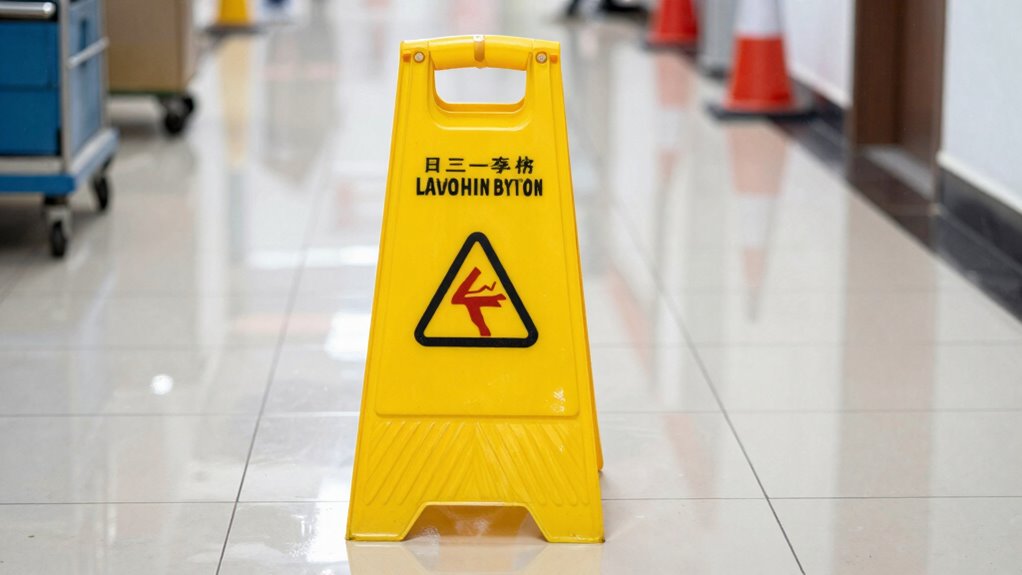
Have you ever wondered if you’re placing wet floor signs effectively to prevent accidents? Proper placement of these signs is essential in alerting people to potential hazards caused by slippery surfaces. When floors are wet, whether from a spill, rain, or cleaning, the risk of slips and falls increases considerably. That’s why understanding how to handle wet floor sign placement correctly is crucial for maintaining safety protocols and protecting everyone in your space.
Effective wet floor sign placement is key to preventing slips and ensuring safety in all environments.
First, you need to guarantee the signs are highly visible and positioned in key locations. Place them directly in the path of foot traffic, especially at entry points and around the wet area. If a spill occurs near multiple walkways or entrances, multiple signs should be used to cover all potential routes. Visibility is paramount; signs should be at eye level and not obstructed by furniture, equipment, or other objects. Bright colors like yellow or orange are preferable because they catch attention quickly. Reflective or illuminated signs are even better in low-light environments, ensuring visibility at all times.
Timing is just as important. You should put the signs out immediately after discovering the wet surface and before anyone has a chance to walk through the hazard. Don’t wait until someone slips; proactive placement is your best defense. Once the wet surface has been cleaned or dried, and the hazard is no longer present, remove the signs promptly to avoid confusion. Proper signage placement can significantly improve safety outcomes, especially when combined with clear communication strategies.
You also need to take into account the size and stability of the signs. Larger signs are more noticeable, but they should also be lightweight enough to be easily moved and stable enough not to tip over easily. Secure placement prevents accidental knocking over, which could create additional hazards. If your environment experiences heavy foot traffic or weather conditions like wind, consider using weighted or fixed signs to keep them in place. Additionally, understanding the importance of proper signage placement can greatly improve safety outcomes. Ensuring that the signs are clearly visible and well-positioned is a key element in effective hazard communication. Proper signage placement is also a critical component of overall safety management, as it directly influences how effectively hazards are communicated to everyone present. Regular training and awareness of best practices in hazard signage can further enhance safety and ensure consistency across your safety measures.
bright reflective wet floor signs
As an affiliate, we earn on qualifying purchases.
As an affiliate, we earn on qualifying purchases.
Frequently Asked Questions
What Materials Are Best for Wet Floor Signs?
You should choose wet floor signs made from durable materials like high-density plastic or aluminum, which withstand frequent use and exposure to water. These materials guarantee sign durability, preventing cracks or fading over time. Also, prioritize signs with bright, reflective colors and bold lettering to enhance sign visibility, especially in low-light conditions. This way, you uphold safety by maintaining clear, long-lasting warnings that grab attention effectively.
How Often Should Wet Floor Signs Be Replaced?
You should replace wet floor signs based on their maintenance schedules and sign durability. Regular inspections help identify signs that are faded, torn, or damaged, guaranteeing safety. Typically, signs last 6 months to a year, but frequent use or exposure to weather can shorten this period. Keep an eye on wear and tear, and replace signs promptly to maintain visibility and safety standards. Proper maintenance guarantees your signs remain effective and reliable.
Are There Legal Requirements for Sign Placement?
Are you aware that failing to meet legal requirements for sign placement can lead to costly fines or lawsuits? You must guarantee your wet floor signage complies with local laws and signage regulations to protect both your business and customers. Proper placement is essential, so always check specific legal compliance standards in your area. Don’t risk safety or legal trouble—place your signs where they’re clearly visible to prevent accidents and stay within the law.
How Do Weather Conditions Affect Sign Visibility?
Weather conditions greatly impact sign visibility, creating various visibility challenges. Rain, fog, or snow can obscure your wet floor signs, making them harder for people to see. Wind might blow signs over or out of position, reducing their effectiveness. To combat this, you should choose weather-resistant signs, secure them properly, and consider additional lighting or reflective materials during poor weather. Staying proactive ensures your signs remain visible and effective, regardless of weather impact.
Can Wet Floor Signs Be Reused or Recycled?
Wet floor signs can often be reused if they’re in good condition, but their durability varies based on material quality. Reusing signs reduces waste and minimizes environmental impact, making them a more sustainable choice. When signs become too worn or damaged, recycling is a better option, especially if made from recyclable materials. Proper maintenance extends their lifespan, ensuring safety and reducing environmental footprint over time.
Conclusion
By carefully coordinating your wet floor sign placement, you create a safer, more secure space for everyone. Consistency, caution, and clear communication are key. When you guarantee signs are strategically positioned, you prevent slips, spills, and surprises. So, stay vigilant, be vigilant, and let your responsible placement reinforce safety. With mindful measures, you minimize mishaps and maximize safety — making your environment a safer, smoother space for all. Safety starts with your smart, strategic sign placement!
Fall Picks
fall essentials
As an affiliate, we earn on qualifying purchases.