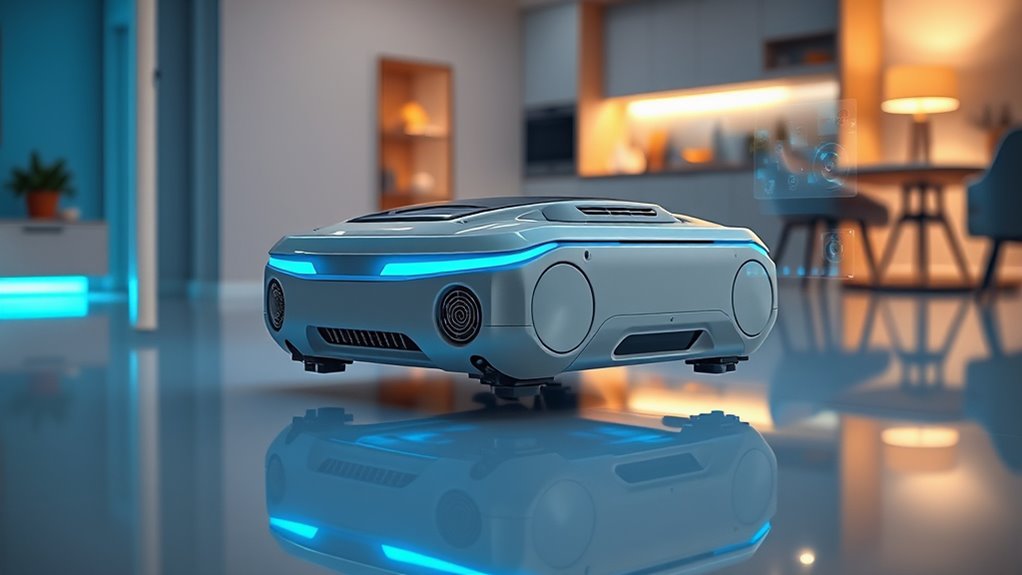
Future trends in AI for autonomous cleaning will see your robot becoming smarter and more efficient. Advanced sensors and AI will allow it to create detailed maps, avoid obstacles, and identify different types of debris for targeted cleaning. Connectivity will enable seamless integration with smart home systems, giving you control via voice or apps. These improvements make your cleaning systems more adaptable and autonomous than ever before—stay with us to discover how these innovations will transform your home.
Key Takeaways
- AI will enable cleaning robots to better differentiate debris types and adjust cleaning strategies accordingly.
- Enhanced machine learning algorithms will improve obstacle detection, navigation, and environment understanding.
- Integration of AI with sensors will facilitate real-time mapping and dynamic route optimization.
- Voice and app controls powered by AI will allow more intuitive, personalized user interactions.
- AI-driven predictive maintenance will minimize downtime and extend robot lifespan.

Have you ever wondered how autonomous cleaning robots effortlessly keep your floors spotless? The secret lies in advanced robotic integration and sophisticated sensor technology that work seamlessly together. As these robots become smarter, they’re increasingly capable of maneuvering complex environments and adapting to changing conditions. Robotic integration involves combining hardware components—such as motors, brushes, and wheels—with software that allows the robot to communicate and coordinate. This integration ensures smooth operations, enabling the robot to perform cleaning tasks efficiently without human intervention. Sensor technology plays a vital role here, providing real-time data that guides the robot’s movements and decision-making processes. Modern autonomous cleaning robots utilize an array of sensors, including lidar, cameras, infrared, and ultrasonic detectors. These sensors create a detailed map of your space, allowing the robot to recognize obstacles, furniture, and even dirtier spots that need extra attention. This mapping capability is essential for avoiding collisions and optimizing coverage. As sensor technology advances, these robots become better at understanding their environment, even in cluttered or dynamic spaces. For example, lidar sensors generate precise 3D maps of a room, enabling the robot to plan efficient cleaning routes while avoiding furniture and pets. Additionally, the integration of advanced sensor systems will lead to even more precise obstacle detection and navigation capabilities, further enhancing their effectiveness. Future trends point toward even more sophisticated sensor systems that can detect specific types of debris or dirt levels, adjusting cleaning intensity accordingly. Imagine a robot that can differentiate between dust, pet hair, and larger debris, then tailor its cleaning approach for each. Such precision will be made possible by integrating sensor technology with AI algorithms, making the cleaning process more effective and resource-efficient. Additionally, advancements in robotic integration will allow these systems to connect seamlessly with smart home networks, giving you control and monitoring options through voice commands or mobile apps. As sensor technology becomes more miniaturized and energy-efficient, robots will be able to operate longer on a single charge and perform more complex tasks without sacrificing speed or accuracy. These improvements will also enable the robots to better coordinate with other smart devices in your home, creating a cohesive cleaning ecosystem. Enhanced robotic integration will facilitate smarter task scheduling, obstacle detection, and even predictive maintenance, reducing downtime and extending the lifespan of your cleaning robot. With these advancements, autonomous cleaning robots will become more autonomous, adaptable, and capable of maintaining your home with minimal input from you.

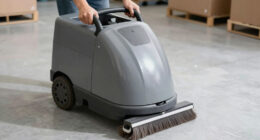
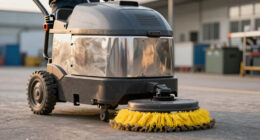
AI Powered Commercial Cleaning Robot, Industrial Floor Sweeper Machine for Warehouse and Factory, Autonomous Navigation with Smart Mapping, Obstacle Detection and Automatic Charging Station
【CUSTOM SOLUTIONS & SUPPORT】Choose from a wide range of models and configurations tailored to your needs. Pricing is…
As an affiliate, we earn on qualifying purchases.
As an affiliate, we earn on qualifying purchases.
Frequently Asked Questions
How Will AI Handle Unexpected Obstacles in Cleaning Environments?
AI handles unexpected obstacles through advanced obstacle detection and adaptive navigation. When it encounters something new or unpredictable, your autonomous cleaner quickly identifies the obstacle, analyzes its position, and adjusts its route seamlessly. This real-time response guarantees efficient cleaning without interruptions. By continuously learning from environment changes, your device becomes more reliable and effective, making sure it navigates around obstacles smoothly and maintains thorough cleanliness without needing human intervention.
What Are the Privacy Concerns With Ai-Powered Autonomous Cleaners?
You should be aware that AI-powered autonomous cleaners raise privacy concerns, especially regarding data security and user privacy. These devices often collect images, sounds, and other personal data, which could be mishandled or hacked if not properly protected. To safeguard your privacy, verify your device has strong security measures, clear data policies, and options to control or delete your data. Staying informed helps you maintain control over your personal information.
How Will AI Improve Cleaning Efficiency Over Time?
Imagine a robotic painter perfecting every stroke, becoming more precise with each pass. That’s how AI improves cleaning efficiency through robotic precision and learning algorithms. Over time, your autonomous cleaner adapts to your home’s unique layout, optimizing routes and cleaning patterns. This continuous learning reduces cleaning time and boosts effectiveness, ensuring you spend less effort and enjoy a consistently spotless space, thanks to AI’s evolving capabilities.
Are There Limitations to AI Navigation in Complex Spaces?
Yes, there are limitations to AI navigation in complex spaces. Navigation challenges arise when AI encounters obstacles or irregular layouts, making it harder to maintain efficiency. Sensor limitations also play a role, as sensors may struggle with poor lighting, clutter, or reflective surfaces, reducing accuracy. These factors can cause delays or errors, but ongoing advancements aim to address these issues, improving AI’s ability to operate smoothly in intricate environments.
What Is the Cost-Benefit Analysis of Adopting AI Cleaning Solutions?
You’ll find that investing in AI cleaning solutions is a game-changer, dramatically boosting efficiency and freeing up your staff for higher-value tasks. A thorough cost analysis shows the upfront expense pays off with a quick ROI assessment, thanks to reduced labor costs and improved cleanliness. While initial costs seem high, the long-term savings and enhanced hygiene make AI-powered cleaning an unbeatable value for your business.

Lefant LiDAR Robot Vacuum and Mop, Smart Mapping and Obstacle Avoidance, Tangle-Free Pet Hair, 2.4G/5G WiFi App Control, Slim Design for Wider Coverage, Carpet Detection, M330 Pro
【dToF Navigation & Multi-Floor Mapping】With advanced dToF navigation, the Lefant M330 Pro lidar robot vacuum efficiently scans up…
As an affiliate, we earn on qualifying purchases.
As an affiliate, we earn on qualifying purchases.
Conclusion
As you embrace the future of autonomous cleaning, AI becomes your trusted compass guiding you through a landscape of endless possibilities. It’s like having a vigilant partner, tirelessly sweeping away dirt and doubt alike. With each technological leap, your cleaning routine transforms into a seamless dance—graceful, efficient, and ever-evolving. Embrace this AI-powered revolution, and watch your spaces shine brighter than ever, illuminated by innovation’s radiant light guiding your way forward.
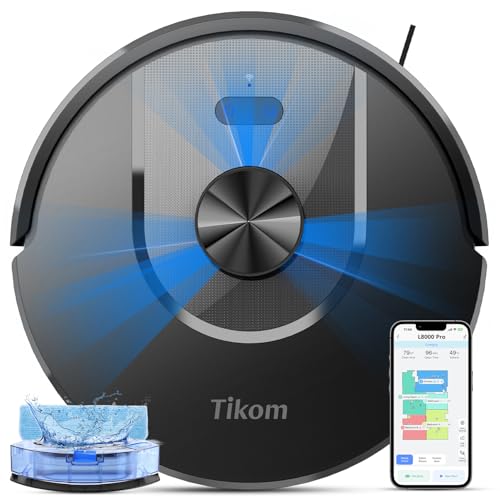
Tikom Robot Vacuum and Mop Combo, 6000Pa Automatic Robotic Vacuum Cleaner, Smart Mapping, 150 Min Max, Ideal for Pet Hair, Hardfloors, Carpets, Home(L8000 Pro)
6000Pa Powerful Suction: The vacuum cleaner boasts a 6000PA suction capability, effortlessly removing pet hair and dust from…
As an affiliate, we earn on qualifying purchases.
As an affiliate, we earn on qualifying purchases.

Robot Vacuum and Mop Combo, 2 in 1 Robotic Vacuums Cleaner with WiFi/App, Robot Vacuum with Water Tank, Strong Suction, Schedule, Self-Charging, Quiet, for Hard Floor, Pet Hair, Low Pile Carpet
Powerful 2-in-1 Robot Vacuum and Mop Function: The iMartine robot vacuum combines strong 2300Pa suction power and a…
As an affiliate, we earn on qualifying purchases.
As an affiliate, we earn on qualifying purchases.