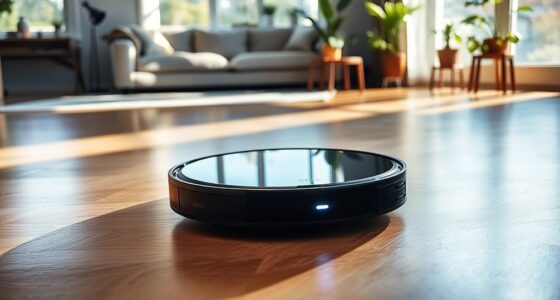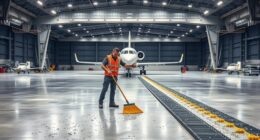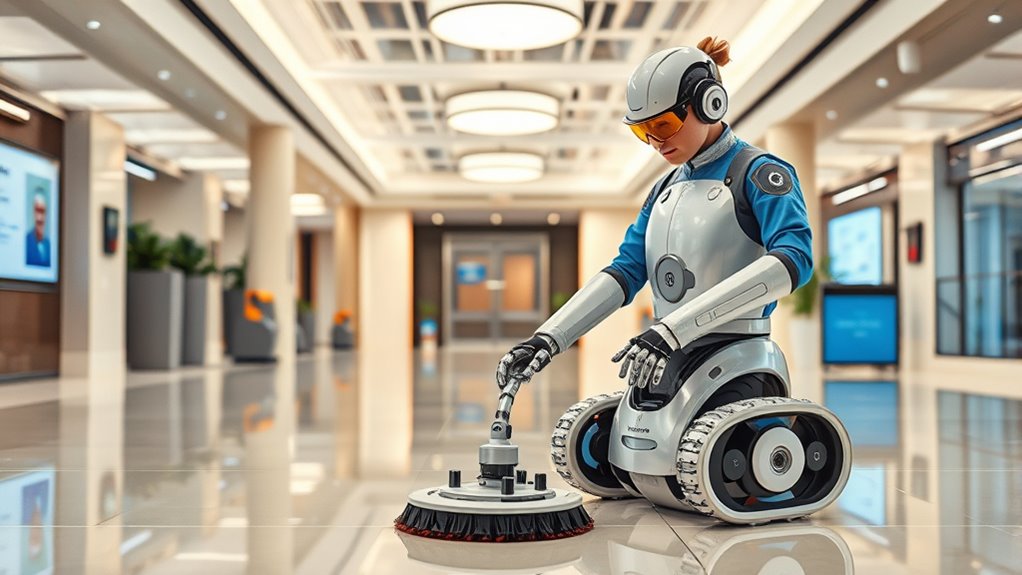

Human-robot collaboration in cleaning teams boosts efficiency by sharing tasks based on each agent’s strengths. Robots learn and adapt through continuous experience, handling routine chores like vacuuming and mopping while notifying humans for complex tasks. This dynamic approach guarantees smoother workflows, reduces human workload, and enhances overall cleanliness. By coordinating actions through smart communication, you can create a seamless team. Keep exploring to discover how this teamwork evolves and optimizes your cleaning process.
Key Takeaways
- Robots handle routine, repetitive cleaning tasks, reducing human workload and increasing overall efficiency.
- Dynamic task allocation ensures optimal use of robot capabilities and human skills for seamless collaboration.
- Continuous robot learning allows adaptation to environment changes, improving cleaning effectiveness over time.
- Communication systems enable robots to notify humans about maintenance needs, preventing task overlaps and ensuring workflow.
- Human-robot teams benefit from combined judgment and automation, creating safer, more efficient cleaning operations.

Have you ever wondered how humans and robots work together seamlessly in modern workplaces? It’s a fascinating collaboration that’s transforming cleaning teams everywhere. Robots are becoming smarter through robot learning, which allows them to adapt to different environments and improve their performance over time. This continuous learning process helps robots understand the layout of a space, recognize obstacles, and refine their cleaning routines. As they gather data and learn from their experiences, they become more efficient and effective partners for human team members. But for this partnership to work smoothly, task allocation plays a pivotal role. It involves assigning the right tasks to the right agents—whether human or robot—based on their strengths, skills, and capacities. In a cleaning team, robots might handle repetitive, time-consuming chores like vacuuming or mopping, freeing up humans to focus on more complex or delicate tasks.
When you’re working alongside a robot in a cleaning environment, you’ll notice that task allocation is often dynamic. The system can assess the robot’s current capabilities, battery life, and the complexity of the task before assigning work. For example, if a robot detects that its dustbin is full, it might pause its task and notify a human to empty it, guaranteeing continuous workflow. Robots also communicate with human team members to coordinate tasks, avoiding overlaps and gaps. This seamless division of labor is made possible by advanced programming that enables robots to make decisions based on real-time data. Over time, as robots learn from their experiences and interactions, they become better at predicting what needs to be done and when, making task allocation even more precise.
Furthermore, robot learning plays a critical role in optimizing task allocation. As robots encounter different scenarios, they adjust their behavior to handle new challenges more efficiently. For instance, if a robot notices that certain areas tend to get dirtier faster, it can prioritize those zones during its cleaning cycle. This adaptability not only improves overall cleanliness but also guarantees that human workers aren’t stuck doing redundant or unnecessary tasks. The combination of robot learning and smart task allocation creates a fluid teamwork environment where robots and humans complement each other’s abilities. You, as a team member, benefit from this synergy by focusing on tasks that require human judgment and empathy, while robots take care of the more routine chores, making the entire cleaning process more efficient, safer, and less burdensome.
Frequently Asked Questions
How Do Robots Adapt to Changing Cleaning Environments?
Robots adapt to changing cleaning environments by using adaptive algorithms that analyze real-time data, allowing them to modify their cleaning patterns. Sensor integration helps robots detect obstacles, dirt levels, and surface types, enabling precise adjustments. You’ll see these robots navigate around furniture, switch cleaning modes, and optimize their routes automatically, ensuring efficient and effective cleaning regardless of environment changes. This seamless adaptation keeps your space consistently clean and well-maintained.
What Safety Measures Protect Humans During Robot Cleaning Operations?
Safety protocols act as the shield protecting you during robot cleaning operations. You should always guarantee emergency procedures are clear and accessible, like a safety net beneath a tightrope. Robots are equipped with sensors that detect human presence, stopping instantly if someone enters their path. Regular maintenance and training reinforce these safety measures, creating a secure environment where humans and robots can work side by side without worry or harm.
How Is Data Privacy Maintained in Human-Robot Collaboration?
You protect data privacy in human-robot collaboration by implementing strong data encryption, ensuring all information exchanged remains secure from unauthorized access. Access control further safeguards sensitive data by limiting system access to authorized personnel only. Regular updates and audits also help identify vulnerabilities, maintaining confidentiality. By combining data encryption with strict access control, you create a secure environment where your collaboration is both efficient and privacy-respecting.
What Training Is Required for Staff to Work With Cleaning Robots?
Imagine you’re learning to operate a cleaning robot in a busy office. You’ll need staff education on robot operation, including understanding controls, safety protocols, and troubleshooting. Hands-on training sessions, like those used in a hospital case study, help staff become confident. Regular refresher courses guarantee everyone stays updated on new features, enabling smooth collaboration and efficient cleaning, while minimizing errors and safety risks in the workplace.
How Do Robots Handle Unexpected Obstacles or Spills?
Robots handle unexpected obstacles with advanced obstacle detection systems that identify and navigate around objects in real-time. For spills, they utilize spill management features, such as sensors to detect wet areas and adjust their cleaning patterns accordingly. You can guarantee ideal performance by regularly maintaining these systems and updating software. This way, the robots efficiently manage surprises, keeping your environment clean and safe without requiring constant human intervention.
Conclusion
Just as Icarus once reached for the sun, you can harness the power of human-robot teamwork to elevate cleaning efficiency. Embrace this synergy, blending human intuition with robotic precision, and you’ll unleash new heights of productivity. Remember, the future isn’t a distant dream but a collaborative dance—like Da Vinci’s masterpieces—where humans and robots craft cleaner, smarter spaces together. Step into this era confidently, and let innovation lead the way.