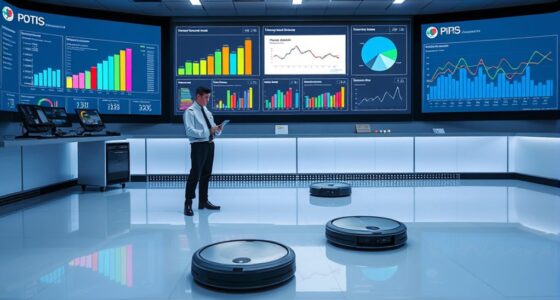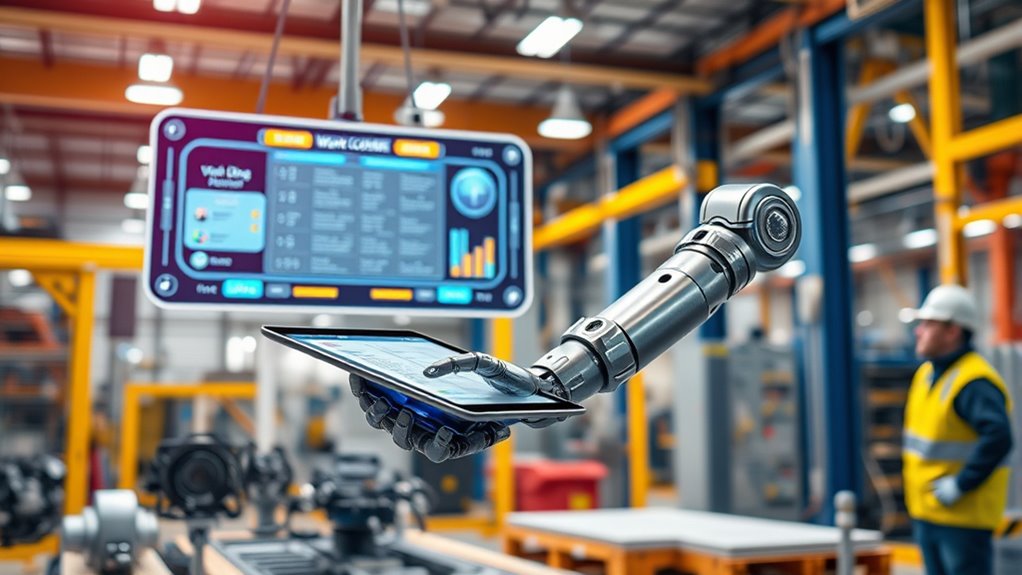

Integrating robots with CMMS and work orders streamlines your maintenance workflows by automating routine inspections, repairs, and scheduling based on real-time data and performance metrics. This integration reduces downtime, boosts safety by handling dangerous tasks, and guarantees accurate documentation for accountability. It also enables predictive maintenance and rapid technician responses, allowing your team to focus on more complex issues. Keep exploring to discover how this setup can transform your maintenance operations even further.
Key Takeaways
- Connect robots to CMMS for automated scheduling, monitoring, and predictive maintenance based on performance data.
- Enable real-time data exchange between robots and CMMS to trigger automatic work order creation.
- Use sensors and performance metrics to generate maintenance alerts and prioritize tasks automatically.
- Centralize work order management within CMMS for efficient tracking, documentation, and reporting of robot maintenance.
- Ensure seamless communication and traceability to enhance safety, accountability, and overall system efficiency.

Integrating robots with CMMS and work orders can substantially enhance maintenance efficiency and accuracy. When you incorporate robotics into your maintenance processes, you open the potential for real-time data collection, faster response times, and more precise work execution. Robots excel at performing repetitive or hazardous tasks, which means your maintenance team can focus on more complex issues rather than routine inspections or simple repairs. This integration streamlines workflows, reduces downtime, and guarantees that maintenance activities are performed promptly and accurately.
Robotics integration boosts efficiency, safety, and accuracy in maintenance workflows.
One of the key benefits of this integration is improved robot maintenance. Robots require regular care to function at their best, and when connected to your CMMS, their maintenance schedules can be automated based on usage data and performance metrics. Automation scheduling becomes a crucial feature here, allowing your system to predict when a robot needs servicing before a breakdown occurs. This proactive approach minimizes unexpected failures, prolongs robot life, and keeps your operations running smoothly. You can set automated alerts for routine checks, battery replacements, or calibration needs, which reduces manual oversight and helps your team plan maintenance tasks more effectively.
By syncing robots with your CMMS, you also create a centralized platform for managing work orders. Instead of manually assigning tasks or tracking robot performance separately, your system automatically generates work orders based on predefined rules or real-time sensor inputs. For example, if a robot detects a potential issue, it can trigger a work order for a technician to investigate or perform repairs. This automation ensures swift action, minimizes delays, and maintains a clear record of all maintenance activities. It also allows you to analyze historical data, identify recurring problems, and refine your maintenance strategies.
Furthermore, integrating robots with your CMMS enhances safety and accuracy. Robots can handle dangerous environments or tasks, reducing risks for your personnel. When linked to work order management, you get a detailed record of what tasks were performed, when, and by whom, guaranteeing accountability and traceability. This seamless flow of information helps you make informed decisions and continuously improve your maintenance operations. Additionally, effective communication between robots and the CMMS ensures that data flows smoothly, optimizing overall system performance.
Frequently Asked Questions
How Do Robots Improve Maintenance Accuracy in CMMS?
Robots improve maintenance accuracy in CMMS by performing precise tasks like robot calibration, which reduces human error. They collect real-time data that feeds into predictive analytics, allowing you to anticipate issues before they escalate. This integration guarantees maintenance records are accurate and up-to-date, helping you plan effective interventions. With robots handling routine checks and calibrations, you enhance overall reliability, minimize downtime, and ensure your maintenance process is both efficient and precise.
What Safety Measures Are Necessary When Deploying Robots in Maintenance?
You need to prioritize robot safety by implementing strict maintenance protocols, guaranteeing robots are regularly inspected and calibrated. Use safety barriers, emergency stop buttons, and clear signage to prevent accidents. Train staff thoroughly on robot operation and safety procedures. Always follow manufacturer guidelines and conduct risk assessments before deployment. These measures help protect workers and ensure seamless, safe integration of robots into your maintenance processes.
Can Robots Handle Emergency Work Orders Automatically?
Robots can handle emergency work orders automatically if you’ve set up proper robot task delegation and emergency response protocols. They can quickly assess situations, prioritize tasks, and execute necessary actions without human intervention. Confirm your system includes clear protocols and real-time communication to keep operations safe and efficient. Regularly testing these protocols helps guarantee robots respond correctly during emergencies, minimizing downtime and hazards.
How Do Robots Communicate With Existing CMMS Software?
Robots communicate with your CMMS software through remote monitoring and data synchronization. They send real-time updates on equipment status, maintenance needs, and completed tasks directly to the system. You can set up APIs or specialized integrations that guarantee seamless data flow. This way, your CMMS stays current without manual input, enabling efficient work order management and quick responses to issues, all while automating routine communication processes.
What Are the Cost Implications of Integrating Robots Into Maintenance?
Sure, investing in robots might seem pricey at first, but you’ll quickly see the irony—cost savings often follow. While the initial investment costs can be high, they lead to reduced labor expenses, fewer errors, and faster repairs. Over time, the efficiencies gained outweigh the upfront costs, making automation a smart move. So, yes, it’s a hefty start, but your maintenance budget will thank you later.
Conclusion
By integrating robots with your CMMS and work orders, you streamline operations and reduce downtime. Some might worry about job security, but embracing automation actually empowers you to focus on more meaningful tasks and innovation. Don’t let fear hold you back—this technology enhances your capabilities and secures your future. Take the leap today, and turn challenges into opportunities for growth and success.