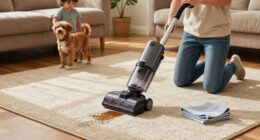
To measure your robotic cleaning program’s success, focus on KPIs like maintenance frequency, robot downtime, cleaning coverage, and residual dirt levels. Track operational efficiency through area cleaned per hour, robot utilization, and cycle times. Monitor costs such as energy use and maintenance expenses, and gather user feedback to guarantee system reliability. Keeping an eye on these metrics helps optimize performance and extend equipment lifespan—stick with us to explore these KPIs in detail.

Get cleaning gear delivered free with Prime
- Fast, free delivery on millions of items
- Prime Video, Amazon Music and more included
- Member-only deals all year
Key Takeaways
- Monitor cleaning coverage accuracy and residual dirt levels to ensure hygiene standards are met.
- Track robot utilization rates and cycle completion times for operational productivity.
- Measure maintenance frequency and repair turnaround times to optimize robot uptime.
- Analyze energy consumption and total costs per cycle for cost efficiency.
- Collect user feedback and system alert data to assess reliability and identify improvement areas.

Implementing a robotic cleaning program can substantially boost efficiency and reduce costs, but measuring its success requires clear KPIs. When you’re deploying cleaning automation, it’s essential to track specific metrics that reflect the performance and reliability of your robots. One of the key indicators to monitor is robotic maintenance. Regular maintenance ensures that your cleaning robots operate at peak efficiency and prevents unexpected breakdowns that can disrupt cleaning schedules. By setting KPIs around maintenance frequency, downtime, and repair turnaround times, you can identify patterns that help optimize maintenance routines and extend the lifespan of your equipment. This proactive approach minimizes costly repairs and keeps your cleaning automation running smoothly.
Beyond maintenance, evaluating the overall effectiveness of your cleaning automation system involves measuring the quality and consistency of cleaning results. You should establish KPIs related to coverage accuracy, such as the percentage of areas cleaned to set standards, and residual dirt or debris levels after cleaning cycles. These metrics help you determine whether your robotic cleaners are performing as intended and meeting hygiene requirements. Regularly reviewing these KPIs allows you to fine-tune operational parameters, ensuring your automation system maintains high standards without unnecessary manual intervention.
Operational efficiency is another critical aspect to evaluate. Track metrics like the total area cleaned per hour, robot utilization rates, and cycle completion times. These KPIs give you insights into how well your robots are integrated into your workflow and whether they’re maximizing productivity. If robots are frequently idle or take longer than expected to complete tasks, you can identify bottlenecks and adjust schedules or routes accordingly. Improving these efficiencies reduces labor costs and increases the overall return on investment in cleaning automation.
Cost management is also essential. Keep tabs on the total cost per cleaning cycle, considering factors such as energy consumption, maintenance expenses, and labor savings. Comparing these costs against baseline figures from manual cleaning helps justify your automation investment. Additionally, tracking energy efficiency metrics, like kilowatt-hours used per square foot cleaned, can highlight opportunities for further optimization.
Lastly, user feedback and system reliability are key KPIs. Regularly gather input from staff who oversee or interact with the robotic cleaners, and monitor system alerts or error reports. These qualitative and quantitative measures provide a thorough view of your program’s success. When you consistently analyze and act on these KPIs, you’ll ensure your robotic cleaning system continues to deliver the efficiency, cost savings, and hygiene standards you aim for, making cleaning automation a seamless and highly effective part of your operations.
Furthermore, understanding the best anime movies related to your industry or interests can serve as a motivational break for your team, enhancing overall productivity.
robotic cleaning maintenance kit
As an affiliate, we earn on qualifying purchases.
As an affiliate, we earn on qualifying purchases.
Frequently Asked Questions
How Do KPIS Vary Across Different Types of Robotic Cleaners?
You’ll find KPIs vary based on the robotic cleaner type, focusing on factors like robotic sensor accuracy and cleaning cycle duration. For instance, autonomous vacuum KPIs emphasize sensor precision for obstacle detection, while industrial floor cleaners prioritize cycle efficiency for large areas. Monitoring sensor accuracy guarantees precise navigation, while optimizing cycle duration improves productivity. Different tasks demand tailored KPIs, helping you measure performance effectively and adapt your robotic cleaning strategies accordingly.
What Are Common Challenges in Tracking Cleaning KPIS?
You might face challenges tracking cleaning KPIs because maintaining consistent cleaning schedules can be difficult, especially when robots encounter obstacles or technical issues. Staff training is vital; without it, your team may struggle to interpret data correctly or troubleshoot problems. Additionally, integrating real-time data into your system and ensuring accurate measurements can be complex, making it harder to monitor progress and improve overall cleaning performance effectively.
How Can KPIS Improve Robotic Cleaning Efficiency Over Time?
You can improve robotic cleaning efficiency over time by monitoring KPIs that focus on automation integration and maintenance scheduling. Regularly analyzing these KPIs helps you recognize when robots need updates or repairs, reducing downtime. By fine-tuning automation processes and scheduling proactive maintenance, you ensure your robotic cleaners operate at peak performance, increasing cleaning effectiveness and efficiency. This continuous improvement leads to better hygiene standards and cost savings.
Are There Industry Benchmarks for Robotic Cleaning KPIS?
Think of industry benchmarks as a lighthouse guiding your robotic cleaning efforts. While specific standards vary, many organizations use benchmark metrics like cleaning coverage, cycle time, and downtime to measure performance. These industry standards help you compare your KPIs against best practices, ensuring you’re on track. Regularly reviewing these benchmarks allows you to identify improvement areas and optimize your robotic cleaning programs effectively.
How to Select the Most Relevant KPIS for Specific Environments?
You should select KPIs based on your environment’s unique needs, focusing on cleaning sensors to measure coverage and accuracy, and maintenance metrics to track operational uptime and repair frequency. Consider how frequently the space requires cleaning and the level of precision needed. By aligning these KPIs with your environment’s demands, you guarantee your robotic cleaning program stays efficient and effective, providing meaningful insights for ongoing improvements.
Conclusion
By tracking these KPIs, you’re not just steering a robotic cleaning program—you’re orchestrating a symphony of efficiency and precision. Think of your KPIs as the compass guiding your fleet through uncharted waters, ensuring every sweep and scrub hits the mark. When you harness these metrics, you turn data into a powerful lighthouse, illuminating the path to spotless success. Keep your eyes on these indicators, and watch your cleaning efforts shine brighter than ever.
Halloween Picks
halloween
As an affiliate, we earn on qualifying purchases.