

To guarantee safety in public spaces, robots must follow established safety standards that include features like emergency stops, sensors for detecting humans, and collision avoidance systems. Regular maintenance, staff training, and transparent communication boost public trust and help prevent accidents. Safety measures should be designed to respond quickly to unexpected situations and reduce hazards. If you’re curious about how these standards are implemented, there’s more to explore on creating safer robotic environments.
Key Takeaways
- Establish and follow regulatory safety standards to protect humans and robots in shared environments.
- Incorporate essential safety features like emergency stops, sensors, and collision avoidance systems.
- Conduct regular maintenance, inspections, and staff training to ensure ongoing safety compliance.
- Implement hazard mitigation strategies to reduce risks from malfunctions and unpredictable interactions.
- Promote transparency and public communication to build trust and ensure understanding of safety protocols.
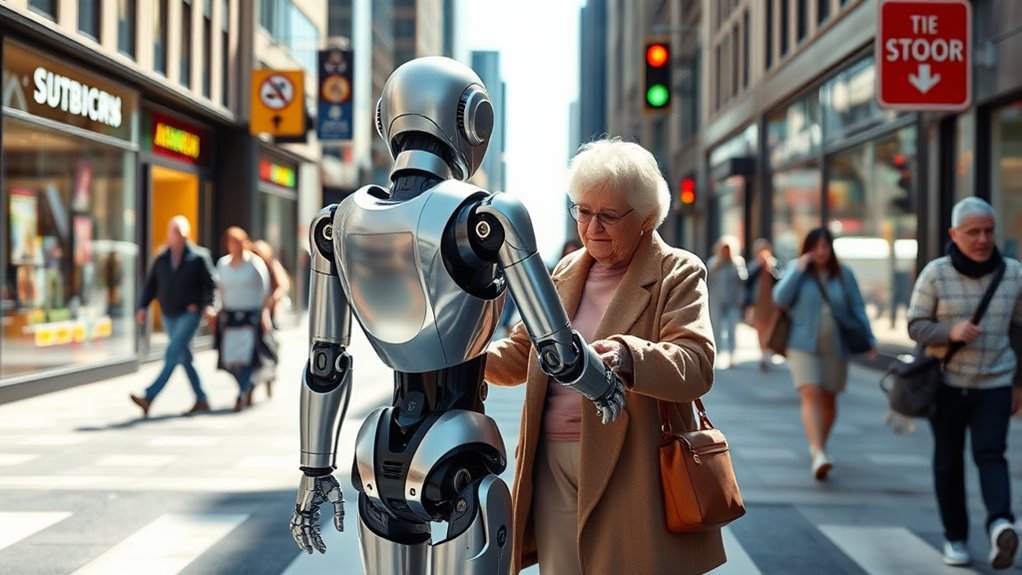
As robots become more common in public spaces, establishing clear safety standards is essential to protect both people and machines. When deploying robots in crowded environments, ensuring robot compliance with established safety protocols becomes a top priority. You need to understand that compliance isn’t just about following regulations; it’s about creating a safe interaction framework that minimizes risks and builds public trust. Proper compliance involves integrating safety features such as emergency stop buttons, sensors to detect humans, and fail-safe mechanisms that activate when malfunction occurs. These measures help prevent accidents before they happen, demonstrating a proactive approach to hazard mitigation.
Hazard mitigation is vital because robots operating close to humans can pose unpredictable risks. For example, sudden movements or mechanical failures can cause injuries or property damage if safety protocols aren’t in place. You should focus on designing robots with built-in safety features that can respond instantly to unexpected situations. This could include collision avoidance systems, soft or rounded edges to reduce injury risk, and sensors that constantly monitor the environment for obstacles or people. Implementing these safety features not only complies with safety standards but also considerably reduces the likelihood of hazards, making public spaces safer for everyone. Additionally, integrating AI security considerations ensures these safety systems remain robust against potential vulnerabilities or malicious interference.
Furthermore, establishing clear safety standards involves regular testing and maintenance of robotic systems. You can’t just set up safety measures once and forget about them. Ongoing inspections and updates ensure that safety features work correctly and adapt to new challenges or environmental changes. Training staff and users on how to operate and interact with robots is equally important. When people understand the safety features and proper protocols, they can avoid accidental mishaps. Proper training also encourages compliance, which in turn supports hazard mitigation efforts.
Another aspect to consider is transparency. You should inform the public about the safety measures in place and how robots are designed to protect users. Transparency builds confidence and encourages acceptance of robotic technology in public spaces. It also promotes a culture of safety where everyone understands their role in maintaining hazard-free environments.
Frequently Asked Questions
How Do Safety Standards Vary Across Different Countries?
You’ll notice safety standards differ across countries due to international compliance and cultural considerations. Some nations enforce strict regulations aligned with international guidelines, while others adapt standards based on local norms and public acceptance. You should stay informed about these variations to guarantee robots meet specific regional requirements. Cultural factors influence safety protocols, making it essential to customize approaches for each country, balancing safety with societal expectations and technological capabilities.
Are There Specific Standards for Robot Interaction With Children?
Sure, there are specific standards for robot interaction with children—because nothing says “fun” like a robot that’s as safe as grandma’s apple pie. These child safety and interaction guidelines focus on preventing harm, ensuring robots can engage without frightening or injuring little ones. You’re encouraged to follow these standards closely, so your robot buddy stays friendly, safe, and ready for play, not a trip to the emergency room.
What Are the Latest Advancements in Robot Safety Technology?
You’ll find the latest advancements in robot safety technology focus on sensor integration and real-time monitoring. These innovations enable robots to detect obstacles and human presence instantly, preventing accidents. Improved sensors and AI-driven systems allow for faster response times and adaptive behaviors, making robots safer in public spaces. As a result, interactions become more secure, ensuring users—especially vulnerable groups like children—are protected while enjoying the benefits of robotic assistance.
How Are Emergency Shutdown Procedures Standardized?
You should understand that emergency shutdown procedures are standardized through strict protocols and a reliable shutdown mechanism. When an emergency protocol is triggered, the shutdown mechanism activates immediately to halt the robot’s operations safely, preventing accidents or damage. These standards guarantee consistency and safety across different robots and environments, giving you confidence that emergency responses are quick, effective, and universally understood, even in unfamiliar public spaces.
Who Is Responsible for Enforcing Safety Standards in Public Spaces?
Imagine a guardian watching over us—you are responsible for enforcing safety standards in public spaces. You guarantee compliance through liability frameworks and certification processes that set clear guidelines. Regulatory bodies, manufacturers, and local authorities work together, like a well-tuned orchestra, to uphold these standards. Your role is crucial; you must oversee implementations, conduct inspections, and enforce penalties, ensuring robots operate safely and responsibly in shared environments.
Conclusion
By embracing these safety standards, you help create a welcoming environment where robots can assist and enhance public life without unintended discomfort. When you prioritize thoughtful design and careful regulation, you foster trust and harmony between humans and machines. Remember, setting gentle guidelines isn’t about restriction but about ensuring everyone feels comfortable and secure. Together, we can pave the way for a future where technology seamlessly blends into everyday spaces, enriching our shared experiences with care and consideration.