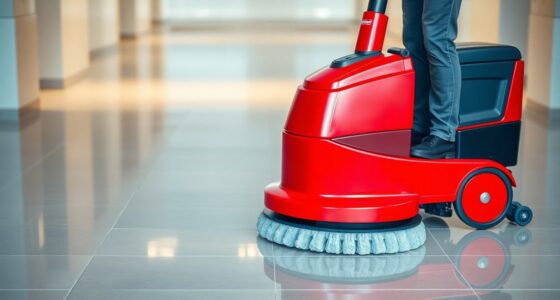
Choosing between pads and brushes depends on your lobby’s flooring and soil level. Pads are softer, ideal for delicate surfaces or polishing, while brushes are more aggressive for heavy dirt and stubborn stains. Guarantee your attachment is securely fastened before use to prevent slips and protect the surface. Proper selection and setup boost cleaning efficiency and extend equipment life. To optimize your auto-scrubber’s performance, understanding these options better is key—keep going to learn more.
Key Takeaways
- Choose pads for delicate floors and polishing; opt for brushes for stubborn dirt and heavy soil removal.
- Ensure attachments are securely fastened to prevent slipping and equipment damage during operation.
- Match the attachment type to the surface and soil condition for optimal cleaning efficiency.
- Properly switch between pad and brush to avoid surface damage and maintain safety.
- Regularly inspect attachments for security to ensure consistent performance and prevent accidents.
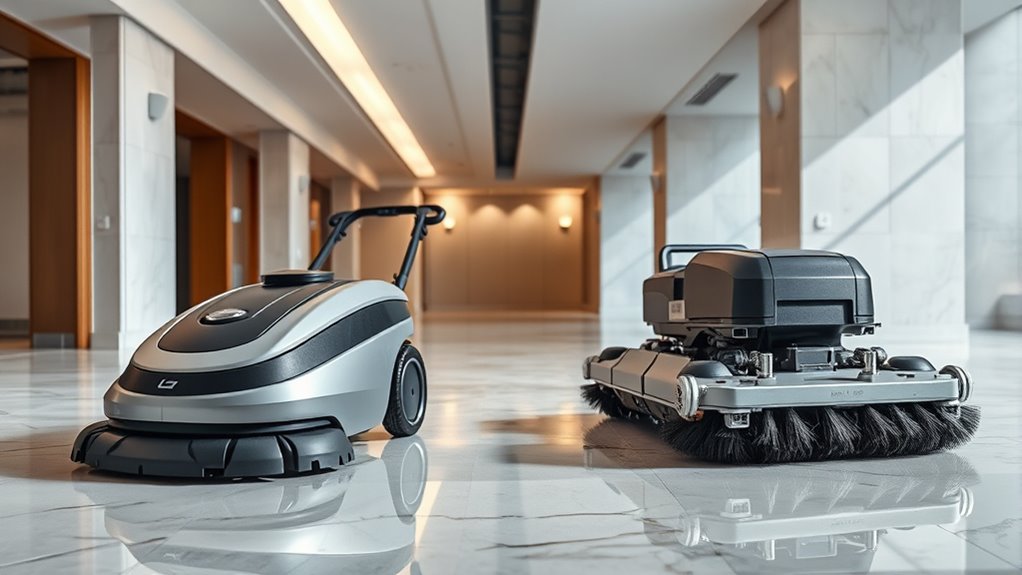
Setting up your auto-scrubber correctly is essential for efficient and effective cleaning. When you understand the nuances of pad versus brush setups, you ensure your equipment delivers optimal results. But before diving into the choices of attachments, it’s crucial to focus on two key areas: battery maintenance and operator training. Proper battery care guarantees your auto-scrubber runs longer between charges, reducing downtime and increasing productivity. Always check the battery’s water level regularly, and follow the manufacturer’s guidelines for charging cycles. Avoid letting batteries completely discharge, as this can shorten their lifespan. Maintaining batteries properly not only extends their life but also ensures your auto-scrubber operates at peak performance. Additionally, some models benefit from regular inspection of brushes and pads for wear and tear to maintain cleaning efficiency.
Equally important is operator training. If you’re responsible for operating or overseeing the scrubber, understanding the correct setup procedures is vital. Well-trained operators can switch between pads and brushes quickly and correctly, ensuring the right tool is used for each cleaning task. Proper training also covers safety protocols, preventing accidents and damage to the equipment or the environment. When operators know how to adjust brush pressure or replace pads efficiently, you avoid unnecessary wear and tear, which can lead to costly repairs. In addition, trained operators are better at troubleshooting minor problems, saving you time and money. Being familiar with attachment security ensures that tools stay firmly in place during operation, avoiding safety hazards.
Choosing between pads and brushes depends on the surface you’re cleaning and the type of soil you’re tackling. Pads are generally softer and more suitable for delicate floors or polishing tasks, providing a uniform finish without scratching. Brushes, on the other hand, are more aggressive and excel at removing stubborn dirt or debris from heavily soiled areas. Setting up your auto-scrubber involves selecting the right attachment for each job, and that decision should be guided by your understanding of the surface and soil conditions. When switching between pad and brush, make sure the attachment is securely fastened to prevent slipping during operation, which could pose safety hazards or reduce cleaning efficiency.
Frequently Asked Questions
How Often Should I Replace the Scrubber Pads or Brushes?
You should replace the scrubber pads or brushes when you notice a decline in cleaning effectiveness or visible wear. Typically, pad lifespan varies based on usage, but many last around 100-150 hours of use. For brushes, replacement frequency depends on the amount of debris and wear, usually every few months. Regular inspection guarantees peak cleaning performance and prevents damage, so stay attentive to signs that indicate it’s time for a change.
Can I Mix Different Pad Types on the Same Machine?
Mixing different pad types on the same machine is like trying to fit square pegs in round holes—it’s not recommended. Stick to compatible pads to guarantee effective cleaning and avoid damage. Check your machine’s pad compatibility and follow proper brush maintenance routines. Using the right combination keeps your auto-scrubber performing at its best, preventing unnecessary wear and tear, and making your cleaning routine as smooth as a well-oiled machine.
What Safety Precautions Are Needed During Setup?
You should wear personal protective gear like gloves and eye protection, and guarantee electrical safety by checking cords and outlets for damage before setup. Turn off the auto-scrubber and unplug it before making any adjustments. Keep the workspace dry to prevent electrical hazards, and always follow manufacturer instructions. These precautions help protect you from electrical shocks and injuries during setup, ensuring a safe and efficient process.
Are There Specific Cleaning Solutions Recommended for Pads or Brushes?
Your cleaning solutions can make or break your equipment’s performance—like a superhero’s power! For pads and brushes, always choose solutions compatible with your auto-scrubber to avoid damage. Check labels for cleaning solution compatibility, and opt for eco-friendly or neutral pH options for safety. Store solutions in a cool, dry place, and clean your pads and brushes regularly to extend their lifespan and guarantee ideal cleaning efficiency.
How Do I Troubleshoot Common Issues With Auto-Scrubbers?
To troubleshoot common auto-scrubber issues, start with a maintenance checklist, checking for clogged nozzles, worn brushes or pads, and fluid levels. Make certain you’re following proper operator training to avoid mishandling equipment. If the scrubber isn’t cleaning effectively, verify the settings and solutions used. Regularly inspecting parts and maintaining the machine helps prevent problems and keeps your office lobby spotless.
Conclusion
Choosing between a pad and a brush for your auto-scrubber depends on your office lobby’s flooring and cleaning needs. While some might worry about the complexity of setup, both options are straightforward and efficient when used correctly. Remember, investing a little time in selecting the right attachment guarantees a cleaner, more polished space. So don’t hesitate—try both to see which works best for your environment and keep your lobby spotless with confidence.