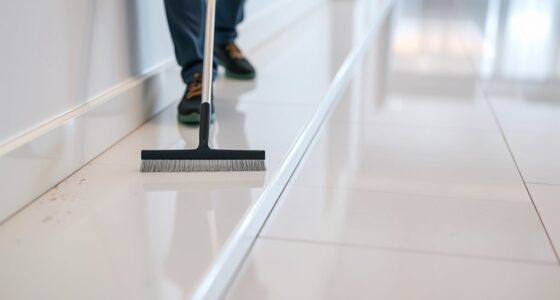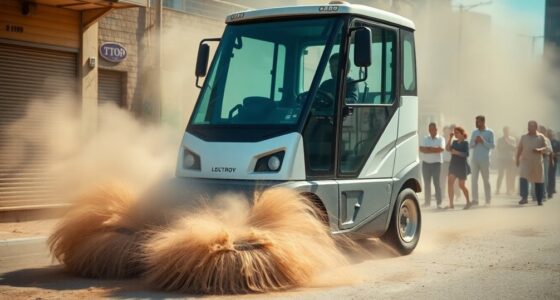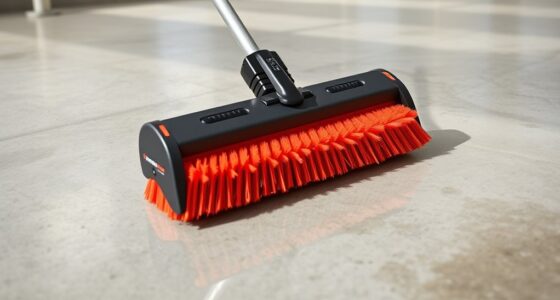

If your sweeper leaves dust trails, it’s likely due to incomplete debris removal caused by worn brushes, insufficient suction, or poor airflow. When these systems don’t work properly, fine particles escape and settle, leaving visible marks. Regular maintenance and proper equipment adjustments can improve performance. Keep an eye on your machine, and you’ll discover how to minimize dust trails and achieve cleaner results. Continuing provides insights into fixing these issues effectively.

Get cleaning gear delivered free — and shop member deals
- Fast, free delivery on millions of items
- Access to Prime Big Deal Days deals on October 6–7
- Prime Video, Amazon Music and more included
Key Takeaways
- Worn or misaligned brushes fail to dislodge all debris, causing dust trails.
- Insufficient suction power leaves behind fine dust and particles.
- Dust collection systems with poor airflow or clogging reduce debris capture.
- Lack of regular maintenance allows dust buildup inside the machine, dispersing dust.
- Inadequate equipment features or improper selection hinder effective dust control.
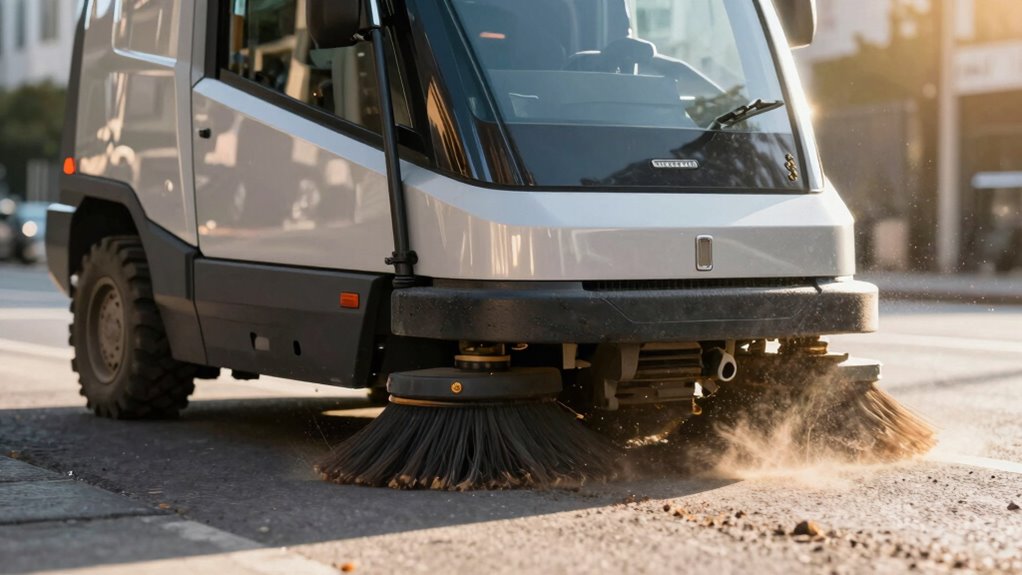
Have you ever noticed dust trails left behind by sweepers on the road? It’s a common sight, but understanding why it happens can help you appreciate the intricacies of effective cleaning. When sweepers leave dust trails, it’s often linked to issues with dust accumulation and cleaning efficiency. Dust buildup occurs when the sweeper fails to pick up debris completely, leaving fine particles behind that easily become airborne. Over time, this residual dust can settle in areas the sweeper missed, making it look as though the cleaning wasn’t thorough. This lingering dust isn’t just a visual concern; it also impacts the overall cleanliness and health of the environment, especially in urban settings or industrial sites.
Dust trails from sweepers indicate incomplete debris removal, affecting cleanliness and environmental health.
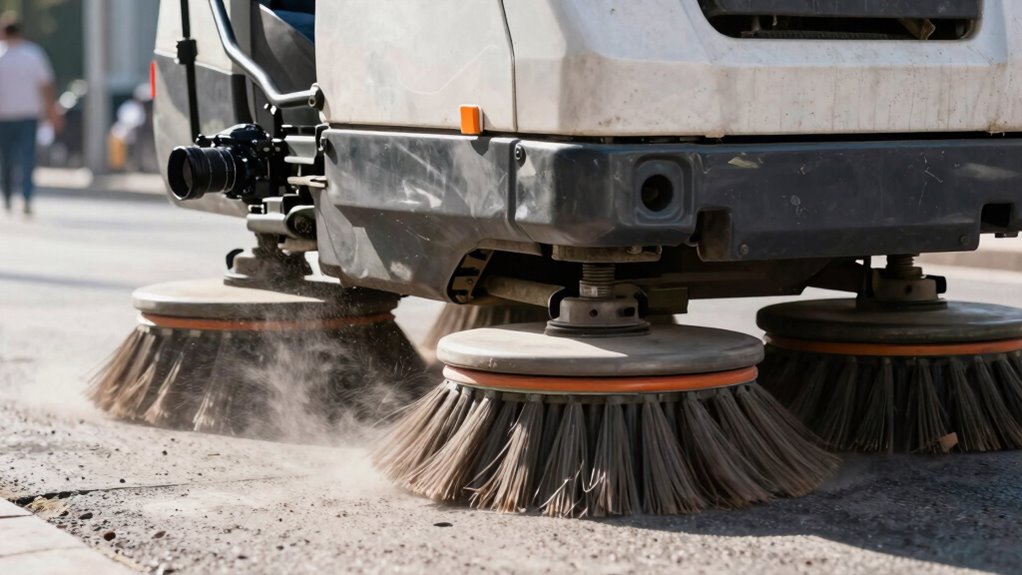
One key reason sweepers leave dust trails is that their brushes or suction systems aren’t functioning at the most favorable levels. If the brushes are worn out or improperly adjusted, they won’t effectively dislodge dirt and dust from the surface. Similarly, if the vacuum or suction system isn’t powerful enough, debris can be left behind or blown away, creating dust trails as the sweeper moves along. This directly hampers cleaning efficiency because instead of capturing and removing dust, the machine disperses it, making the area appear only partially cleaned. In some cases, dust trails occur because the sweeper’s dust collection system isn’t maintaining proper airflow or isn’t emptied regularly, leading to dust buildup within the machine itself. Proper maintenance practices are essential to ensure the equipment functions optimally and minimizes dust dispersal. Regular inspection and cleaning of the equipment can prevent many of these issues before they become significant problems. Additionally, selecting equipment with advanced dust control features can further reduce dust trails and improve overall cleaning performance. Ensuring the proper functioning of suction systems can also greatly enhance the effectiveness of the cleaning process.
vacuum sweeper brush replacement
As an affiliate, we earn on qualifying purchases.
As an affiliate, we earn on qualifying purchases.
Frequently Asked Questions
Can Dust Trails Be Completely Eliminated From Sweepers?
Dust trails can’t be completely eliminated from sweepers, but you can minimize them through effective dust absorption and proper air circulation. Regular maintenance guarantees filters work efficiently, capturing more dust. Improving air circulation helps prevent dust from settling and becoming airborne. Using sweepers with advanced dust control features also reduces dust trails. While perfection isn’t always possible, these steps substantially cut down on dust dispersion, keeping your environment cleaner and healthier.
Do Different Floor Types Affect Dust Trail Formation?
Imagine your floors as a canvas, each surface inviting a different dance of dust and debris. Your choice of floor surface directly impacts dust trail formation; smooth, hard floors like tile or hardwood tend to show dust accumulation more clearly, causing sweepers to leave noticeable trails. Conversely, carpets trap dust deeper, reducing visible trails but making cleaning more challenging. So, yes, floor type influences how dust trails appear after sweeping.
Are Dust Trails More Common With Manual or Robotic Sweepers?
Dust trails are more common with robotic sweepers because their design efficiency often struggles with dust particle dispersion, especially on uneven surfaces. Manual sweepers give you more control, allowing you to adjust your technique to minimize dust dispersion. Robotic models tend to leave more dust trails, as their limited maneuverability and sensor precision can’t always capture all dust particles, resulting in visible dust trails behind the device.
How Often Should Sweepers Be Maintained to Prevent Dust Trails?
To prevent dust trails, you should follow a regular maintenance schedule, ideally cleaning and inspecting your sweeper weekly. Dust accumulation can impair the machine’s effectiveness, leading to more dust being spread. Regularly replacing filters, brushes, and vacuum belts helps maintain peak performance. By staying consistent with maintenance, you guarantee your sweeper works efficiently, minimizes dust trails, and keeps your space cleaner and healthier.
Do Environmental Conditions Influence Dust Trail Visibility?
Environmental conditions definitely influence dust trail visibility. When the air quality is poor, dust dispersion becomes more pronounced, making dust trails more noticeable. Wind and humidity also play roles; strong winds spread dust further, while high humidity helps settle particles quickly. You should consider these factors when operating sweepers, as they impact how visible dust trails are and can help you adjust your cleaning schedule for better results and improved air quality.
Conclusion
So, when your sweeper leaves a dust trail, it’s like a painting with smudged strokes—clumsy yet revealing. Dust sneaks past the bristles, whispering secrets of a machine not quite up to the task. To keep your floors spotless, give your sweeper a little TLC, like tending to a loyal friend. With proper care, it’ll glide smoothly, leaving only the clean, crisp canvas you desire—no more dusty footprints trailing behind.
Fall Picks
fall essentials
As an affiliate, we earn on qualifying purchases.