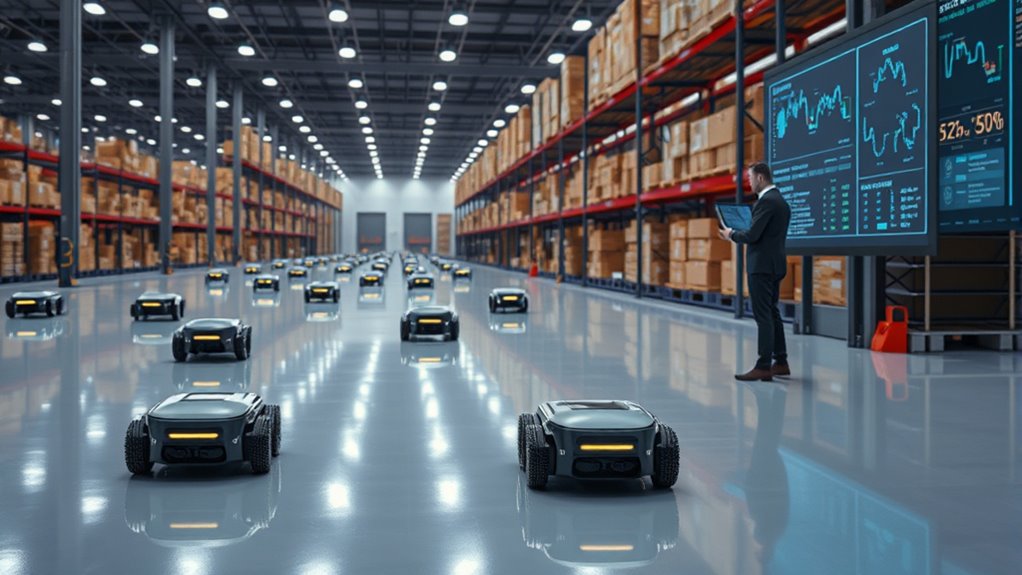

Effective fleet management for multiple robots involves real-time maintenance scheduling, predictive analytics, and automated alerts to keep your robots running smoothly. By continuously monitoring performance, you can identify issues early and schedule repairs during low-traffic periods. Integrating navigation with maintenance planning allows for dynamic responses and reduces downtime. Centralized systems coordinate tasks efficiently, supporting fleet growth and scalability. Keep exploring to discover how these strategies can optimize your robotic operations even further.
Key Takeaways
- Implement centralized control systems to coordinate route planning, task allocation, and maintenance scheduling for multiple robots.
- Utilize real-time data monitoring and predictive analytics to optimize fleet performance and prevent failures.
- Set automated alerts and thresholds to ensure timely maintenance and reduce unplanned downtime across the fleet.
- Integrate navigation, maintenance, and communication systems for seamless, dynamic fleet management.
- Leverage historical data to refine operational strategies, improve resource allocation, and enhance overall fleet resilience.

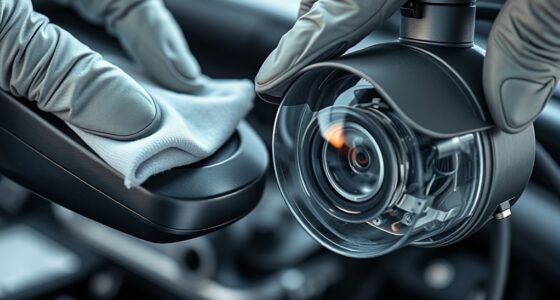
Efficient maintenance scheduling is the backbone of a reliable fleet. When you automate this process, you prevent unexpected breakdowns that can halt operations and cause costly delays. The key is to monitor each robot’s performance continuously, collecting data on factors like battery life, motor function, and sensor health. With this information, you can predict when a robot will need servicing and plan maintenance proactively. This predictive approach minimizes downtime and extends the lifespan of your robots. You can set up alerts for specific thresholds, ensuring that maintenance happens before a minor issue becomes a major problem. Automating maintenance scheduling also allows you to allocate resources more effectively, avoiding the chaos of reactive repairs and ensuring your fleet operates at peak efficiency. Incorporating preventive maintenance strategies helps maintain optimal functioning and reduces unexpected failures. Integrating autonomous navigation with maintenance scheduling creates a dynamic and resilient system. For example, if a robot detects an obstacle that it cannot navigate around, it can flag an issue that might indicate a sensor problem or mechanical wear. This proactive communication enables you to address potential failures before they impact productivity. Additionally, as your fleet grows, centralized control systems can coordinate routes and maintenance tasks, reducing human workload and minimizing errors. You can also analyze historical data to optimize routes further and schedule maintenance during low-traffic periods, ensuring your robots are always ready to perform their tasks.

Battery Powered Walk Behind Mini Automatic Floor Scrubber Machine – Compact & Portable, 15” Cleaning Width, 90-Minute Runtime, 170 RPM – Ideal for Small Commercial Spaces, Offices, Retail & More
Compact & Efficient Cleaning – Designed for small commercial spaces, this mini automatic floor scrubber features a 15-inch...
As an affiliate, we earn on qualifying purchases.
Frequently Asked Questions
How Does Fleet Management Adapt to Different Robot Manufacturers?
You adapt fleet management by focusing on manufacturer compatibility and seamless software integration. You choose platforms that support various robot brands, ensuring smooth communication regardless of manufacturer differences. By prioritizing flexible, adaptable systems, you can easily incorporate new robots into your fleet, streamline operations, and maintain consistent control. This approach minimizes disruptions, improves efficiency, and keeps your fleet agile across different manufacturer specifications and software environments.
What Are the Cybersecurity Concerns in Managing Multiple Robots?
You might think managing multiple robots is a breeze, but cybersecurity vulnerabilities can turn it into a nightmare. Hackers could exploit weak points, risking data breaches or even remote control takeover. To stay safe, you need robust data encryption and regular security updates. Ironically, the very interconnectedness that makes fleet management efficient also opens doors to cyber threats. Stay vigilant, because in this digital age, your robots aren’t just tools—they’re potential targets.
How Is Real-Time Data Synchronized Across the Fleet?
You verify real-time data synchronization by implementing robust protocols that address data consistency and minimize network latency. You use synchronized clocks and timestamping to keep data aligned across robots, while prioritizing network stability to reduce delays. Regular updates and redundancy help maintain accuracy, ensuring your fleet operates smoothly. By actively managing these factors, you keep all robots informed and coordinated, enhancing overall efficiency.
What Are the Cost Considerations for Large Robot Fleets?
You should consider cost analysis and maintenance budgeting when managing a large robot fleet. The initial investment includes hardware, software, and infrastructure, while ongoing costs involve maintenance, repairs, and energy consumption. By tracking these expenses carefully, you can optimize resource allocation and reduce downtime. Planning for scalability and unexpected repairs helps prevent budget overruns, ensuring your fleet remains efficient and cost-effective over time.
How Can Fleet Management Systems Scale With Growing Robot Numbers?
To scale your fleet management system effectively, you should focus on scaling infrastructure to handle increased robot numbers and guarantee seamless operation. Optimize bandwidth by prioritizing data streams and reducing unnecessary transmissions. Implement modular, flexible systems that grow with your fleet, and utilize cloud solutions for scalability. Regularly assess performance metrics to identify bottlenecks, allowing you to adapt your infrastructure and bandwidth strategies proactively, supporting your expanding robot fleet efficiently.

Oreck Commercial Orbiter Hard Floor Cleaner Machine, Multi-Purpose Floor Cleaning, Random Orbital Drive, Wide Cleaning Path, 50-Foot Long Cord, ORB550MC, Gray/Red
MULTI-PURPOSE CLEANING: Commercial grade cleaner and effective on all types of flooring surfaces. Sand, refinish, strip, scrub, wax,...
As an affiliate, we earn on qualifying purchases.
Conclusion
Managing a fleet of robots is like conducting an orchestra, where each unit plays a crucial role. With effective strategies, real-time monitoring, and seamless coordination, you guarantee your robots operate smoothly and efficiently. Embrace the challenges and leverage technology to optimize performance. Remember, a well-managed fleet is the backbone of modern automation—like a symphony, it’s only as good as its harmony. Stay proactive, and your robots will work together harmoniously, delivering outstanding results.

HHQ Commercial Floor Scrubber Machine with Brushes and Pads, Heavy Duty Floor Cleaner Polisher and Buffer- Deep Cleaning Tile and Grout, Hardwood Floors and Carpets without Getting on Hands and Knees
Kit Included: 1 Orbital Floor Buffer & Scrubber Machine, 2 Polishing/ Stripping Pads, 3 Scrub Brushes, 1 Microfiber...
As an affiliate, we earn on qualifying purchases.

Bissell BigGreen BGFS5000 Portable Two Brush Floor Scrubber & Polisher, Polypropylene, 13"" W x 7"" D x 44"" H, White & Green
A small portable scrubbing machine that is perfect for cleaning brick, carpet, ceramic, concrete, cork, hard wood, laminate,...
As an affiliate, we earn on qualifying purchases.