
TL;DR

Get cleaning gear delivered free with Prime
- Fast, free delivery on millions of items
- Prime Video, Amazon Music and more included
- Member-only deals all year
A Hunker report describes a DIY method for hiding a downspout extension: connect a durable pipe to the downspout, bury it in a sloped trench and leave the outlet exposed. The approach can move roof runoff away from the spot where it exits, but the report does not provide tested performance results or establish that it will prevent erosion or foundation problems in every yard.
A DIY method featured by Hunker hides much of a downspout extension underground while carrying roof runoff farther from the house. The design, which the report associates with YouTuber Jesse Smith, uses a connected pipe buried in a sloped trench; it aims to address visible piping and water collecting at the downspout outlet, but the report does not establish that the approach is suitable for every property.
The method extends the downspout with a flexible plastic, corrugated or PVC pipe of roughly the same size. The connection can be made by fitting and sealing the pipe, while Hunker says a downspout adapter may make installation easier. An adapter with a cleanout opening can also provide access for maintenance. The report lists waterproof tape or PVC glue among the possible connection materials, depending on the setup.
Before digging, the installer measures the route and accounts for the difference in height between the downspout outlet and the pipe’s buried position. The pipe needs a downhill path for water to flow. Hunker advises checking the locations of underground utilities before excavation and warns that creating a slope on a mostly flat lawn can require additional planning. The trench should cover the pipe completely, and the pipe’s far end must remain open or fitted with a suitable outlet so water can leave.
The process disturbs the lawn. Hunker suggests removing the grass layer carefully so it can be returned after the pipe is installed, and says reseeding or adding decorative features may be needed. A grate or pop-up drain can be placed at the outlet, according to the report. Cleaning the downspout before work is also recommended. The source presents these steps as a DIY approach; it does not report a formal test, installation cost, measured drainage improvement or long-term results.
Runoff Control Without Visible Piping
The design addresses two practical concerns at once: the appearance of an exposed extension and water repeatedly discharging onto one patch of ground. Moving the outlet farther away may reduce the concentration of runoff beside the downspout and help limit the mud or bare ground described in the report. Burying the pipe can also keep most of the extension out of view, leaving only the outlet visible.
That benefit depends on the site. Roof runoff volume, soil, slope, outlet placement and the condition of the existing drainage system all affect where water goes. The Hunker report says concentrated runoff can contribute to erosion and potentially to structural or foundation concerns, but it does not show that this particular DIY installation prevents those problems. Readers should treat the design as a drainage option to evaluate, not as a guaranteed fix for water entering a basement or collecting near a foundation.
As an affiliate, we earn on qualifying purchases.
How the Buried Extension Works
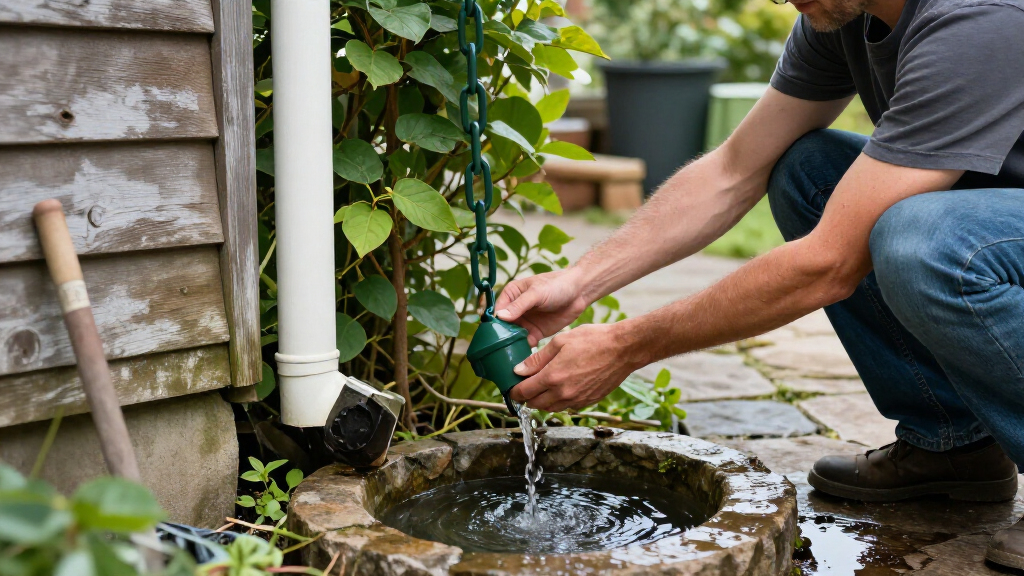
Downspouts channel water from a roof and release it at an outlet. Hunker’s report describes the problem as water flowing repeatedly over the same ground, which can leave mud puddles or bare patches. The proposed change is not to remove the downspout, but to extend its route below the lawn and shift the discharge point to a less conspicuous location.
The report attributes the design to Jesse Smith, a YouTuber, but the supplied material does not include a date for his installation or technical measurements from it. Hunker frames the method as a home project requiring a pipe, a way to connect it, and a shovel, with soil or grass seed potentially needed to repair the lawn. It also mentions planting a rain garden near a downspout as a possible way to incorporate the drainage area into the landscaping; that is an optional design choice, not a required part of the buried-pipe method.
“The pipe should run downhill for water to flow properly.”
— Hunker report
Site Conditions and Results Vary
The source does not specify the pipe’s exact diameter, trench depth, slope, length or outlet distance, and it provides no performance measurements or follow-up showing how the installation held up. It also does not establish whether the design meets local drainage rules or is appropriate for a particular yard. Those details depend on the property, including underground utilities, soil, grading and the route water will take.
It remains unclear whether the installation described by Smith has been independently assessed or whether it reduced erosion or foundation risks at his home. The report notes that lawn grading can be technical, but does not give engineering specifications. A buried outlet could also be difficult to inspect if it becomes blocked or if water does not drain as intended; the suggested cleanout adapter may aid access, but does not remove the need to monitor the system.
Check the Route Before Digging
Anyone considering the project should first identify underground utilities and map a route that can maintain a downhill path to a suitable discharge point. The outlet should not simply move the water problem to another area of the property. Hunker advises planning for lawn repairs and cleaning the downspout before installation; its report does not provide a universal set of dimensions or a code checklist.
After installation, the drainage path and outlet can be observed during rainfall to see whether water flows freely and whether it collects at the new discharge point. If the yard is flat, the outlet is near a foundation, or runoff is already causing structural concerns, the source’s general DIY instructions may not resolve the issue. The report gives no scheduled follow-up or additional testing, so the project’s longer-term results remain unreported.
Key Questions
What is the DIY downspout design?
It connects a pipe extension to a downspout, then buries most of the pipe in a trench so runoff exits farther away and the extension is less visible.
Does the buried pipe need a slope?
Yes. Hunker says the pipe needs to run downhill for water to flow. The report warns that creating a suitable grade on a mostly flat lawn can be technical.
Can the pipe be buried completely?
The pipe can be covered along its route, but the far end must remain exposed or have an outlet so water can discharge. The report also mentions a grate or pop-up drain as an option.
Will this prevent foundation damage?
The report does not establish that the method prevents foundation damage. It describes moving runoff away from the downspout’s immediate outlet area, but performance depends on the site and the destination of the water.
What should be checked before digging?
Hunker advises checking underground utility locations, planning the pipe’s slope and route, and cleaning the downspout before work. It also says to expect some lawn disturbance and possible reseeding.
Source: rss
Halloween Picks
halloween
As an affiliate, we earn on qualifying purchases.